Why It Matters
SUSE’s shift from a quiet Linux supplier to a strategic infrastructure layer could reshape enterprise cloud choices, especially for organizations prioritizing data sovereignty and AI readiness.
Key Takeaways
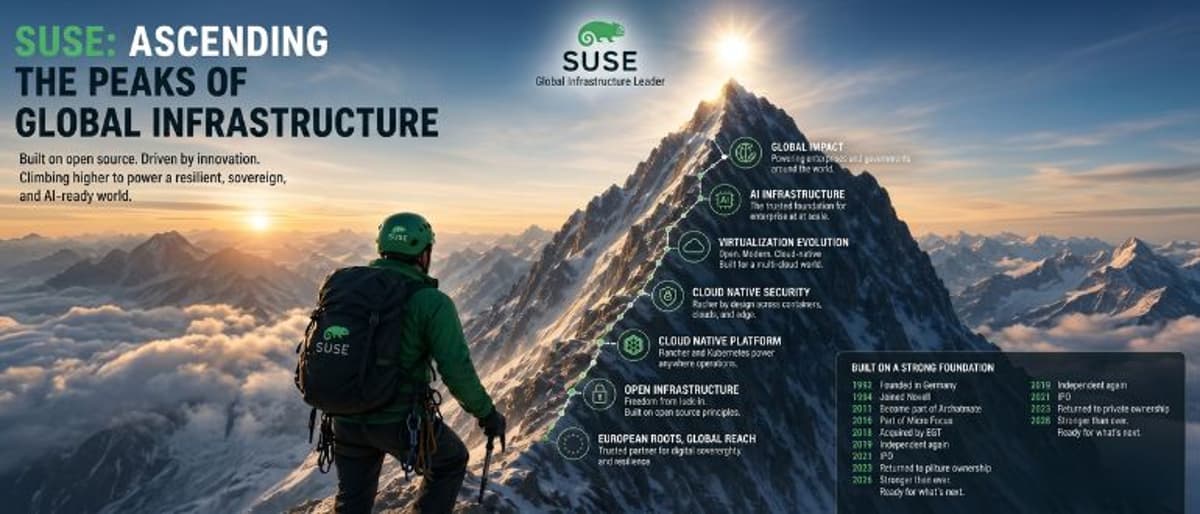
- •SUSE’s European heritage fuels demand for sovereign infrastructure
- •Rancher acquisition anchors SUSE in Kubernetes management
- •NeuVector adds native container security to SUSE’s stack
- •VMware disruption drives interest in KubeVirt‑based virtualization
- •AI workloads increase need for open, resilient platforms
Pulse Analysis
SUSE’s three‑decade journey from a niche Linux distributor to a global infrastructure player reflects a broader industry evolution. Early ownership changes and an IPO kept the company under the radar, yet its commitment to open source built deep trust among enterprises. This foundation proved valuable as regulators across Europe tightened rules on data residency, turning digital sovereignty from policy jargon into a procurement imperative. Companies now favor vendors that can guarantee control‑plane transparency and avoid vendor lock‑in, a niche where SUSE’s open‑source DNA gives it a clear advantage.
Strategic acquisitions have accelerated SUSE’s relevance in today’s cloud‑native world. The 2020 purchase of Rancher delivered a mature Kubernetes management platform, enabling hybrid and multi‑cloud deployments that many enterprises now consider essential. Adding NeuVector’s container security capabilities further differentiated SUSE by embedding compliance‑ready protection directly into the orchestration layer. Together, these moves repositioned the firm from an operating‑system seller to a comprehensive infrastructure control plane, aligning with market demand for open, interoperable solutions that can scale across on‑prem, edge and public‑cloud environments.
Looking ahead, SUSE stands at a crossroads where emerging trends converge. The virtualization market’s fragmentation after VMware’s challenges has opened space for KubeVirt‑based alternatives, while AI initiatives push organizations to modernize underlying compute and data pipelines. SUSE’s open, Kubernetes‑centric stack is uniquely positioned to serve as the foundation for these workloads, offering the flexibility, security and sovereignty that modern enterprises require. Execution will be critical, but if the company capitalizes on this momentum, it could evolve from a respected open‑source player into a cornerstone of the next generation of global infrastructure.
SUSE Ascendant
Comments
Want to join the conversation?
Loading comments...