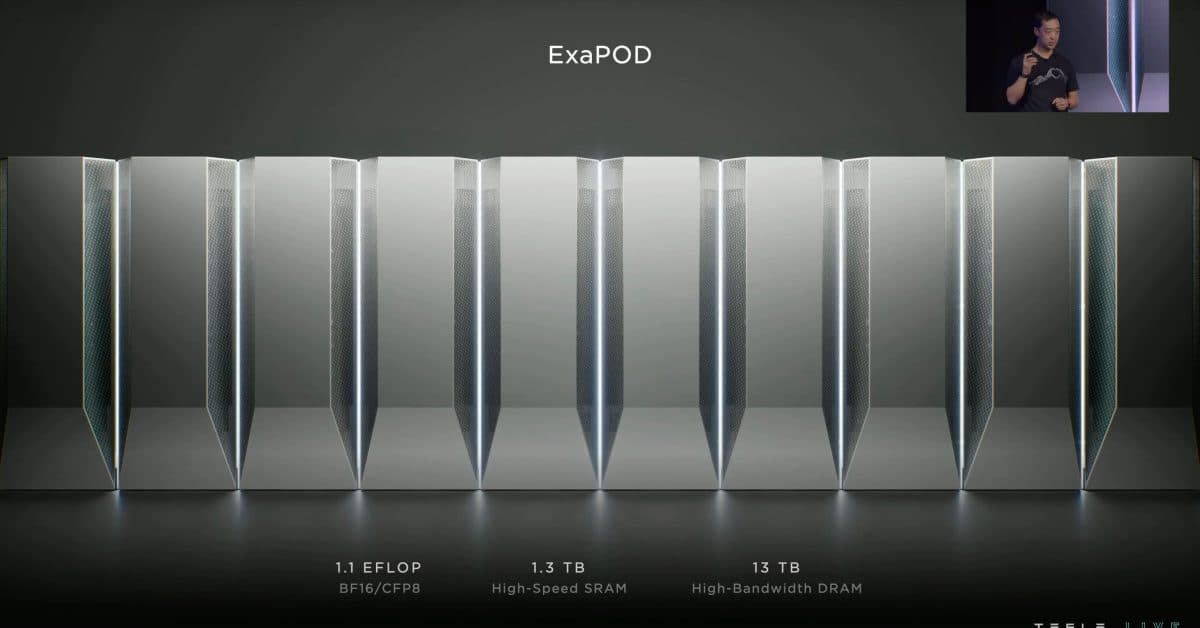
Tesla Plans to Sell Modular AI Data Center Hardware Called ‘Megapod’
Companies Mentioned
Why It Matters
If Tesla can successfully package its power‑storage and cooling tech for AI data centers, it could open a high‑margin business beyond electric vehicles. However, competing directly with Nvidia’s entrenched hardware ecosystem remains a steep hurdle.
Key Takeaways
- •Tesla filed a “Megapod” trademark for modular AI data‑center hardware.
- •Nvidia’s GB200 and DGX SuperPOD currently dominate the modular AI market.
- •Tesla lacks a commercial compute‑hardware portfolio, relying on Nvidia GPUs.
- •Megapack energy storage could power Megapod units for AI workloads.
- •Success hinges on Tesla’s ability to bundle power, cooling, not servers.
Pulse Analysis
The trademark filing for "Megapod" signals Tesla's first formal step into the AI infrastructure arena, a sector that has surged alongside the broader artificial‑intelligence boom. Nvidia currently sets the benchmark with its GB200 liquid‑cooled chassis and DGX SuperPOD clusters, which combine dozens of GPUs and CPUs into a single, scalable unit. By naming the product "Megapod," Tesla is positioning itself as a turnkey solution provider, aiming to sell complete rack‑and‑room packages rather than individual components. This move mirrors the company's recent pattern of attaching its brand to emerging tech trends, even when the underlying hardware expertise is limited.
Tesla's core competency lies in energy storage and power management, not in designing high‑performance compute servers. Its Megapack and newer Megablock batteries have already found traction as grid‑scale buffers for AI training facilities, including a $1 billion purchase by Musk's xAI. Leveraging this strength, a Megapod could integrate Tesla's power electronics, thermal‑control systems, and enclosure design to offer AI data centers a reliable, energy‑efficient backbone. However, the company’s history with in‑house AI chips—marked by delayed AI5 and AI6 silicon and the aborted Dojo 2 project—highlights a gap in delivering competitive compute performance, a critical factor for customers who currently depend on Nvidia GPUs.
For investors, the Megapod concept presents a double‑edged sword. A successful rollout could diversify Tesla's revenue beyond vehicles and batteries, tapping into the multi‑billion‑dollar AI‑compute market and improving margins through high‑value services. Conversely, failure to differentiate from Nvidia's mature ecosystem could result in wasted R&D spend and further pressure on a stock that has lagged the AI‑driven rally of its peers. The coming months will reveal whether Tesla can translate its power‑storage prowess into a credible AI‑hardware offering or if Megapod remains a trademark without a tangible product.
Tesla plans to sell modular AI data center hardware called ‘Megapod’
Comments
Want to join the conversation?
Loading comments...