The Future of Software Development: Now with Less Software Development
Why It Matters
AI‑driven automation promises to accelerate product cycles, lower defect rates, and reshape developer roles, forcing firms to rethink talent and tooling strategies. Companies that adopt these agents early will gain a competitive edge in speed and cost efficiency.
Key Takeaways
- •AI Dev 26x SF gathered 3,000 developers in San Francisco
- •AMD unveiled HotSwap and HIP backend for llama.cpp
- •AWS highlighted Hydro, Cedar, and Strata to cut defect rates
- •Panelists rated future brightness 7‑10, emphasizing AI agents
- •Andrew Ng predicts small generalist teams will drive 100% AI code
Pulse Analysis
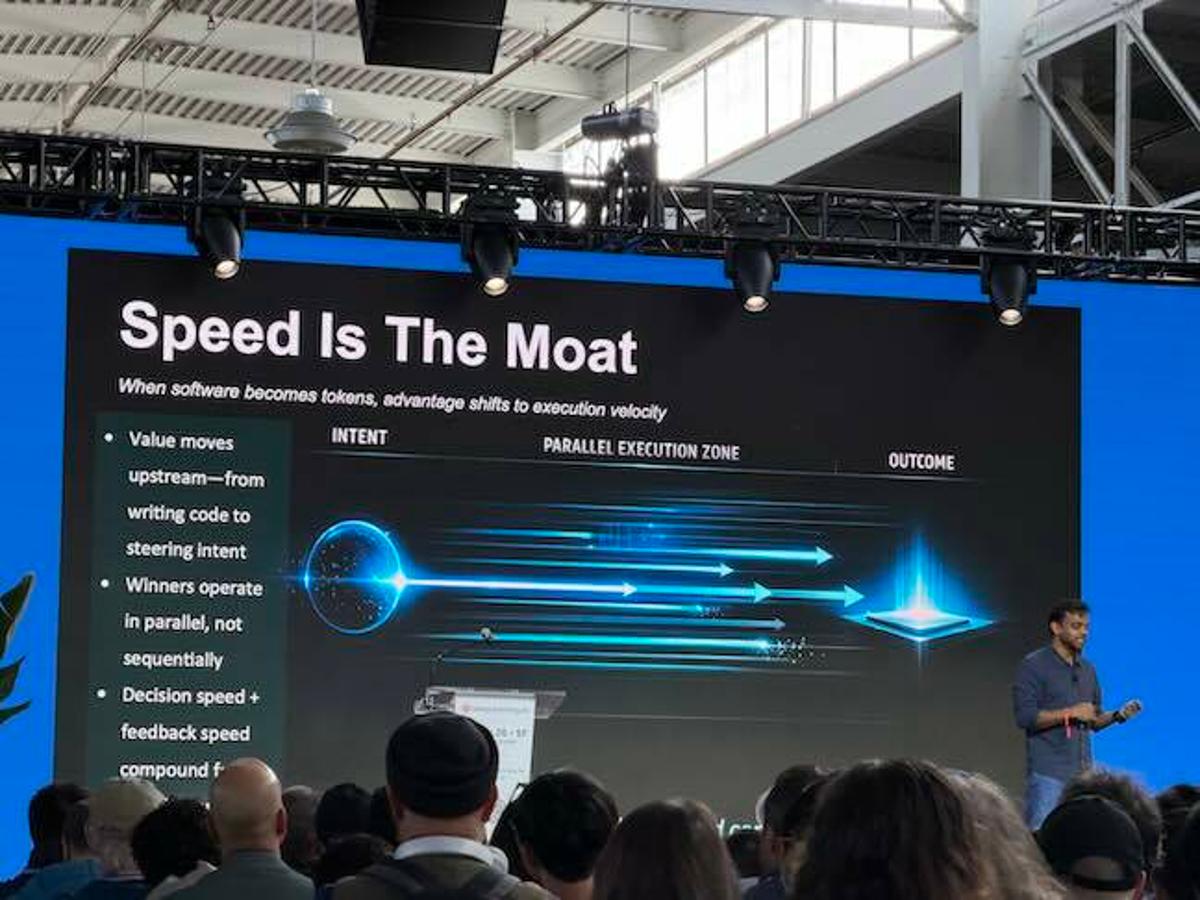
The AI Dev 26x SF conference underscored a pivotal shift: code writing is no longer the primary bottleneck; imagination and model guidance are. Attendees heard from industry leaders about how generative models are moving from assistive roles to full‑stack code creation. This transition is reshaping development pipelines, prompting firms to invest in prompt engineering, specification‑driven workflows, and robust validation frameworks to keep pace with rapid iteration.
AMD’s announcements highlighted low‑level innovations such as HotSwap, which dynamically retargets GPU kernels, and a native HIP backend for the popular llama.cpp model. These advances illustrate how hardware vendors are embedding AI capabilities directly into their stacks, offering developers tighter performance margins. Meanwhile, AWS showcased a suite of tools—Hydro, Cedar, and Strata—designed to reduce defect rates by enforcing formal specifications and automated reasoning. By coupling AI agents with rigorous correctness checks, cloud providers aim to mitigate the risk of error‑prone code while preserving the speed gains of automation.
The broader industry implication is a redefinition of the software engineer’s role. As Andrew Ng and panelists suggested, future teams may consist of a handful of generalists overseeing AI agents that handle design, coding, testing, and even product positioning. This agent‑orchestrated model could compress development cycles, lower labor costs, and democratize access to sophisticated software. However, it also raises questions about skill relevance, governance, and the need for new metrics focused on AI‑generated output quality. Organizations that balance innovative AI tooling with strong oversight are likely to lead the next wave of software creation.
The future of software development: Now with less software development
Comments
Want to join the conversation?
Loading comments...