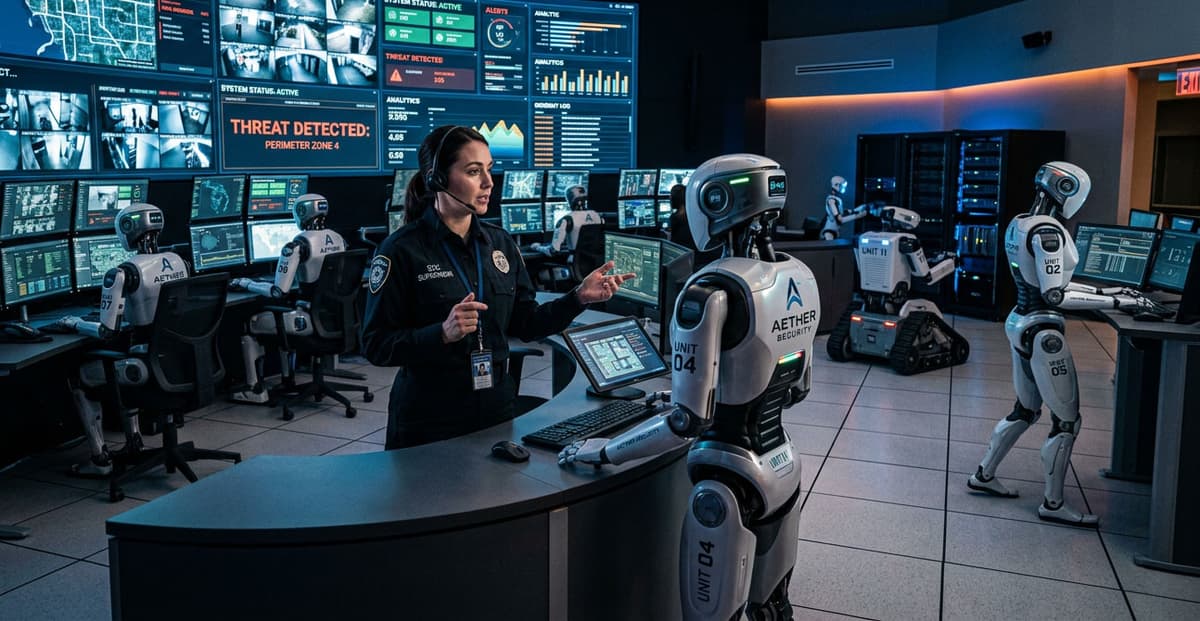
The Human Factor: Why AI-Powered SOCs Still Need People in Charge
Companies Mentioned
Why It Matters
Human oversight guarantees that AI‑driven recommendations align with business priorities and regulatory responsibilities, making AI‑augmented SOCs viable for enterprises seeking both speed and control.
Key Takeaways
- •Sophos MDR's Triage Agent cuts alert noise by over 60%.
- •Human analysts validate AI recommendations, preventing disruptive containment actions.
- •Case Investigation Agent halves mean time to investigate, thanks to human feedback.
- •Embedded AI, transparency, and human‑in‑the‑loop ensure accountability.
Pulse Analysis
The rise of AI‑powered security operations centers reflects a broader industry shift toward automation at scale. By ingesting terabytes of telemetry, AI agents can prioritize threats, de‑duplicate alerts, and generate investigative timelines far faster than a human‑only team. Sophos’ MDR offering illustrates this trend: its Triage Agent reduces noise by more than 60%, while the Case Investigation Agent slashes mean time to investigate by up to half. These efficiencies free analysts to focus on nuanced incidents that demand contextual judgment, a capability machines still lack.
Yet the most critical advantage of a human‑in‑the‑loop architecture lies in aligning security actions with business objectives. Deciding whether to isolate a server, suspend a user account, or escalate an alert involves understanding operational dependencies, customer service commitments, and regulatory constraints. Human analysts bring that strategic perspective, ensuring AI‑generated recommendations do not inadvertently disrupt critical services. Sophos codifies this approach with three principles—embedded AI, transparency, and human‑in‑the‑loop—providing auditable decision trails that satisfy compliance requirements and preserve accountability.
Looking ahead, the feedback loop between analysts and AI models will drive continual improvement. As seasoned responders confirm findings and correct false positives, the underlying algorithms learn to recognize subtle threat patterns, reducing future error rates. This symbiotic relationship positions AI as a force multiplier rather than a replacement, encouraging broader adoption of agentic SOCs across enterprises. Companies that blend machine speed with human expertise are likely to achieve faster breach detection, lower operational costs, and stronger governance—a competitive edge in an increasingly hostile cyber landscape.
The human factor: Why AI-powered SOCs still need people in charge
Comments
Want to join the conversation?
Loading comments...