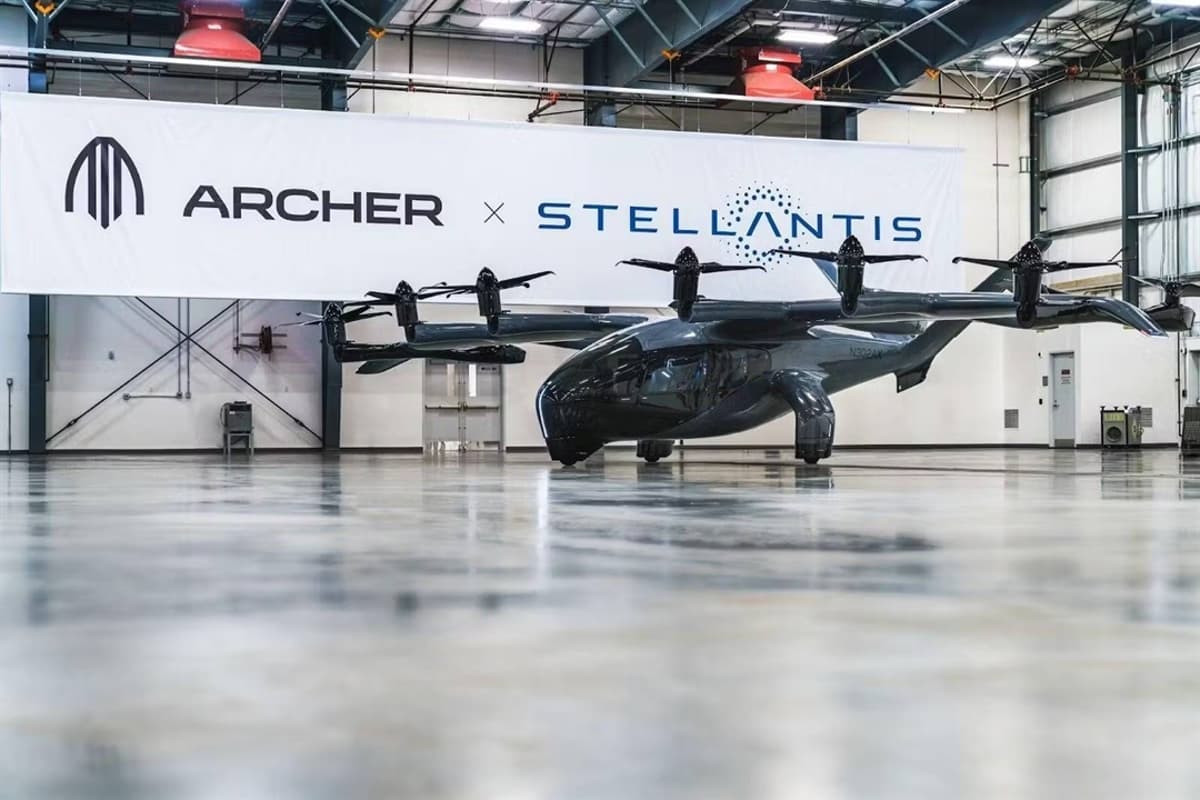
The Physics-Constrained AI Breakthrough in Aerospace and eVTOL
Companies Mentioned
Why It Matters
The breakthrough slashes development cycles and material costs while boosting safety, making urban air mobility commercially viable faster than traditional methods.
Key Takeaways
- •Physics-constrained AI embeds thermodynamics, fluid dynamics into neural networks.
- •Reduces CFD/FEA simulation time from days to minutes.
- •Enables real-time digital twins for predictive health monitoring.
- •Generates lattice structures cutting eVTOL component weight 30‑50%.
- •AI-driven additive manufacturing pre‑compensates warp, reducing scrap rates.
Pulse Analysis
Physics‑informed neural networks are redefining aerospace engineering by marrying data‑driven learning with immutable physical laws. Traditional CFD and finite‑element pipelines, while accurate, demand supercomputing resources and create bottlenecks that stall innovation. By constraining model training with partial‑differential‑equation residuals, Physical AI delivers rapid, physics‑consistent predictions, allowing designers to explore far more configurations within a single day. This paradigm shift not only trims computational expense but also raises confidence in AI‑generated concepts, a critical factor for certification‑heavy aviation markets.
In the eVTOL arena, the impact is especially pronounced. Urban air mobility requires aircraft that transition seamlessly from hover to forward flight while coping with turbulent urban windfields. Real‑time digital twins powered by physics‑constrained AI ingest live sensor streams and instantly estimate aerodynamic loads and structural fatigue, enabling predictive maintenance that extends fleet availability without over‑engineering. Simultaneously, AI‑guided topology optimization produces organic lattice geometries that serve dual roles as load‑bearing structures and heat exchangers, delivering weight reductions of up to half compared with conventional machined parts.
The final piece of the puzzle lies in additive manufacturing. Complex lattice designs are impractical for CNC machining but thrive in metal laser‑powder bed fusion. Physics‑constrained AI models the thermal gradients and solidification physics of the build, pre‑distorting CAD models to counteract expected warpage and flagging defects such as porosity in‑situ. The result is a tighter design‑to‑production loop, lower scrap rates, and a scalable pathway for high‑volume eVTOL production. As aerospace firms like Joby, Archer and Wisk integrate these tools, the industry moves toward faster, cheaper, and safer urban flight solutions.
The physics-constrained AI breakthrough in aerospace and eVTOL
Comments
Want to join the conversation?
Loading comments...