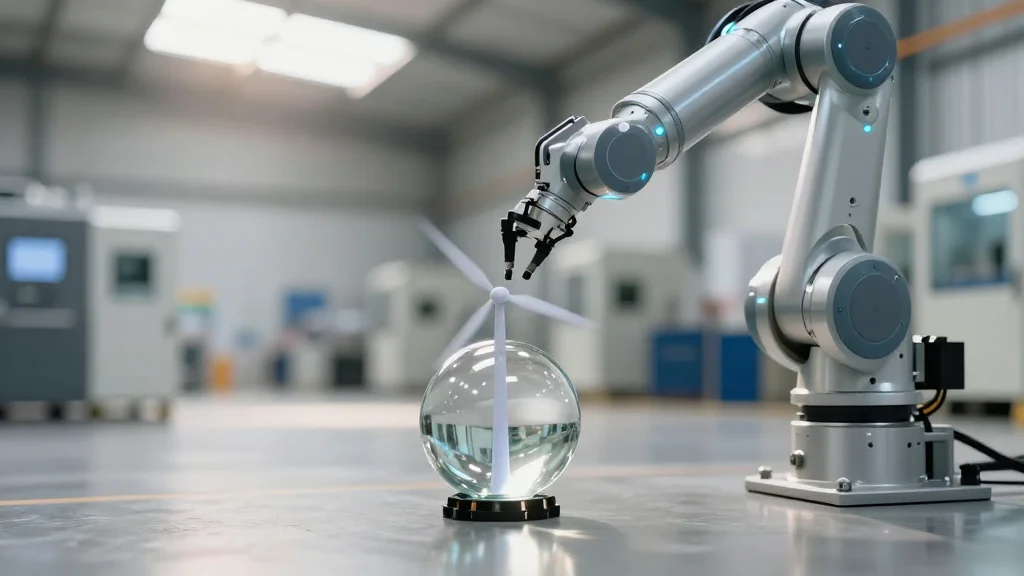
The Price of Progress: How Manufacturers Are Weighing AI’s Energy Demands
Why It Matters
Treating energy as a core input, rather than an afterthought, determines whether AI‑driven automation delivers net productivity and cost benefits, especially as manufacturers compete for limited power resources.
Key Takeaways
- •81% of manufacturers plan to boost AI spending in three years
- •Energy use may rise non‑linearly as robotics scale production
- •Early adopters treat power infrastructure as a core investment
- •Renewables could offset AI‑driven load and improve cost stability
Pulse Analysis
The manufacturing sector is at a crossroads where AI‑enabled automation promises dramatic productivity lifts, yet the hidden variable of electricity consumption is gaining prominence. A PwC survey shows that 81% of executives will increase AI budgets, driven by the belief that intelligent systems will secure America’s industrial edge. However, the traditional linear link between output and energy is eroding; sophisticated agents can boost throughput while only marginally increasing power draw, reshaping cost structures and opening a pathway to greener operations.
Scaling these technologies introduces a new set of challenges. As robots move from pilot lines to full‑scale production, their cumulative power draw can outpace early‑stage estimates, pressuring plant grids already strained by data centers and other high‑intensity loads. Companies that fail to synchronize energy infrastructure upgrades with AI rollouts risk delays, higher operating expenses, and even site siting constraints. Renewable investments—solar, wind, on‑site storage—are gaining traction, with 46% of firms pursuing self‑generated power to mitigate grid volatility and align with ESG goals. Integrating these sources into a flexible, AI‑aware energy management system can smooth demand spikes and lower long‑term costs.
Strategically, manufacturers that embed energy planning into AI project economics will secure a competitive moat. By treating power as a primary capital input, they can model load profiles, negotiate better utility rates, and leverage renewables to offset the incremental consumption of autonomous agents. This holistic approach not only safeguards margins but also reinforces sustainability narratives, positioning firms to attract capital and talent in an increasingly climate‑conscious market. The firms that master this dual focus on intelligence and energy will define the next wave of industrial productivity.
The price of progress: How manufacturers are weighing AI’s energy demands
Comments
Want to join the conversation?
Loading comments...