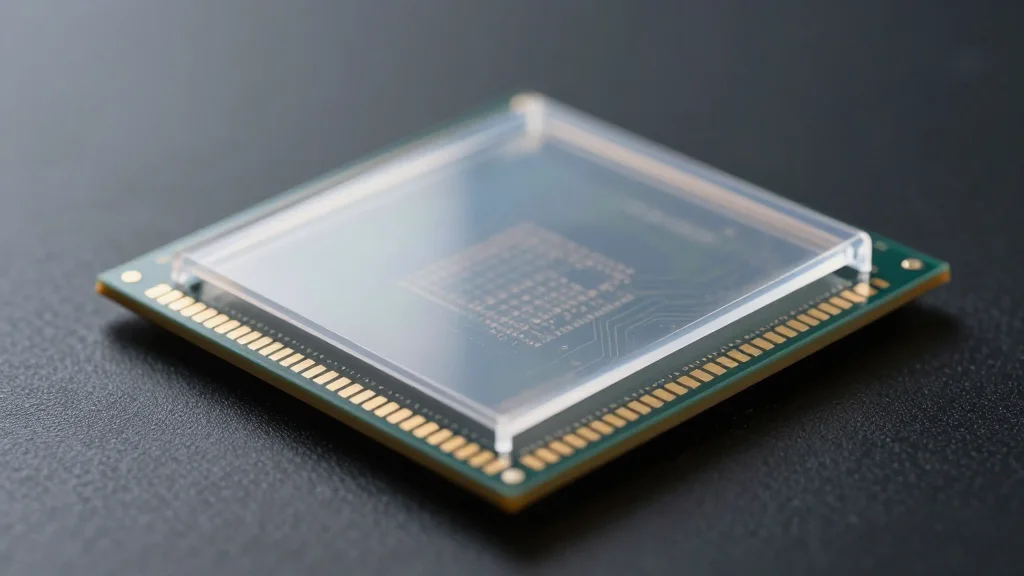
The Strange Japanese Companies Minting Money From AI
Companies Mentioned
Why It Matters
The move illustrates how traditional chemical firms can capture high‑margin AI hardware revenue, while highlighting material bottlenecks that could affect global chip production.
Key Takeaways
- •Ajinomoto controls >95% of AI insulation film market
- •Build‑up Film derived from MSG by‑products
- •AI chip demand drives film scarcity and price surge
- •Ajinomoto shares up 65% YTD, outpacing Nikkei
- •Material shortage could affect global AI hardware rollout
Pulse Analysis
The rapid expansion of artificial‑intelligence hardware has exposed a hidden layer of the supply chain: the specialized materials that keep high‑frequency processors cool and electrically isolated. Among these, build‑up films act as ultra‑thin dielectric barriers, preventing signal interference and thermal runaway. While silicon and packaging dominate headlines, the performance of AI chips increasingly hinges on such niche polymers. Global chip makers are scrambling for reliable sources, and any bottleneck in film production can ripple through data‑center deployments, autonomous‑vehicle platforms, and edge‑computing devices.
Ajinomoto, a century‑old Japanese firm best known for monosodium glutamate, has turned a by‑product of its core business into a strategic asset. The company’s Ajinomoto Build‑up Film (ABF) is synthesized from residues generated during MSG fermentation, giving it a low‑cost, high‑volume feedstock. With more than 95% market share in AI‑grade insulation films, Ajinomoto enjoys economies of scale that few competitors can match. This vertical integration has allowed the firm to capture premium pricing as demand for AI chips spikes, propelling its stock 65% higher since January, far outpacing the Nikkei index.
The financial market is taking note of this unconventional growth driver. Investors see Ajinomoto’s material dominance as a hedge against the volatility of traditional food‑sector earnings, while also providing exposure to the booming AI ecosystem. However, the concentration of supply in a single supplier raises concerns about resilience; any disruption in MSG production could reverberate through the AI hardware pipeline. Analysts therefore watch both Ajinomoto’s capacity expansions and potential entry of rival chemical firms, anticipating that competition could moderate pricing and diversify the AI materials landscape.
The strange Japanese companies minting money from AI
Comments
Want to join the conversation?
Loading comments...