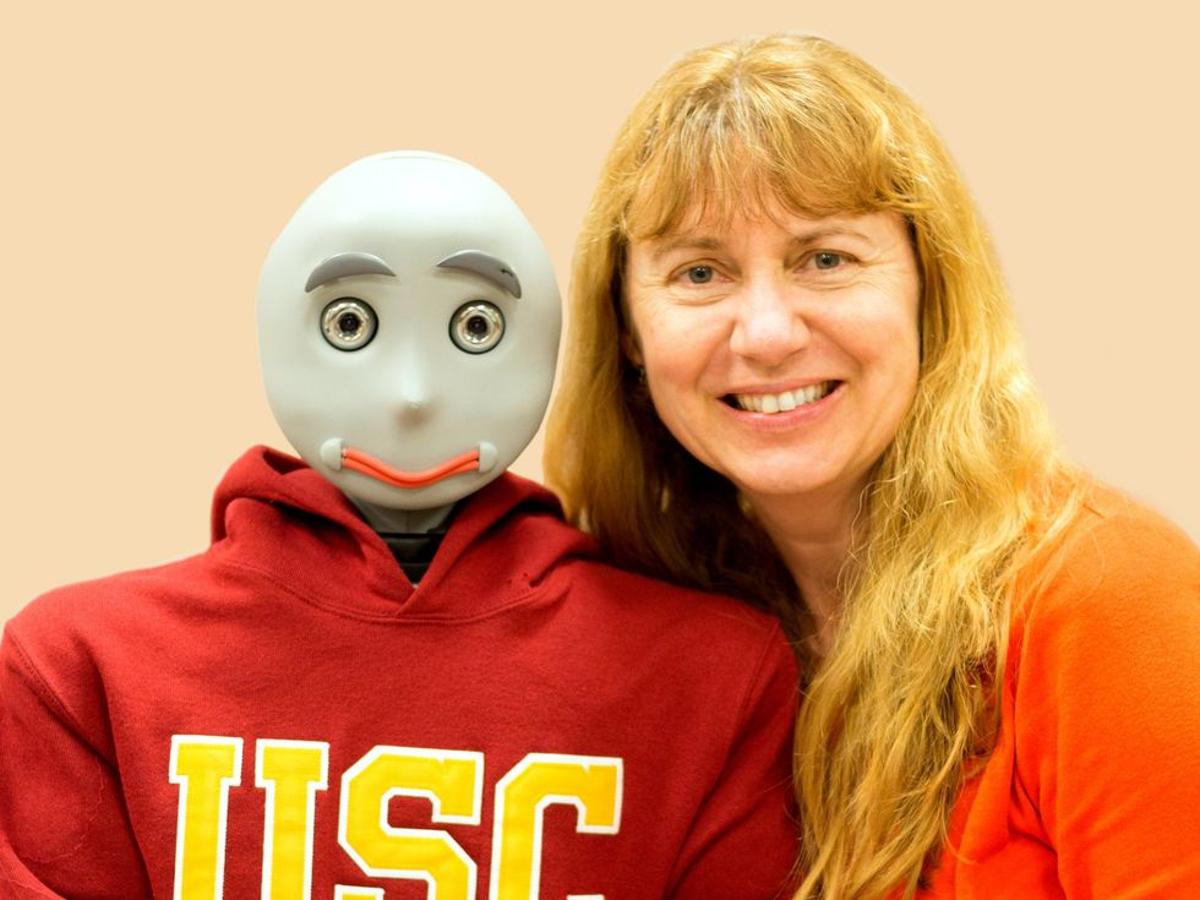
The USC Professor Who Pioneered Socially Assistive Robotics
Companies Mentioned
Why It Matters
Her pioneering robots demonstrate that socially assistive technology can deliver scalable mental‑health interventions, reshaping both clinical practice and the robotics market.
Key Takeaways
- •Defined socially assistive robotics in 2005, shaping a new discipline
- •Developed robots (Bandit, Kiwi, Blossom) that aid autism and mental health
- •2025 MassRobotics Medal recognized her impact on female robotics research
- •NIMH grant funds 6‑week CBT trial with 120 students using Blossom
- •Study shows robot outperforms chatbot in reducing student distress
Pulse Analysis
The emergence of socially assistive robotics marks a shift from purely functional machines to companions that can influence human behavior and wellbeing. Maja Matarić’s early work, including the behavior‑based robot Toto and the seminal 2005 paper that coined the field, laid the technical foundation for robots that engage users through speech, facial expression and adaptive feedback. By integrating neuroscience insights with AI, her Interaction Lab created platforms like Bandit and Blossom that can personalize therapy, a capability that traditional industrial robots lack.
Matarić’s recent studies highlight the competitive edge of embodied agents over text‑only chatbots in mental‑health applications. In a controlled dorm‑room trial, students who practiced cognitive‑behavioral therapy with Blossom showed a measurable decline in psychiatric distress, whereas peers using an identical large‑language model chatbot did not. This suggests that physical presence, multimodal cues, and embodied empathy amplify the therapeutic impact of AI, a finding that could steer venture capital toward robot‑based health solutions and encourage insurers to consider coverage for such interventions.
The broader industry implications are significant. With a $120‑student NIMH‑funded trial underway, Matarić’s work provides a scalable research model for evaluating robot‑delivered care, potentially accelerating regulatory pathways and commercial adoption. As healthcare providers grapple with therapist shortages and rising mental‑health demand, socially assistive robots offer a cost‑effective, data‑rich alternative that can be deployed in campuses, senior living facilities, and telehealth ecosystems. Matarić’s blend of academic leadership, interdisciplinary collaboration, and real‑world validation positions her at the nexus of robotics innovation and public health, signaling a new era where machines are not just tools but therapeutic partners.
The USC Professor Who Pioneered Socially Assistive Robotics
Comments
Want to join the conversation?
Loading comments...