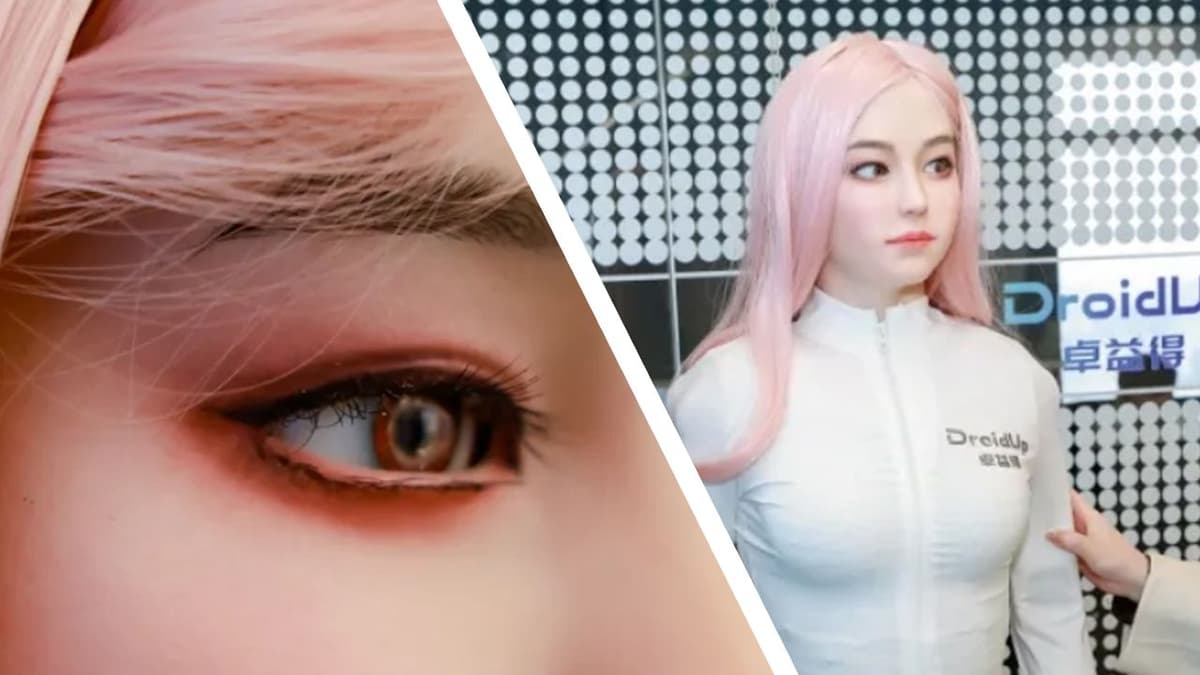
The World's First 'Biomimetic AI Robot' Just Strolled in From the Uncanny Valley —and Yes, It's Super-Creepy
•February 5, 2026
0
Companies Mentioned


Why It Matters
Moya pushes the boundary of human‑like robotics, signaling a shift toward premium, service‑oriented bots that could reshape public‑interaction spaces despite a steep price tag.
Key Takeaways
- •Moya priced at ¥1.2 million, launching late 2026.
- •Warm skin mimics human temperature, 32‑36 °C.
- •Walking accuracy claimed at 92 % with Walker 3 skeleton.
- •AI enables micro‑expressions via camera‑based vision.
- •Targeted for healthcare, education, public‑service deployments.
Pulse Analysis
The debut of Moya marks a notable milestone in the race for truly biomimetic robots. By integrating temperature‑controlled polymer skin, a high‑precision locomotion system, and AI‑driven facial micro‑expressions, Droidup aims to blur the line between machine and living companion. While the technology showcases impressive engineering—such as a 92 % walking accuracy metric—it also raises questions about the definition of realism in robotics and the psychological impact of interacting with entities that feel almost human.
From a market perspective, Moya’s ¥1.2 million price point places it firmly in the enterprise tier, targeting institutions rather than household consumers. Potential deployments span hospitals, where a warm‑touch robot could comfort patients, to airports and museums that need multilingual, interactive guides. The emphasis on public‑service scenarios reflects a pragmatic strategy: leveraging high‑value contracts to recoup R&D costs while gradually building trust in humanoid assistants before broader consumer adoption becomes viable.
Moya also sits within a broader competitive landscape that includes Xpeng’s Iron and 1X’s Neo, each offering different trade‑offs between cost, functionality and realism. As manufacturers chase ever‑more lifelike appearances, ethical considerations—privacy, data security, and the uncanny valley effect—grow louder. Nonetheless, the push toward embodied intelligence suggests that the next wave of AI will be less about disembodied chatbots and more about physically present agents that can navigate, sense, and emotionally engage with humans in shared spaces.
The world's first 'biomimetic AI robot' just strolled in from the uncanny valley —and yes, it's super-creepy
0
Comments
Want to join the conversation?
Loading comments...