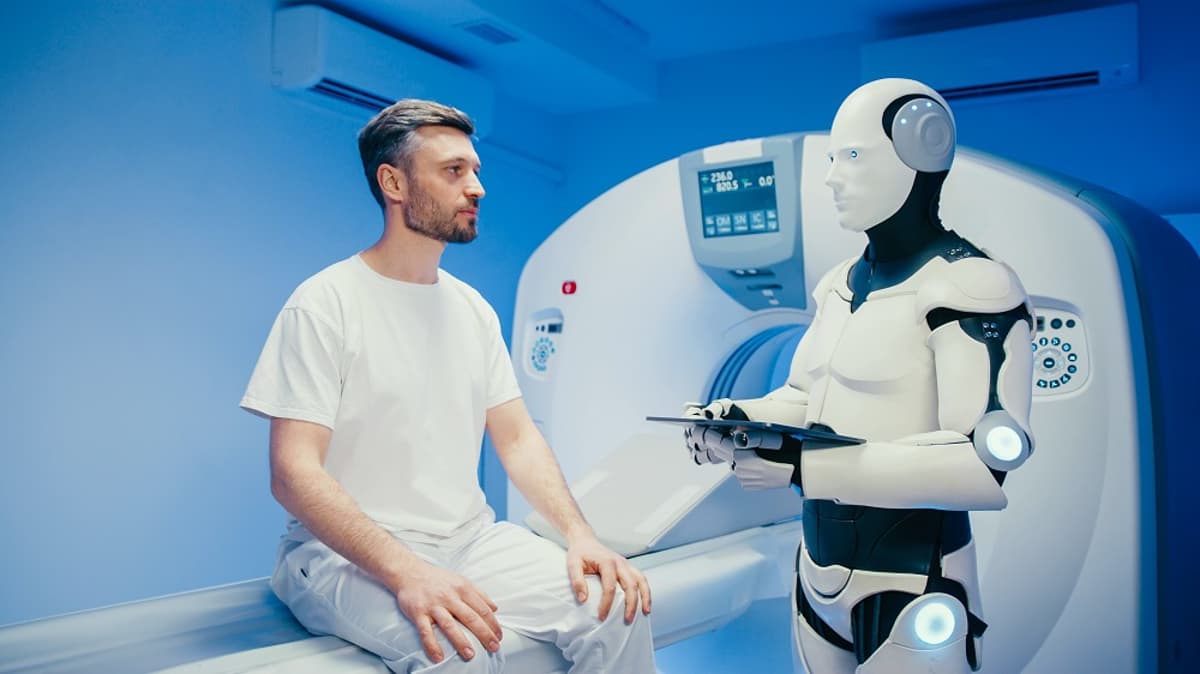
“Thinking” AI Outperforms Human Doctors on Real-Life Data
Companies Mentioned

Why It Matters
The findings suggest that advanced reasoning LLMs can surpass human diagnostic accuracy in complex, unstructured settings, potentially reshaping clinical decision support. However, safe integration requires rigorous validation to ensure patient outcomes improve.
Key Takeaways
- •o1-preview achieved 78.3% correct diagnosis inclusion, 52% top‑1 accuracy
- •Model outperformed physicians on 101‑case subset in top‑1 and top‑10 metrics
- •In real ER data, o1 beat attendings most at triage
- •Physicians identified AI output correctly only 15% of time
- •Study highlights need for prospective trials before clinical deployment
Pulse Analysis
The rise of large language models (LLMs) has transformed many knowledge‑intensive fields, and medicine is no exception. Early attempts at computer‑assisted diagnosis struggled with narrow rule‑based systems, but the advent of generative AI introduced models that can parse narrative text and generate differential diagnoses. The newest generation, exemplified by OpenAI’s o1‑preview, incorporates chain‑of‑thought reasoning, allowing it to articulate step‑by‑step clinical logic rather than merely regurgitating memorized facts. This shift from pattern matching to transparent reasoning is crucial for clinicians who need to trust and verify AI recommendations.
In the *Science* study, o1‑preview was evaluated on six physician‑style tasks, including NEJM clinicopathological conferences, virtual‑patient simulations, and raw electronic health record excerpts from an emergency department. Across 143 published cases, the model placed the correct diagnosis within its differential 78.3% of the time and as the top choice in over half the cases, eclipsing GPT‑4 and human peers. When tested on 76 real ER encounters with unprocessed notes, o1‑preview consistently outperformed attending physicians, especially during triage when information is limited. Reviewers could not reliably tell whether a differential came from a human or the AI, underscoring the model’s human‑like narrative style.
These results signal a potential paradigm shift for clinical decision support, but they also raise practical and ethical questions. Deploying such models without prospective, outcome‑focused trials could introduce new risks, from over‑reliance on algorithmic suggestions to hidden biases in training data. Healthcare systems must develop robust governance frameworks, integrate AI as an assistive tool rather than a replacement, and ensure transparency in how recommendations are generated. As newer reasoning models emerge, the industry will need to balance rapid innovation with patient safety, regulatory compliance, and equitable access to AI‑enhanced care.
“Thinking” AI Outperforms Human Doctors on Real-Life Data
Comments
Want to join the conversation?
Loading comments...