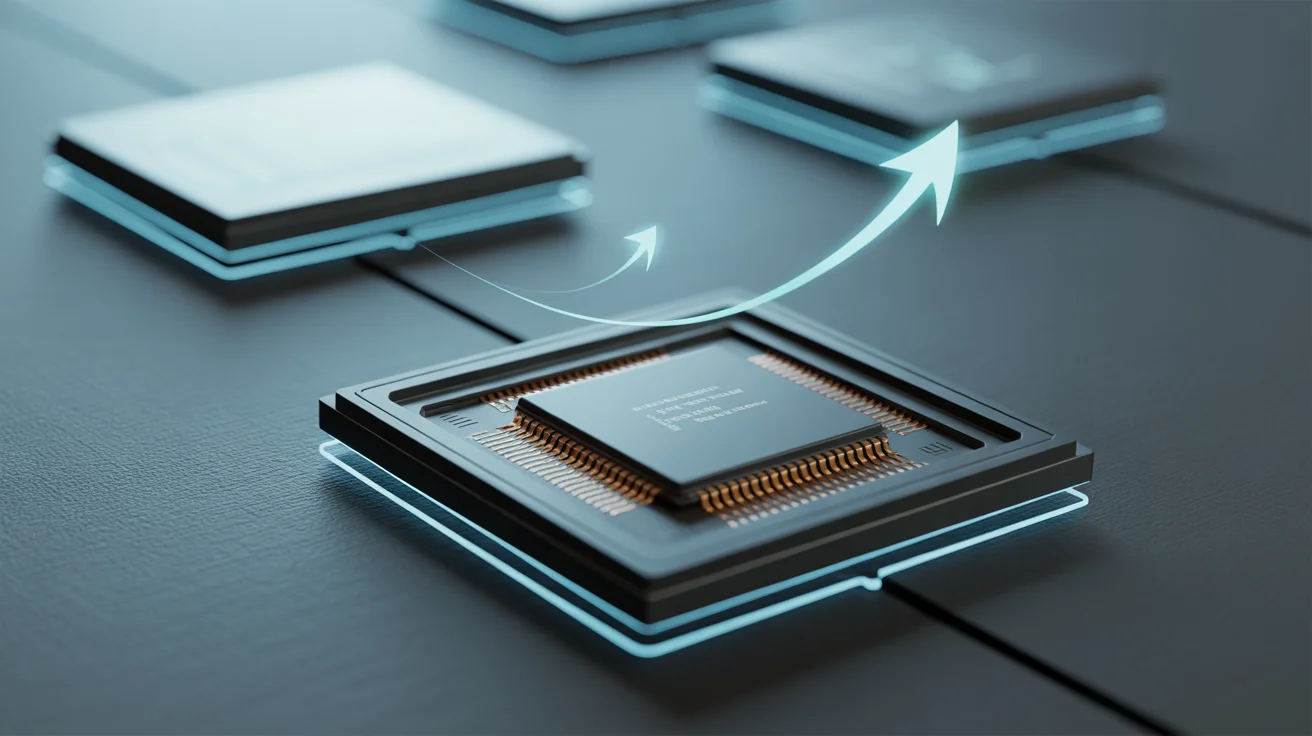
This Chinese Chip Giant Is Boosting Production to Try and Take on Nvidia - but How Will Huawei Feel?

Companies Mentioned

Semiconductor Manufacturing International Corp.
NVIDIA
NVDA
Taiwan Semiconductor Manufacturing Company
TSM
Why It Matters
Cambricon’s aggressive scaling aims to fill the void left by Nvidia’s retreat, reshaping China’s AI‑chip supply chain and affecting rivals like Huawei. Low yields and component bottlenecks, however, threaten to blunt its market impact.
Key Takeaways
- •Cambricon targets 500k AI chips in 2026
- •Yield rate currently only 20%
- •Memory shortages risk delivery delays
- •SMIC lagging behind TSMC's 2nm yields
- •Huawei may lose AI chip supplier
Pulse Analysis
China’s AI‑chip landscape is undergoing rapid realignment as Nvidia scales back its presence in the market. Domestic players such as Cambricon see an opening to capture demand from data‑center operators and AI‑driven enterprises. By committing to 500,000 units next year, Cambricon hopes to position itself as the primary home‑grown alternative, leveraging its Siyuan 590 and 690 accelerators to meet the performance expectations of Chinese customers while reducing reliance on foreign technology.
The ambition, however, collides with stark manufacturing realities. Cambricon’s current 20% yield on SMIC‑fabricated chips underscores a significant efficiency gap compared with TSMC’s 60% yield on 2 nm processes. Limited access to cutting‑edge lithography, coupled with acute shortages of high‑bandwidth memory (HBM) and LPDDR components, threatens to curtail the company’s ability to meet its production targets on schedule. These constraints not only inflate unit costs but also jeopardize the timely rollout of AI workloads for data‑center clients.
For Huawei and other Chinese tech giants, Cambricon’s trajectory carries strategic weight. If Cambricon can overcome its fab challenges, it could become a reliable supplier of AI accelerators, mitigating the impact of export controls on foreign chip imports. Conversely, persistent yield and supply issues may force Huawei to seek alternative partners or accelerate its own in‑house chip programs. The broader market will watch closely as these dynamics shape the competitive balance between domestic innovators and the lingering influence of global semiconductor leaders.
This Chinese chip giant is boosting production to try and take on Nvidia - but how will Huawei feel?
Comments
Want to join the conversation?
Loading comments...