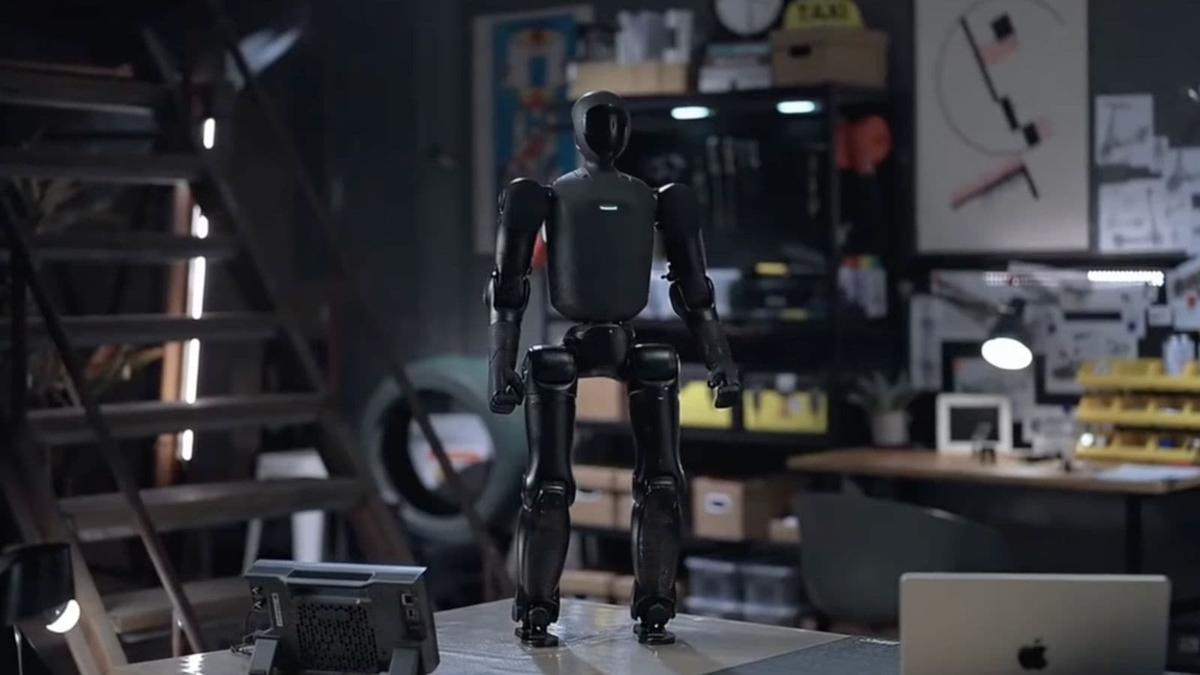
This Tiny Humanoid Robot Is Designed to Go Wherever You Go
•January 7, 2026
0


Why It Matters
Q1 lowers cost and technical barriers, democratizing embodied AI research for startups and academia. Its backpack‑size form factor expands real‑world use cases for personal companion robots.
Key Takeaways
- •Q1 fits in backpack, 80 cm tall.
- •Quasi‑Direct Drive joints provide precise force control.
- •Open platform includes developer kits, 3D‑printable shells.
- •Zero‑code motion programming enables non‑engineers to program.
- •Reduces embodied AI prototyping cycles from weeks to days.
Pulse Analysis
The debut of Agibot’s Q1 at CES 2026 reflects a broader shift toward compact, consumer‑grade humanoid robots. While traditional platforms remain lab‑bound and costly, miniaturized units like Q1 promise to bring embodied AI out of specialized facilities and into everyday environments. This trend aligns with China’s aggressive push to dominate the global robotics market, where portability and affordability are becoming key differentiators for both developers and end users.
Q1’s technical architecture combines quasi‑direct drive actuation with full‑body force control, delivering smooth, precise movements previously reserved for larger systems. By offering an open platform—complete with developer kits, 3D‑printable exteriors, and a zero‑code motion interface—the robot dramatically shortens the iteration cycle for AI algorithms. Researchers can now validate perception and control models on a physical agent within days, accelerating the transition from simulation to real‑world deployment and reducing R&D expenditures.
Beyond research labs, Q1’s capabilities such as voice interaction, indoor positioning, and guided dance lessons hint at a new class of personal companion devices. Its backpack‑sized form factor enables on‑site demonstrations, educational programs, and niche commercial applications like retail greeters or home tutoring. As Agibot celebrates its 5,000th unit, the company’s rapid scaling signals heightened competition among Chinese and global players to capture the emerging market for accessible humanoid robotics, potentially reshaping how AI interacts with daily life.
This tiny humanoid robot is designed to go wherever you go
0
Comments
Want to join the conversation?
Loading comments...