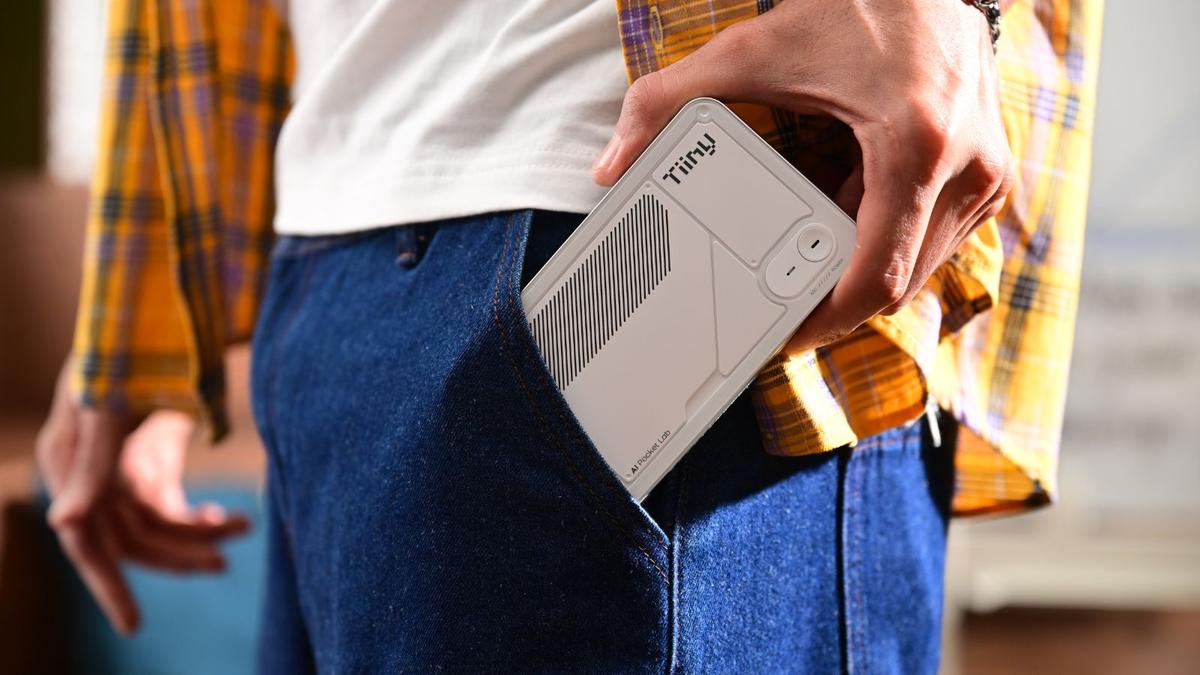
This US Startup Claims to Fit a 120-Billion-Parameter AI Model Into Your Pocket
•January 6, 2026
0


Why It Matters
By bringing massive LLM capabilities to the edge, Tiiny AI reduces latency, cuts operational costs, and addresses privacy and sustainability concerns that dominate cloud‑centric AI deployments.
Key Takeaways
- •120B‑parameter LLM runs on 300‑gram pocket device
- •Runs offline, eliminating cloud latency and privacy risks
- •Consumes 65 W, far less than GPU‑based servers
- •TurboSparse and PowerInfer enable efficient sparse inference
- •One‑click install of major open‑source models at CES 2026
Pulse Analysis
Edge AI is entering a new era as devices like Tiiny AI Pocket Lab demonstrate that massive language models no longer require data‑center scale hardware. The convergence of advanced sparsity algorithms and heterogeneous compute—TurboSparse’s neuron‑level pruning paired with PowerInfer’s dynamic CPU‑NPU scheduling—compresses the computational footprint of a 120‑billion‑parameter model into a handheld form factor. This breakthrough challenges the prevailing belief that scaling AI inevitably drives up energy consumption, offering a viable path toward sustainable, on‑device intelligence for enterprises and developers alike.
For businesses, the implications are profound. Offline inference eliminates the latency penalties of round‑trip cloud calls, enabling real‑time decision‑making in remote or bandwidth‑constrained environments such as field operations, manufacturing floors, and emerging markets. Moreover, keeping data on the device mitigates regulatory and privacy risks, a critical advantage in sectors like healthcare, finance, and defense where data sovereignty is paramount. The Pocket Lab’s modest 65‑watt power envelope also translates to lower total‑cost‑of‑ownership, making high‑performance AI accessible to startups and individual creators who previously faced prohibitive GPU costs.
Looking ahead, the democratization of large‑scale AI at the edge could reshape the competitive landscape. As more developers adopt one‑click model installations, a vibrant ecosystem of specialized AI agents may emerge, tailored to niche applications without reliance on cloud APIs. This shift may accelerate innovation cycles, drive new business models around device‑as‑a‑service, and spur standards for secure, portable AI workloads. Tiiny AI’s record‑setting device signals that the future of artificial intelligence may be as portable as a smartphone, redefining how and where intelligent services are delivered.
This US startup claims to fit a 120-billion-parameter AI model into your pocket
0
Comments
Want to join the conversation?
Loading comments...