Why It Matters
AI adoption can dramatically reduce manual labor, accelerate client service, and improve bottom‑line profitability for accounting firms facing staffing constraints.
Key Takeaways
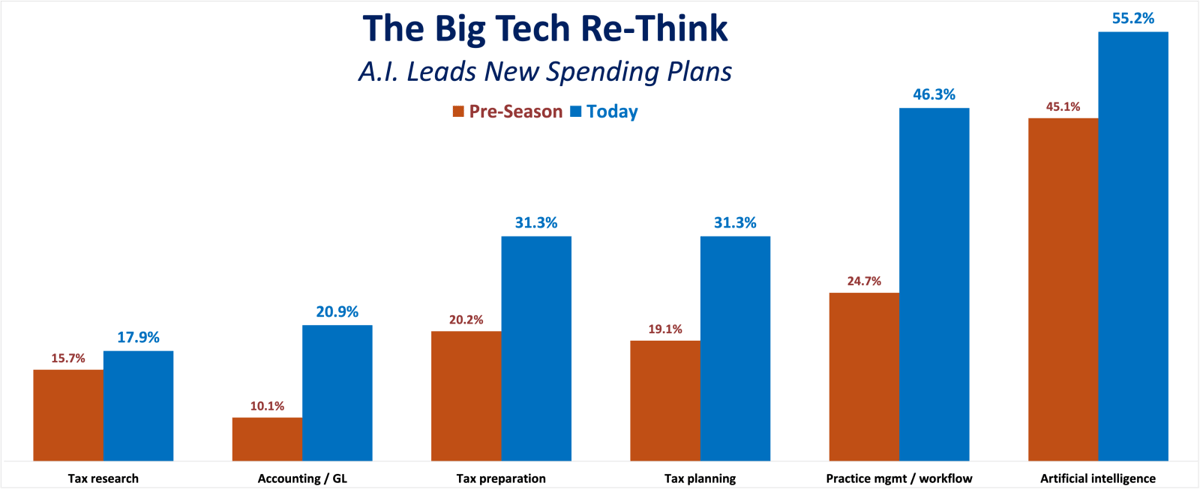
- •55% of firms seek AI solutions, up 10 points post‑season
- •Practice‑management workflow tools demand has nearly doubled
- •Firms prioritize efficiency, manual‑task reduction, and technology utilization
- •Adoption gap: desire for change outpaces implementation speed
- •AI-driven workflows expected to improve profit margins
Pulse Analysis
The CPA Trendlines Busy Season Barometer released on April 13 shows a decisive pivot toward artificial intelligence among U.S. accounting firms. More than 55 % of respondents now plan to invest in AI‑enabled solutions, a ten‑point jump from pre‑season levels, and demand for practice‑management and workflow platforms has almost doubled. This surge reflects lingering bottlenecks from the recent tax filing rush, where firms grappled with manual data entry, compliance pressures, and staffing shortages. By earmarking AI as a top priority, firms aim to modernize legacy systems that have long limited scalability.
AI‑driven workflow tools promise to slash repetitive tasks, freeing staff for higher‑value advisory work and tightening profit margins. Early pilots report up to a 20 % reduction in time spent on routine reconciliations, translating into lower labor costs and faster client turnaround. However, the research also flags a widening gap between ambition and execution; many firms lack the internal expertise or change‑management frameworks needed to integrate new platforms quickly. Consequently, firms that pair technology purchases with robust training programs are poised to capture the most immediate financial upside.
Looking ahead, the market for accounting AI is expected to attract both established ERP vendors and nimble startups, intensifying competition on price, integration depth, and industry‑specific features. Firms should evaluate solutions on data security, scalability, and the ability to embed AI insights directly into existing practice‑management dashboards. Strategic adoption—starting with pilot projects in tax research or accounts payable—allows firms to measure ROI before broader rollout. As AI matures, firms that embed intelligent automation into their core processes will likely set new benchmarks for efficiency and client service in the profession.
Tipping Point: Accountants Scramble for AI Tech
Comments
Want to join the conversation?
Loading comments...