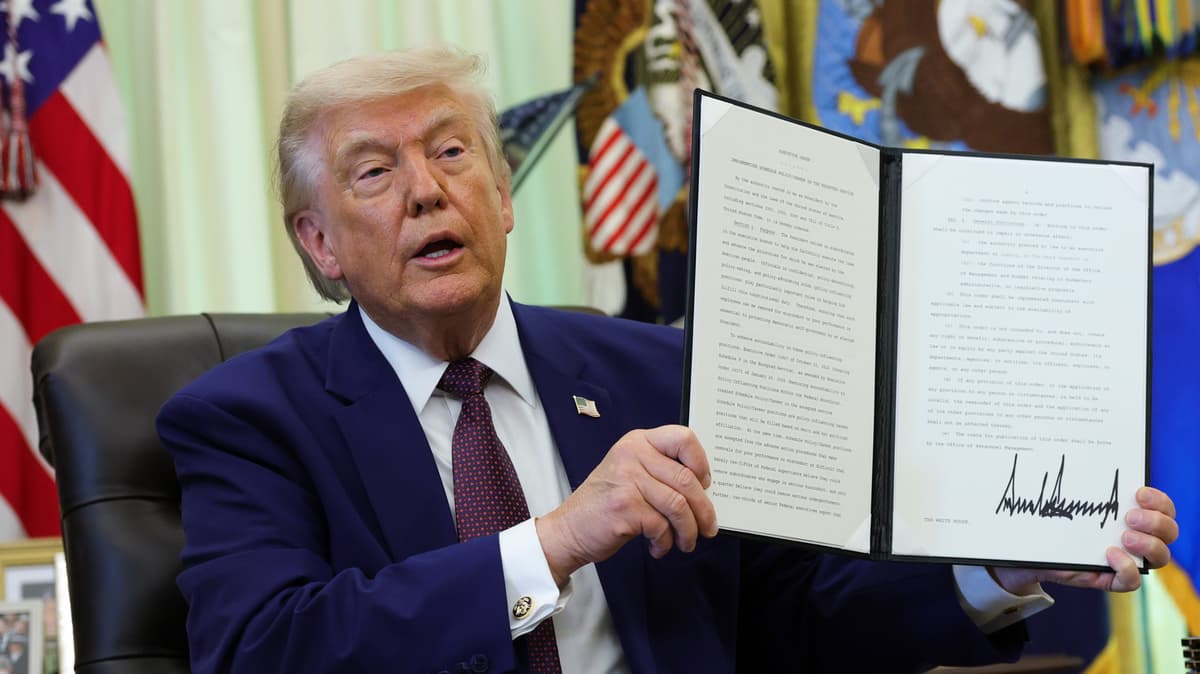
Trump's Latest Memo Puts 'Most Advanced AI in the World' Into the Military's Hands
Why It Matters
Accelerating AI integration gives the military a technological edge while the new safeguards aim to protect operational integrity and civil liberties, reshaping the defense‑tech procurement landscape.
Key Takeaways
- •National Security Presidential Memorandum authorizes rapid AI adoption in defense.
- •DoD to onboard advanced AI models from multiple commercial vendors.
- •New rule bars modifying warfighter AI systems without prior approval.
- •Prohibited AI use includes censorship, ideological bias, and unlawful surveillance.
Pulse Analysis
The United States has long viewed artificial intelligence as a strategic differentiator in national security, but the pace of commercial breakthroughs has outstripped government procurement cycles. President Trump's latest National Security Presidential Memorandum seeks to close that gap by mandating rapid onboarding of the most advanced AI models across defense agencies. By leveraging commercial and open‑source innovations, the memo promises to equip warfighters with tools that rival the best private‑sector offerings, echoing earlier executive orders that aimed to streamline AI oversight while preserving U.S. leadership.
The directive places the Department of Defense under a new mandate to evaluate multiple vendor solutions, from large‑scale foundation models to specialized analytics platforms. It also imposes a safeguard: any entity that alters a warfighter‑dependent AI system must obtain explicit approval, a move intended to prevent supply‑chain tampering and maintain operational integrity. Simultaneously, Secretary of Defense Pete Hegseth must update guidance on autonomous weapons, signaling a tighter coupling between AI capability and rules of engagement. Industry players can expect accelerated contracts but also heightened compliance scrutiny.
Beyond the battlefield, the memo reshapes the broader AI ecosystem by creating a de‑facto government market for frontier models. Companies that secure a foothold in the defense pipeline may gain credibility and funding, accelerating research that could spill over into civilian applications such as disaster response and cybersecurity. However, the prohibition on models that enable censorship or unlawful surveillance underscores a delicate balance between national security and civil liberties. Stakeholders will watch how the 30‑day review window from the earlier executive order influences model releases and competitive dynamics.
Trump's latest memo puts 'most advanced AI in the world' into the military's hands
Comments
Want to join the conversation?
Loading comments...