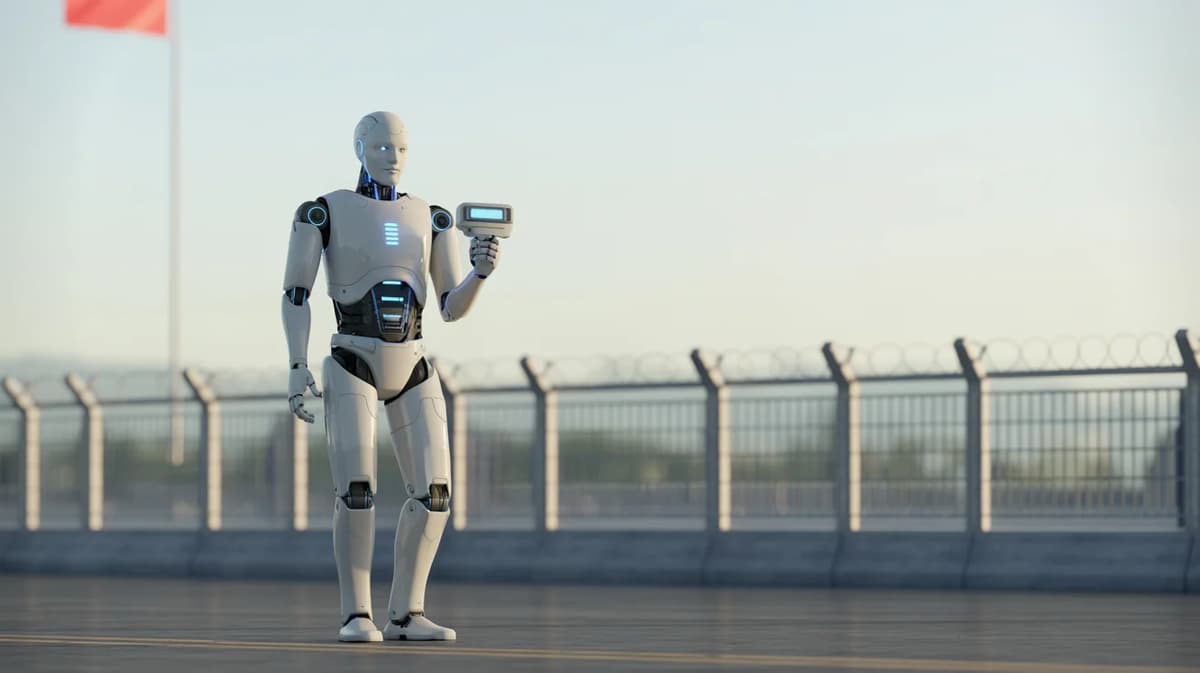
UBTech Strikes Deal with China to Assist at Border Crossings, and This Isn't a Dystopian Nightmare at All
•November 27, 2025
0
Why It Matters
The partnership demonstrates how governments are turning to AI‑powered robotics to automate high‑risk, repetitive border tasks, potentially reshaping security operations and creating a new revenue stream for the robotics industry.
Key Takeaways
- •UBTech secured $37 million border‑security contract in China.
- •Walker S2 robots to patrol China‑Vietnam crossing.
- •Delivery target: 500 units by 2025, 10,000 by 2027.
- •Robots feature rapid battery swap and onboard LLM.
- •Automation may reshape border management and reduce human bias.
Pulse Analysis
UBTech, a Chinese leader in consumer and industrial robotics, has moved beyond showroom demos with a $37 million agreement to place its Walker S2 humanoid units at the China‑Vietnam frontier. The contract, signed with a provincial authority, is one of the first government‑scale deployments of a mass‑produced android for public‑sector duties. As nations grapple with labor shortages and the need for continuous surveillance, the deal signals a shift toward AI‑driven infrastructure that can operate in harsh, high‑traffic environments without fatigue. Analysts view the win as a catalyst for the broader humanoid‑robot market, which is projected to exceed $30 billion by 2030.
The Walker S2 combines a 5‑foot frame, 154‑pound weight, and a dexterous hand set equipped with tactile sensors, allowing it to manipulate luggage and guide travelers. Its ability to swap batteries in under three minutes keeps the unit operational around the clock, while an onboard large‑language model enables natural‑language interaction for instructions and alerts. Compared with human border agents, the robot can maintain consistent performance, reduce exposure to hazardous conditions, and collect data in real time. However, integration challenges such as network reliability, regulatory approval, and public acceptance remain.
UBTech’s rollout plan—500 robots by late 2025 and a ten‑thousand‑unit fleet by 2027—creates a template for other border agencies seeking cost‑effective automation. If the pilot proves reliable, neighboring countries may follow suit, accelerating a global trend toward robotic border enforcement. The move also raises ethical questions about accountability and the potential for bias‑free decision making, a point often debated in AI policy circles. For investors, the contract underscores a growing appetite for AI‑enabled hardware, positioning UBTech as a key player in the next wave of public‑sector automation.
UBTech strikes deal with China to assist at border crossings, and this isn't a dystopian nightmare at all
0
Comments
Want to join the conversation?
Loading comments...