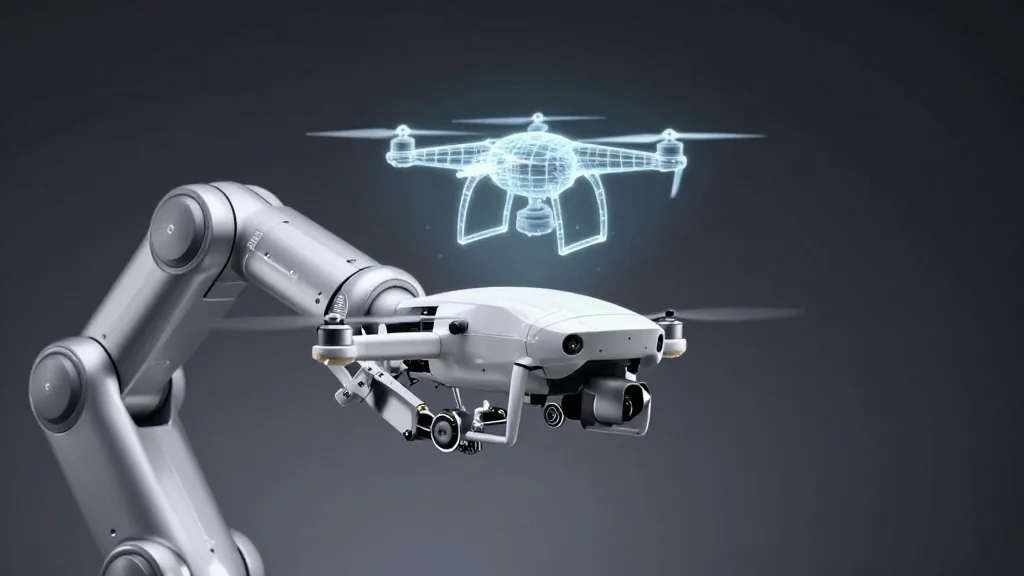
UE5 Is Becoming the Platform of Choice for Robotics Simulation
Why It Matters
By narrowing the sim‑to‑real gap and slashing data‑labeling expenses, UE5 speeds up AI training cycles and reduces deployment risk, reshaping how robotics firms build and validate autonomous systems.
Key Takeaways
- •UE5's Nanite, Lumen, and ray tracing enable real‑time photorealism.
- •Chaos Physics and AGX Dynamics deliver high‑fidelity contact modeling.
- •RealityScan automates digital‑twin creation from photogrammetry and LiDAR.
- •Synthetic data from UE5 cuts labeling costs after tens of thousands images.
- •CARLA, Duality AI, and PteroSim rely on UE5 for robotics simulation.
Pulse Analysis
The robotics community has long grappled with the "sim‑to‑real" gap, where models trained in virtual worlds stumble when faced with real‑world variability. Unreal Engine 5 addresses this challenge by marrying cutting‑edge rendering—Nanite’s virtualized geometry, Lumen’s dynamic global illumination, and RTX‑accelerated ray tracing—with a real‑time pipeline. The result is photorealistic environments that faithfully reproduce lighting, material properties, and sensor noise, allowing perception algorithms to train on data that looks indistinguishable from camera feeds captured on actual hardware.
Beyond visual fidelity, UE5’s Chaos Physics engine and third‑party solvers like AGX Dynamics deliver engineering‑grade dynamics, from precise friction and contact forces to complex multibody systems. Coupled with automatic ground‑truth generation, developers can produce millions of labeled images, depth maps, and LiDAR point clouds without manual annotation, dramatically lowering per‑image costs after just tens of thousands of frames. This synthetic data economy enables rapid iteration, extensive domain randomization, and robust validation of control policies across edge‑case scenarios that would be unsafe or prohibitively expensive to recreate physically.
Integration is another pillar of UE5's appeal. Native ROS/ROS 2 bridges, Docker‑compatible containers, and cloud‑ready headless rendering let teams embed the engine into existing CI/CD pipelines. Major platforms such as CARLA, Duality AI’s Falcon, and PteroSim have built their simulation back‑ends on UE5, leveraging its extensibility for sensor modeling, reinforcement‑learning loops, and digital‑twin deployments in manufacturing and autonomous‑vehicle testing. As the industry pushes toward Industry 4.0 and autonomous systems at scale, UE5’s blend of visual realism, physics accuracy, and ecosystem compatibility positions it as the de‑facto foundation for next‑generation robotics simulation.
UE5 is becoming the platform of choice for robotics simulation
Comments
Want to join the conversation?
Loading comments...