University of Houston Develops AI-Powered Radar System to Inspect Concealed Cold-Formed Steel
Why It Matters
By eliminating destructive inspections, the technology slashes labor costs and downtime while delivering faster safety assessments, a critical advantage for routine maintenance and post‑disaster response.
Key Takeaways
- •AI‑enhanced GPR scans locate hidden steel and flag damage
- •Cold‑formed steel now comprises roughly one‑third of U.S. non‑residential buildings
- •System reduces invasive inspections, saving time, money, and disruption
- •GPR‑CutMix training improves model performance across varied wall assemblies
- •Enables rapid post‑disaster structural assessments for large building portfolios
Pulse Analysis
Cold‑formed steel has become a staple in modern commercial construction because of its light weight, cost efficiency, and lower carbon footprint. Yet its hidden placement behind drywall and cladding has long forced owners to resort to invasive cut‑and‑inspect methods, inflating project budgets and extending downtime. The University of Houston’s breakthrough merges ground‑penetrating radar—traditionally used for underground utilities—with a sophisticated AI model, offering a non‑destructive window into the structural core of buildings.
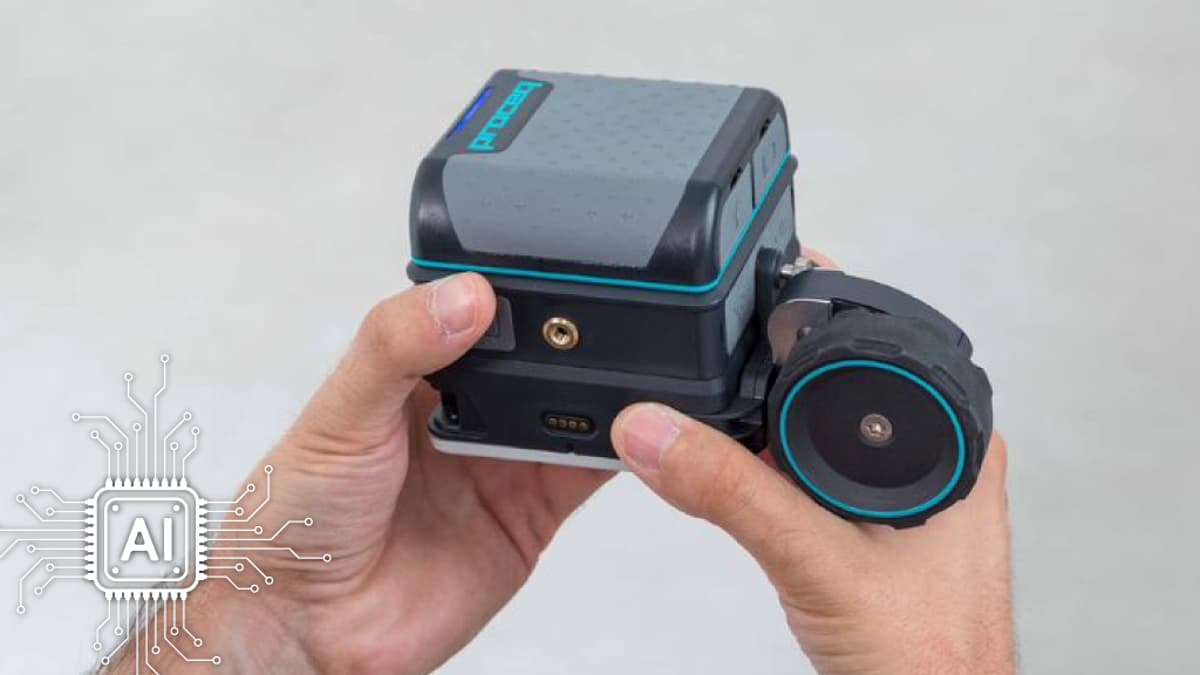
The technical core relies on a handheld GPR unit that emits electromagnetic pulses across a wall surface, capturing echo patterns that differ when they encounter steel members or voids caused by buckling. Those raw scans feed into InternImage, a large‑scale vision foundation model, which has been fine‑tuned with a proprietary dataset covering diverse wall assemblies, stud spacings, and damage scenarios. A novel training augmentation called GPR‑CutMix further equips the AI to handle real‑world variability, ensuring the system can generalize from lab conditions to field deployments with high accuracy.
For the construction and facilities‑management sectors, the implications are immediate. Faster, targeted inspections mean reduced labor hours, lower renovation costs, and minimal disruption to occupants—a compelling proposition for owners of aging office towers and hospitals. Moreover, after earthquakes, hurricanes, or severe storms, inspectors can rapidly screen thousands of structures, focusing invasive checks only where the AI flags potential failure. While still in the research phase, the technology is poised for commercial pilots, promising a new standard for scalable, data‑driven building health monitoring.
University of Houston develops AI-powered radar system to inspect concealed cold-formed steel
Comments
Want to join the conversation?
Loading comments...