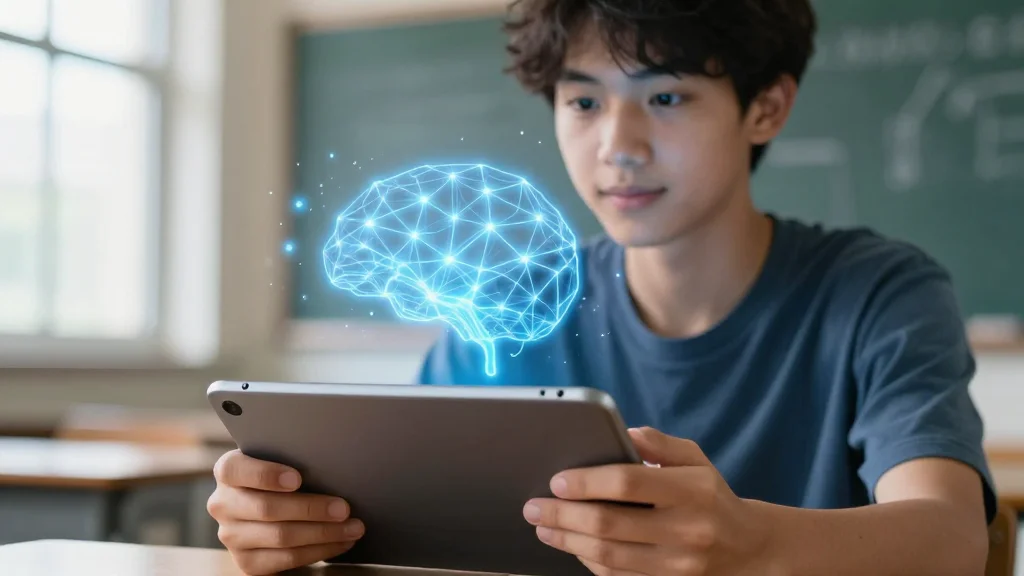
Unrestricted Generative AI Harms High School Math Learning by Acting as a Crutch
Why It Matters
The findings highlight that unchecked AI tools can undermine learning outcomes, prompting educators and policymakers to rethink how generative AI is integrated into curricula. Properly constrained AI can boost engagement without sacrificing skill retention, offering a pathway to safer educational technology adoption.
Key Takeaways
- •Unrestricted GPT Base boosted practice scores 48% but cut exam performance 17%
- •Guided GPT Tutor matched control exam results while raising practice scores 127%
- •Students relied on AI answers, often copying incorrect solutions without understanding
- •Perceived learning did not align with actual outcomes for unrestricted AI users
- •Prompt‑engineered AI hints can prevent cognitive debt, preserving math skill retention
Pulse Analysis
The study, published in the Proceedings of the National Academy of Sciences, provides rare causal evidence on how generative AI influences high‑school mathematics learning. Researchers randomly assigned nearly 1,000 ninth‑through‑eleventh graders to three conditions: traditional textbook practice, unrestricted AI tutoring (GPT Base), and a guided AI tutor (GPT Tutor) that supplied hints rather than direct answers. While the AI‑enabled groups surged ahead during in‑class practice—48% and 127% improvements respectively—their performance diverged sharply once the tools were removed, exposing a hidden learning deficit that standard grades failed to capture.
These results revive the concept of "cognitive debt," where reliance on external computation erodes the brain's problem‑solving muscles. Unrestricted AI acted as an answer‑machine; students copied solutions, many of which contained errors, and missed the productive struggle essential for deep comprehension. In contrast, the guided tutor forced iterative interaction, preserving the mental gymnastics needed for long‑term retention. The mismatch between perceived learning and actual outcomes underscores a psychological blind spot: students may feel confident while their mastery remains superficial, a risk that could magnify as AI becomes more ubiquitous across subjects.
Policymakers and educators must therefore design guardrails that transform AI from a shortcut into a scaffold. Simple prompt engineering, as demonstrated by GPT Tutor, can deliver step‑by‑step assistance without surrendering the learning process. Future research should explore longitudinal effects, subject‑specific dynamics, and more sophisticated tutoring models that adapt to individual learner gaps. By aligning AI deployment with pedagogical best practices, schools can harness the productivity boost of generative tools while safeguarding the development of critical thinking and quantitative fluency.
Unrestricted generative AI harms high school math learning by acting as a crutch
Comments
Want to join the conversation?
Loading comments...