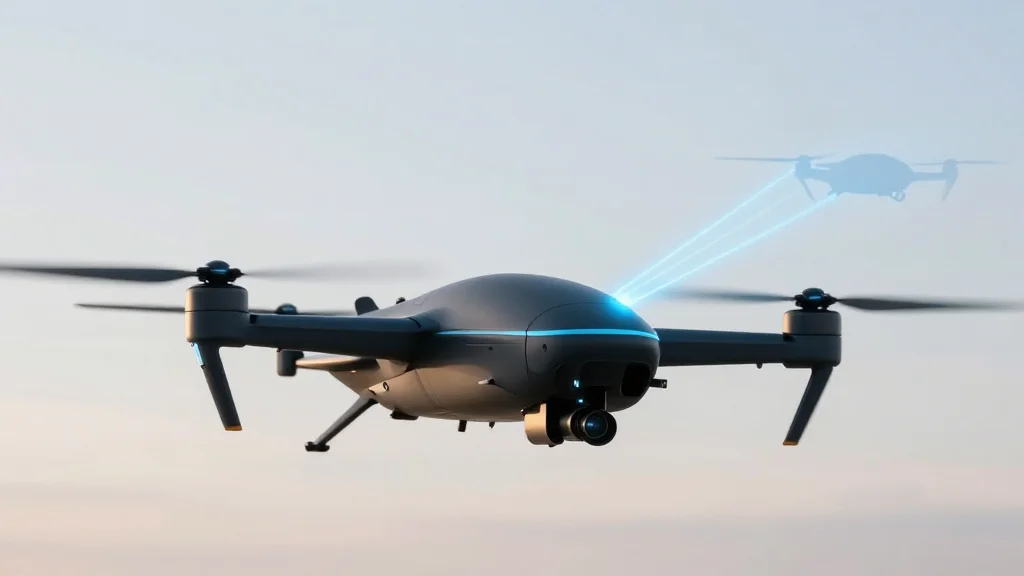
U.S. Army Secures AI‑Assisted Bumblebee V2 Interceptor Drone as Ukraine Deploys Similar Systems

Why It Matters
The acquisition signals a shift toward mass‑produced, AI‑enabled kinetic defenses that can be fielded quickly and at low cost, reshaping how militaries address the growing threat of cheap, swarmable drones. By embedding AI in a simple quadcopter, the U.S. and its partners can protect forward units without relying on high‑value missile interceptors, potentially altering force structure and budget allocations. At the same time, the deployment raises ethical and strategic concerns. As AI takes on more decision‑making in lethal engagements, the line between human‑in‑the‑loop and autonomous action blurs, prompting calls for clearer policy frameworks and safeguards to prevent unintended escalation.
Key Takeaways
- •U.S. Army JIATF 401 signed a February agreement to acquire Bumblebee V2 from Perennial Autonomy.
- •Bumblebee V2 uses AI‑guided target recognition to achieve hard‑kill kinetic strikes against enemy drones.
- •Ukraine’s Bumblebee drone has proven effective against Russian Shahed loitering munitions, prompting U.S. interest.
- •Major Cole Price called the system a "dual purpose, low‑cost" ISR and strike platform.
- •Field testing slated for later 2026 with full operational capability aimed for 2027.
Pulse Analysis
The Pentagon’s move to field the Bumblebee V2 reflects a pragmatic response to a changing threat environment where low‑cost, swarmable drones can overwhelm traditional air‑defense assets. By leveraging AI for target identification while retaining human oversight, the U.S. seeks a middle ground that balances rapid response with accountability. Historically, counter‑UAV solutions have relied on expensive radar‑guided missiles; the Bumblebee V2’s kinetic approach could democratize air‑defense, allowing smaller units to protect themselves without a massive logistical footprint.
However, the technology’s reliance on AI introduces new vulnerabilities. Adversaries could feed deceptive visual data to confuse the drone’s algorithms, or develop electronic warfare tactics that degrade its sensor suite. The U.S. must therefore invest not only in the hardware but also in robust AI validation, secure data pipelines, and training regimes that keep the system effective against evolving counter‑AI measures. The next wave of procurement will likely focus on modular AI upgrades that can be patched in the field, mirroring software‑centric models seen in commercial tech.
Strategically, the proliferation of AI‑assisted interceptors could spur a cascade effect: as more nations adopt similar platforms, the battlefield may become saturated with autonomous agents, raising the stakes for international norms governing lethal autonomy. Policymakers will need to address whether kinetic AI drones should be subject to the same arms‑control discussions as larger autonomous weapons, ensuring that the speed and scalability of these systems do not outpace the diplomatic frameworks meant to contain them.
U.S. Army Secures AI‑Assisted Bumblebee V2 Interceptor Drone as Ukraine Deploys Similar Systems
Comments
Want to join the conversation?
Loading comments...