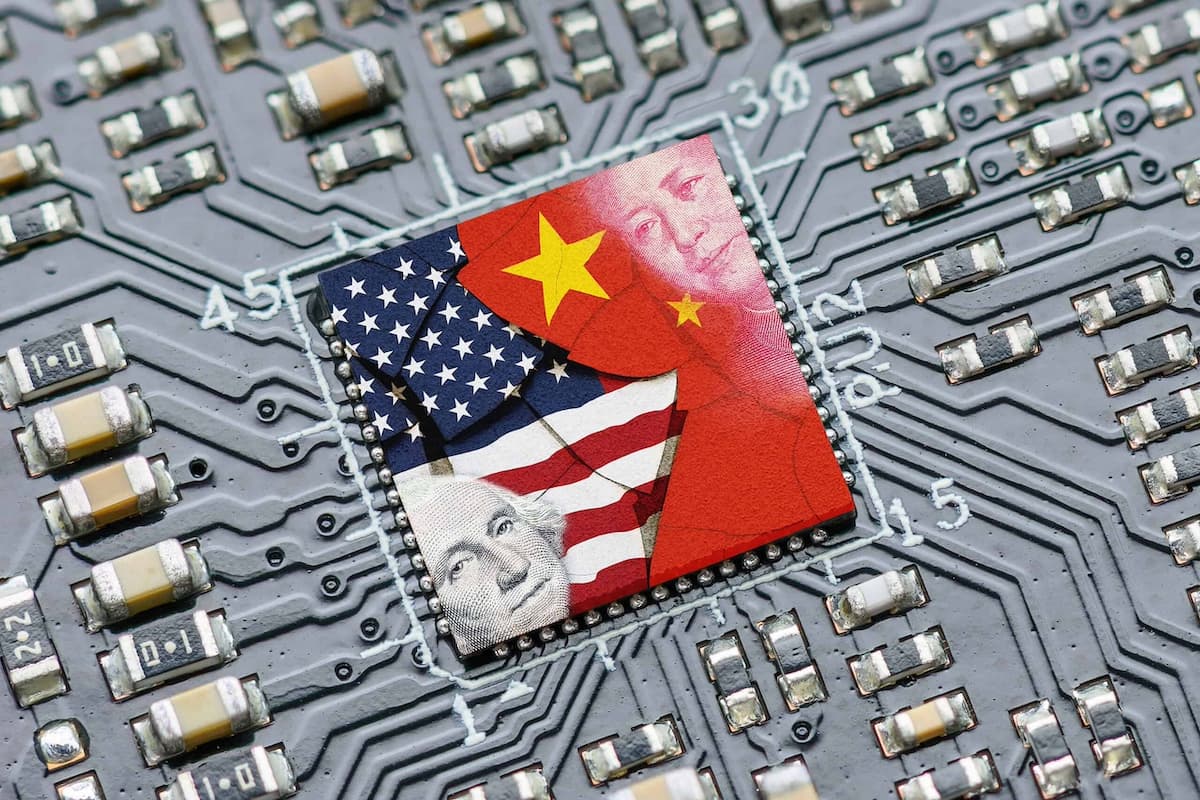
US Chasing AGI Myth While China Builds the AI Future
Companies Mentioned

Why It Matters
U.S. focus on a vague AGI race risks misallocating resources, while China’s deployment‑first approach could secure broader economic dominance. The shift from singular breakthroughs to widespread integration will determine long‑term global AI leadership.
Key Takeaways
- •US policy centers AI strategy on undefined AGI concept
- •Lack of AGI definition leads to unstable investment priorities
- •China focuses on rapid AI deployment across industry and infrastructure
- •Diffusion of AI tools, not single breakthrough, drives economic advantage
- •Experts urge U.S. to prioritize integration, workforce training, and open research
Pulse Analysis
The United States has built its national AI agenda around the elusive notion of artificial general intelligence. Lawmakers and venture‑backed labs cite AGI as a strategic North Star, yet scholars cannot agree on a single definition—ranging from human‑level problem solving to autonomous self‑improvement. This semantic ambiguity translates into policy that prizes ever‑larger frontier models while sidelining the practical steps needed for broad adoption. As a result, federal budgets and private capital risk being funneled into speculative projects that may never deliver a decisive competitive edge.
By contrast, Beijing has turned AI into an engine of industrial scale. Chinese research output now eclipses that of any other nation, and the country leads in AI‑related patents and robot deployments on factory floors. More importantly, the government has embedded machine‑learning tools in logistics, smart‑city platforms, education curricula and supply‑chain management, turning capability into productivity gains. This deployment‑first approach narrows the performance gap with U.S. frontier models while generating measurable economic returns, illustrating that the real battleground is the diffusion of technology, not the race to a mythical singular intelligence.
Strategists now argue that the United States should recalibrate its AI playbook. Maintaining world‑class research remains essential, but funding must also flow to modern data infrastructure, energy‑efficient compute clusters, and large‑scale pilot programs that embed AI in public services. Parallel investments in AI literacy, vocational retraining and interdisciplinary curricula will ensure the workforce can harness these tools. Finally, expanding open‑source collaborations beyond a handful of megacorp labs will accelerate diffusion and reduce reliance on proprietary breakthroughs. Such a balanced approach promises sustainable advantage, turning AI from a headline‑grabbing hype into a foundational economic infrastructure.
US chasing AGI myth while China builds the AI future
Comments
Want to join the conversation?
Loading comments...