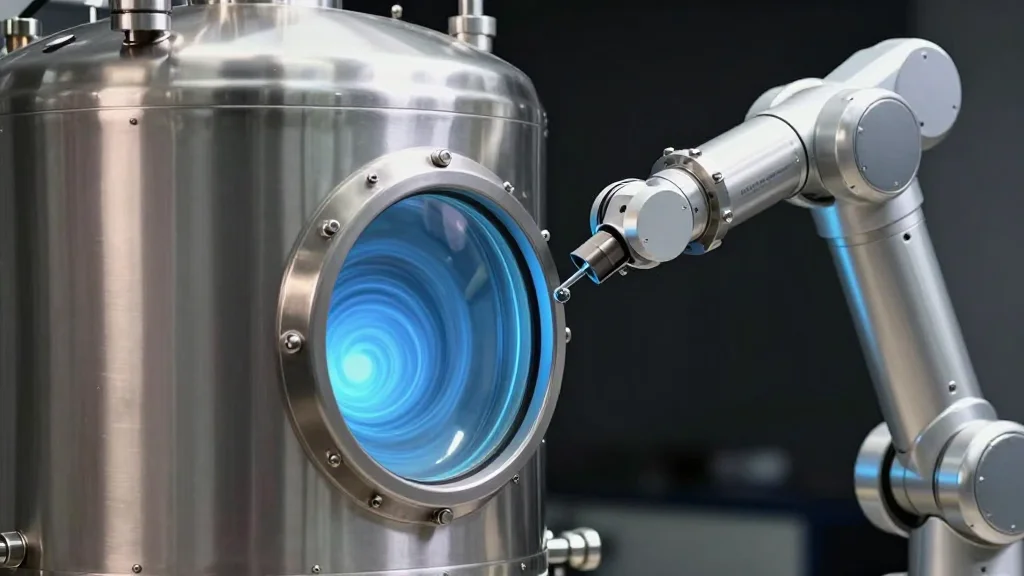
US DOE Announces $34M in Funding to Pair Artificial Intelligence with Autonomous Labs for Catalyst Development

Why It Matters
Accelerating catalyst development shortens time‑to‑market for cleaner fuels and chemicals, strengthening U.S. industrial leadership and supporting climate‑aligned energy transitions.
Key Takeaways
- •$34M allocated to 12 AI‑driven catalyst projects.
- •Goal: shrink development cycles from 10 years to 1 year.
- •Programs target tenfold faster validation for fuels and chemicals.
- •Partnerships span universities, national labs, and startups.
Pulse Analysis
Catalysts sit at the heart of modern chemical and energy processes, yet their development has traditionally been a decade‑long, trial‑and‑error endeavor. Recent advances in machine learning and robotics now enable researchers to predict material properties, synthesize candidates, and test performance in a closed loop, dramatically reducing the need for sequential experimentation. By automating these steps, AI‑augmented labs can explore thousands of formulations in weeks, unlocking pathways to more efficient fuels, lower‑emission chemicals, and novel energy carriers.
The DOE’s CATALCHEM‑E program channels $34 million into twelve distinct projects that marry AI algorithms with high‑throughput, self‑driving laboratory platforms. Recipients range from the University of Wisconsin‑Madison’s AI‑FIXCAT, which targets ethanol upgrading, to Argonne’s Catalyst Design Foundry, focused on waste‑carbon conversion. Funding allocations hover around $2.8‑$3 million per effort, supporting the integration of large language models, robotic synthesis, and real‑time data analytics. Collectively, these initiatives aim to compress catalyst validation timelines from ten years to a single year and achieve up to a tenfold speedup in bringing new chemistries to pilot scale.
If successful, the program could reshape U.S. industrial competitiveness by delivering faster, cheaper routes to high‑value chemicals and low‑carbon fuels. Faster catalyst commercialization supports domestic manufacturing, reduces reliance on imported technologies, and aligns with broader climate goals by enabling more efficient energy conversion processes. The convergence of AI and autonomous labs also creates a new talent pipeline at the intersection of data science, chemistry, and engineering, positioning the United States to lead the next wave of sustainable industrial innovation.
US DOE Announces $34M in Funding to Pair Artificial Intelligence with Autonomous Labs for Catalyst Development
Comments
Want to join the conversation?
Loading comments...