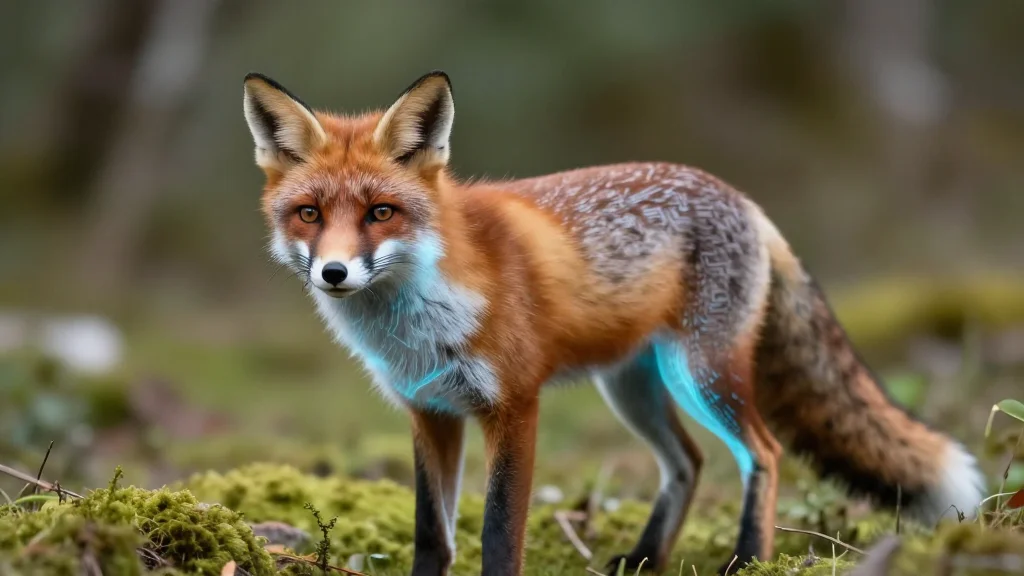
Visual AI Tracks Nearly 100 Wildlife Species to Improve Conservation
Companies Mentioned

Why It Matters
By automating species identification and individual tracking, SA‑FARI dramatically cuts labor costs and accelerates ecological insights, reshaping how conservationists monitor biodiversity at scale.
Key Takeaways
- •SA‑FARI tracks 100 species using pixel‑accurate masklets.
- •Over 11,000 wildlife videos annotated and released for free.
- •Researchers could save thousands of hours previously spent on manual review.
- •Project led by ConservationX Labs and META, presented at CVPR 2026.
- •Future upgrades may add pose, depth, and natural‑language descriptions.
Pulse Analysis
The rise of visual AI in environmental science has reached a new milestone with SA‑FARI, a system that extends META’s Segment Anything Model 3 to wildlife monitoring. By interpreting both textual prompts and visual cues, the model isolates animal outlines—masklets—across video frames, delivering a level of precision previously reserved for laboratory settings. This breakthrough aligns with a broader trend where computer‑vision tools are repurposed for ecological data, offering a scalable alternative to labor‑intensive camera‑trap analysis and opening doors for real‑time field deployments.
Central to SA‑FARI’s impact is the open‑source dataset of more than 11,000 annotated videos covering diverse habitats and species. Researchers can download the footage to train custom models or directly apply the pre‑built system to their own monitoring projects, slashing the months‑long effort of manual annotation. The masklet approach not only isolates animals from complex backgrounds but also preserves temporal continuity, enabling downstream tasks such as behavior classification, individual identification, and population dynamics modeling. Early adopters report potential savings of thousands of analyst hours, allowing teams to redirect resources toward hypothesis testing and conservation interventions.
Beyond immediate efficiency gains, SA‑FARI signals a shift toward interdisciplinary collaboration in AI‑driven conservation. The consortium—spanning universities, research institutes, NGOs, and tech giants—demonstrates how shared expertise can accelerate deployment of cutting‑edge tools in the field. Future enhancements, like pose estimation, depth perception, and natural‑language descriptions, promise richer ecological insights and more nuanced policy decisions. As governments and NGOs seek data‑rich solutions to biodiversity loss, platforms like SA‑FARI are poised to become foundational infrastructure for the next generation of wildlife stewardship.
Visual AI tracks nearly 100 wildlife species to improve conservation
Comments
Want to join the conversation?
Loading comments...