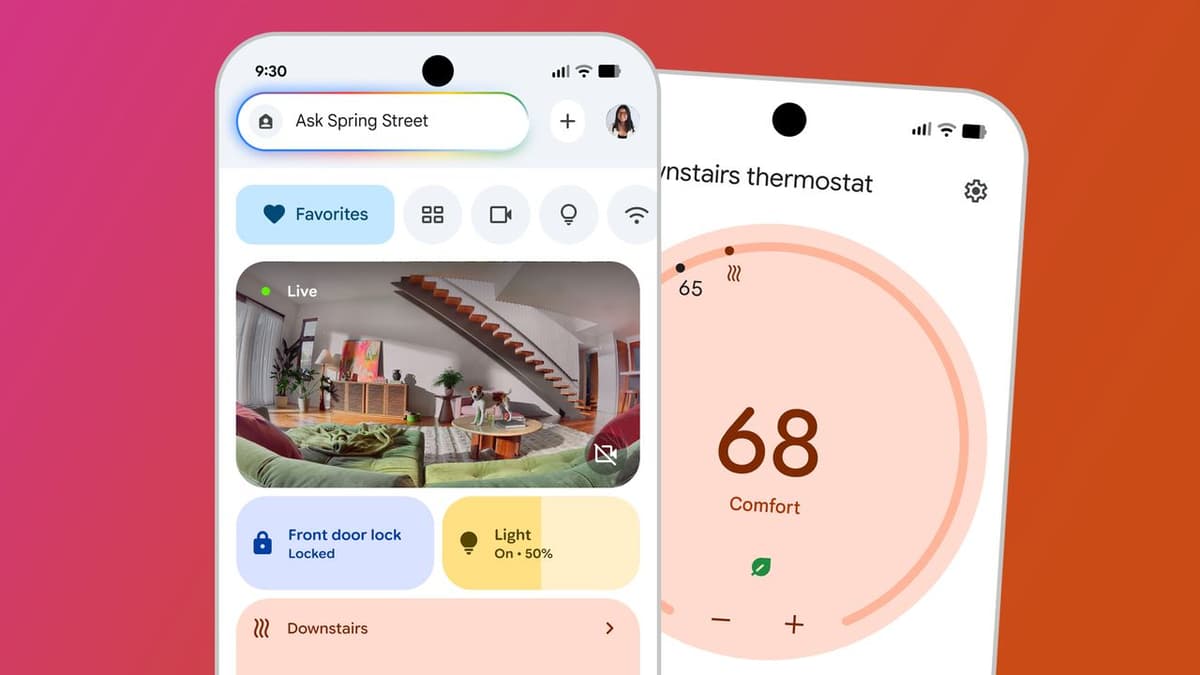
Want to Skip the Line for Gemini for Home Access? This Simple Hack Is Working for some Users
•December 1, 2025
0
Companies Mentioned

Why It Matters
The workaround offers immediate access to Google’s next‑gen home AI, accelerating user adoption and pressure on Google’s subscription model before the official rollout expands globally.
Key Takeaways
- •Google Home Premium unlocks Gemini for Home features.
- •Hack uses `googlehome://assistant/voice/setup` URL in Chrome.
- •Early access limited to US; rollout extends to 2025.
- •Subscription starts at $10/month for full Gemini capabilities.
- •Some users only get Gemini-style voices, not full upgrade.
Pulse Analysis
Google’s Gemini for Home marks a strategic shift from the traditional Google Assistant toward a more conversational, multimodal AI that can interpret video clips, answer complex queries, and manage smart‑home routines. By integrating Gemini, Google aims to keep its ecosystem competitive against rivals like Amazon’s Alexa and Apple’s Siri, which have also begun embedding generative AI. The upgrade is being piloted in the United States with a staggered rollout that may not reach other markets until 2025, creating a scarcity that fuels demand among power users and developers eager to experiment with the new capabilities.
The community‑sourced hack—entering the googlehome://assistant/voice/setup URL in Chrome on Android—effectively bypasses the official waiting list, granting users immediate eligibility for a Google Home Premium trial. While the method works for some, results vary; a subset of testers only receive Gemini‑styled voice skins without the deeper conversational features. This inconsistency highlights the early‑stage nature of the rollout and suggests that backend eligibility checks still govern full access. Nonetheless, the hack demonstrates how savvy users can leverage deep links to accelerate feature adoption, a tactic seen across mobile ecosystems.
From a business perspective, the hack underscores the tension between Google’s subscription‑driven revenue model and the desire for rapid user acquisition. Google Home Premium, priced at $10 per month (or equivalent local rates), bundles Gemini’s advanced functions, positioning the service as a premium offering within the broader smart‑home market. By offering a free trial via the workaround, Google may convert a higher percentage of early adopters into paying subscribers, especially as competitors roll out their own AI‑enhanced home assistants. The limited geographic release and reliance on paid tiers also suggest Google is testing monetization strategies before a global launch, making the hack both a user shortcut and a potential data point for the company’s rollout strategy.
Want to skip the line for Gemini for Home access? This simple hack is working for some users
0
Comments
Want to join the conversation?
Loading comments...