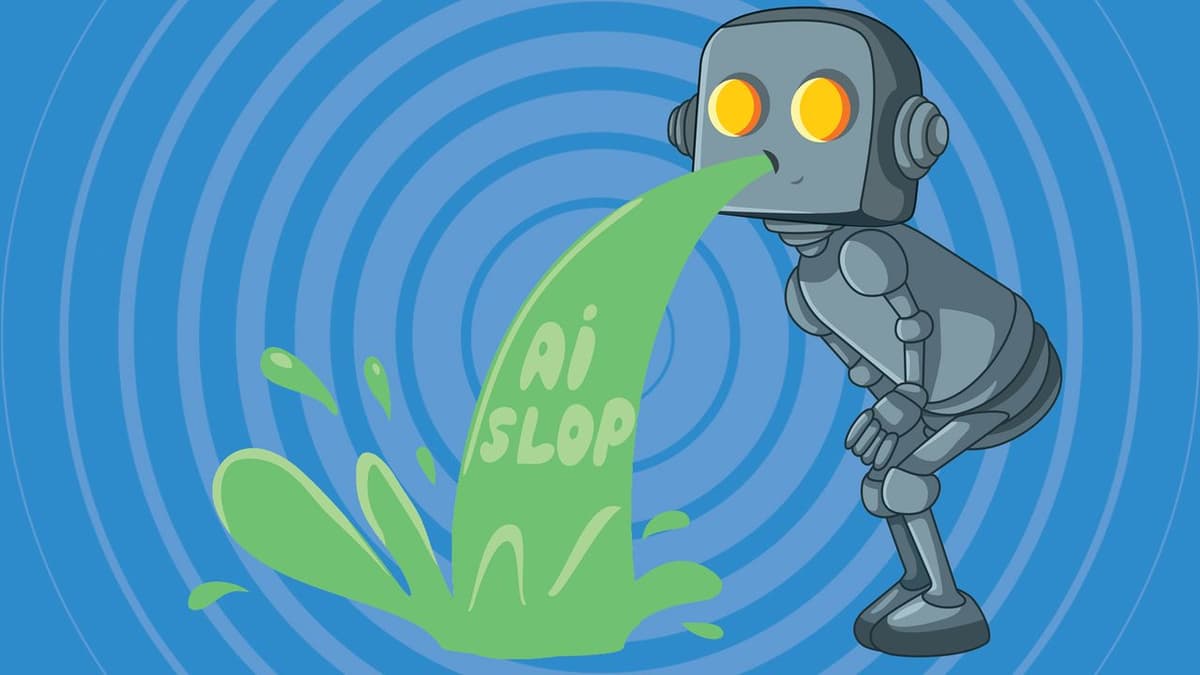
We Filled the Internet with Garbage, and Now Slop Is the Word of the Year — Nice Going, AI
•December 15, 2025
0
Companies Mentioned


Why It Matters
Businesses risk brand dilution and audience fatigue as AI slop saturates digital channels, making content differentiation and authenticity critical for competitive advantage.
Key Takeaways
- •AI-generated content dominates internet, termed “AI slop.”
- •Merriam-Webster names “Slop” 2025 Word of the Year.
- •Experts estimate up to 90% of online content is AI‑created.
- •Low‑quality AI output erodes trust in digital media.
- •Future AI agents may automate content, increasing slop risk.
Pulse Analysis
The term “AI slop” captures a paradox of modern content creation: powerful generative models are now as ubiquitous as a word processor, yet many users treat them as a shortcut rather than a tool. Platforms like ChatGPT, Gemini, Claude, and Copilot enable anyone to produce articles, videos, and even podcasts with a single prompt. This democratization has accelerated output volumes dramatically, but it also means quality controls are often bypassed, resulting in a sea of repetitive, shallow material that crowds out nuanced, human‑crafted narratives.
For marketers and enterprises, the proliferation of AI slop poses a strategic dilemma. Brand reputation hinges on authenticity; when audiences encounter generic, AI‑generated copy, engagement drops and trust erodes. Companies must therefore invest in verification workflows, editorial oversight, and AI‑augmented quality metrics to distinguish valuable content from filler. Moreover, search engines are refining algorithms to penalize low‑value pages, making SEO performance increasingly dependent on originality and expertise rather than sheer keyword density.
Looking ahead, the next generation of AI agents will likely automate end‑to‑end content pipelines, pulling data, generating drafts, and publishing without human intervention. While this promises efficiency gains, it also amplifies the risk of unchecked slop. Industry leaders can mitigate this by establishing clear governance policies, employing AI‑detecting tools, and fostering a culture that values human insight alongside machine assistance. Proactive stewardship will be essential to ensure that AI enhances, rather than dilutes, the digital information ecosystem.
We filled the internet with garbage, and now Slop is the word of the year — nice going, AI
0
Comments
Want to join the conversation?
Loading comments...