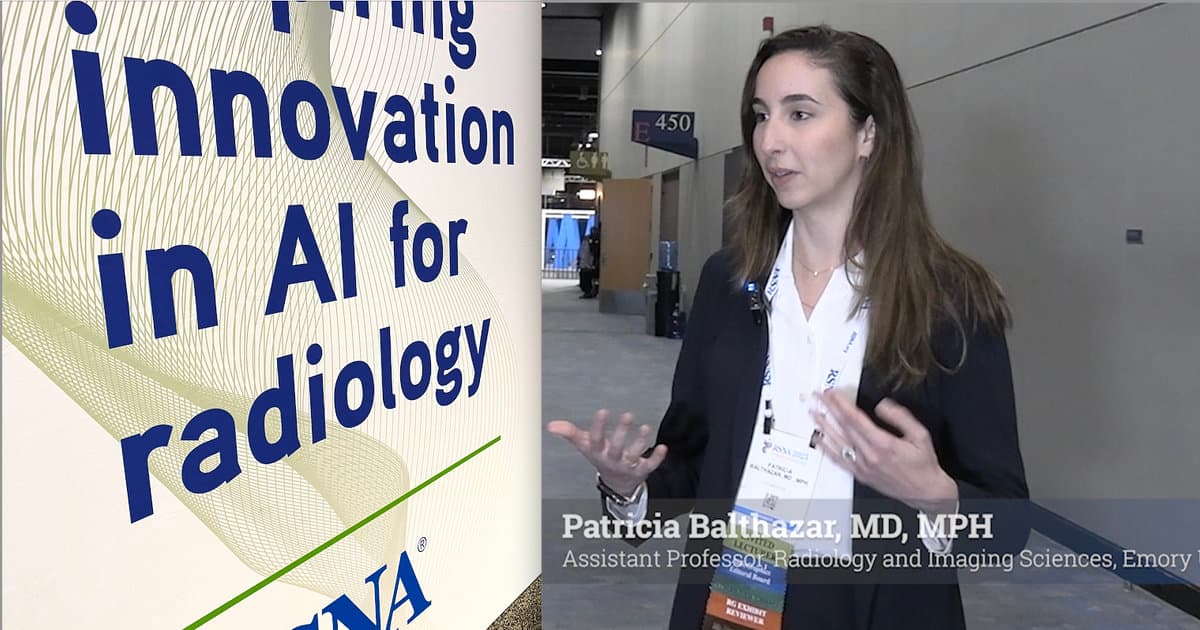
What Makes AI a Friend, Foe or Time Thief in Radiology?
Why It Matters
Without sustained oversight, AI can become a hidden source of inefficiency, eroding clinical productivity and patient outcomes. Effective governance turns AI from a novelty into a reliable diagnostic ally.
Key Takeaways
- •AI success hinges on post‑deployment monitoring and governance.
- •Workflow changes can cause AI performance drift in imaging.
- •Radiologist‑led committees ensure appropriate tool evaluation and adoption.
- •National registries aim to benchmark real‑world AI effectiveness.
- •Continuous oversight prevents AI from becoming a hidden time thief.
Pulse Analysis
The rush to adopt artificial intelligence in medical imaging has outpaced the industry’s readiness for long‑term stewardship. While FDA clearance validates an algorithm’s performance on test data, real‑world environments introduce variables—scanner settings, patient demographics, and IT infrastructure—that can degrade accuracy. Hospitals that treat AI deployment as a one‑off project risk missing the crucial “downhill” phase where continuous validation, error tracking, and model recalibration become essential for patient safety and workflow efficiency.
Operational nuances often dictate AI success more than the technology itself. A seemingly minor server migration at Emory disrupted image routing, rendering several AI tools ineffective until the issue was identified. Such incidents illustrate the phenomenon of model drift, where changes in data pipelines or imaging protocols cause algorithms to deviate from their trained behavior. Emerging national registries, spearheaded by the American College of Radiology, aim to collect real‑world performance metrics, offering institutions a benchmark to compare outcomes and quickly spot anomalies across diverse practice settings.
Sustainable AI integration calls for structured governance anchored by radiologists who understand both clinical nuances and algorithmic limitations. Multidisciplinary AI councils, like Emory’s internal AI council, evaluate new tools against standardized criteria, balancing innovation with risk management. By embedding continuous monitoring, transparent reporting, and collaborative decision‑making, health systems can transform AI from a potential time thief into a dependable partner that enhances diagnostic accuracy and operational throughput.
What makes AI a friend, foe or time thief in radiology?
Comments
Want to join the conversation?
Loading comments...