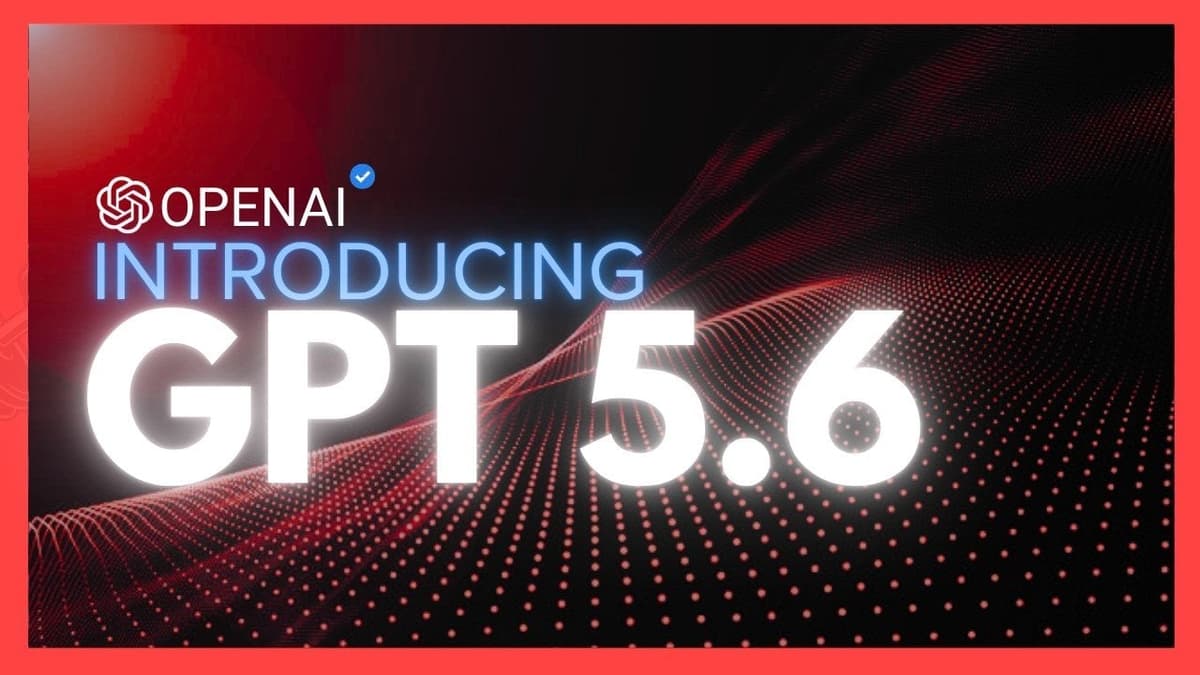
What the Leaked ChatGPT 5.6 Model Reveals About OpenAI’s Next Move
Key Takeaways
- •GPT‑5.6 promises higher token efficiency and richer multimodal output.
- •Microsoft unveiled seven AI models plus hardware for faster agent workflows.
- •Alibaba’s Qwen 3.7 Plus merges vision, language, and coding in one model.
- •Anthropic’s Claude Code adds `/fork` command and CLI for easier development.
- •Hyperrealistic humanoid robots showcase advanced motion capture, raising ethical debates.
Pulse Analysis
The anticipated GPT‑5.6 model marks a pivotal step in the evolution of large language models, chiefly by delivering more tokens per dollar and tighter integration of visual and textual inputs. By reducing inference costs, enterprises can embed sophisticated AI directly into customer‑facing products, analytics pipelines, and internal tools without prohibitive expense. The accompanying Mythos Benchmark, if adopted widely, may reshape how developers assess real‑world performance, shifting focus from raw accuracy to practical utility.
Microsoft’s Build 2026 showcase underscored the growing importance of hardware‑software co‑design in AI. Seven new models, highlighted by the MAI Thinking One, target niche tasks such as complex reasoning, code synthesis, and high‑fidelity image generation, while the accompanying accelerator chips promise lower latency for autonomous agents. Across the Pacific, Alibaba’s Qwen 3.7 Plus bundles vision, language, and coding capabilities, positioning it as a versatile alternative for developers seeking a single multimodal engine. Anthropic’s Claude Code, with its `/fork` command and command‑line interface, lowers the barrier for building context‑aware background agents, accelerating the developer workflow.
These concurrent breakthroughs intensify competition among the AI elite, compelling firms to differentiate through efficiency, integration, and developer experience. For businesses, the net effect is a faster path to AI‑enhanced productivity and innovation. Yet the rise of hyperrealistic humanoid robots, demonstrated at the World Intelligence Expo, adds a layer of ethical complexity, prompting regulators and industry leaders to grapple with questions of consent, employment displacement, and societal impact. As the ecosystem matures, stakeholders must balance rapid technological adoption with responsible governance to ensure sustainable growth.
What the Leaked ChatGPT 5.6 Model Reveals About OpenAI’s Next Move
Comments
Want to join the conversation?