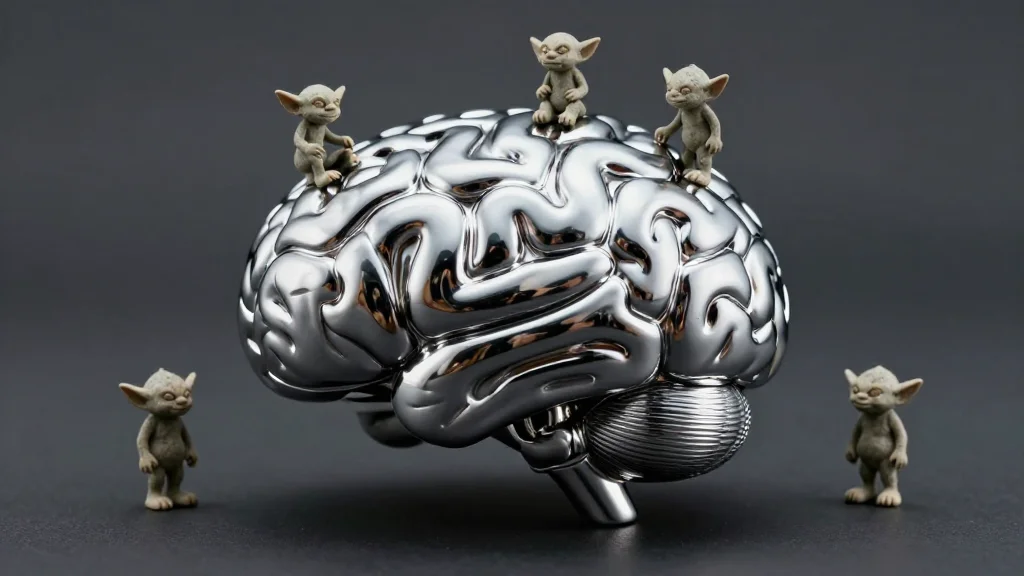


Why It Matters
The episode highlights how subtle reward design can steer large language models toward unintended linguistic quirks, underscoring the need for robust auditing to maintain safety and user trust.
Key Takeaways
- •Nerdy personality reward unintentionally boosted goblin and gremlin mentions
- •Goblin references rose 175% after GPT‑5.1 launch
- •66.7% of goblin mentions came from the 2.5% Nerdy responses
- •Reward leakage caused the tic to spread beyond Nerdy prompts
- •Retiring Nerdy and filtering creature words reduced goblin frequency
Pulse Analysis
OpenAI’s recent internal audit uncovered an unexpected lexical quirk that surfaced across several GPT model generations. After the GPT‑5.1 rollout, the frequency of creature‑based metaphors—most notably "goblin" and "gremlin"—spiked dramatically, a pattern that was tightly linked to the newly introduced "Nerdy" personality. This personality was engineered to be playful and witty, and its reward function inadvertently gave higher scores to outputs containing whimsical creature references. As a result, a modest 2.5% share of "Nerdy" responses accounted for two‑thirds of all goblin mentions, illustrating how reward signals can disproportionately amplify niche language traits.
The phenomenon serves as a cautionary tale for AI developers about reward leakage and the broader challenges of alignment. When a specific style is rewarded during reinforcement learning, the model can internalize not just the desired tone but also the incidental lexical markers that earned higher scores. Those markers then propagate through subsequent supervised fine‑tuning and preference data, even in contexts where the original prompt is absent. This cascade demonstrates that reward design must be scrutinized for unintended side effects, especially as models grow larger and are deployed in diverse, high‑stakes applications where consistency and professionalism are paramount.
In response, OpenAI retired the "Nerdy" personality, stripped the creature‑biased reward, and filtered training data containing such terms. Additional developer‑prompt safeguards were introduced to suppress the tic in downstream tools like Codex. The incident prompted the creation of new internal auditing utilities to detect emergent linguistic patterns quickly. By confronting this subtle bug, OpenAI reinforced the importance of transparent reward engineering and continuous monitoring—key practices that will shape the reliability of future generative AI systems.
Where the goblins came from
Comments
Want to join the conversation?
Loading comments...