Companies Mentioned

Why It Matters
These books capture pivotal debates on AI’s role in medicine, interdisciplinary science communication, and the strategic direction of tech development, influencing both industry leaders and policy makers.
Key Takeaways
- •AI digital scribes now draft clinical notes in many U.S. clinics.
- •Gallup 2025 poll: 61% Americans support AI in healthcare.
- •Woodpecker brain mass, not foam, protects against impact forces.
- •Authors advocate incremental tech upgrades over disruptive breakthroughs.
- •2026 releases explore AI, ornithology, and tech philosophy trends.
Pulse Analysis
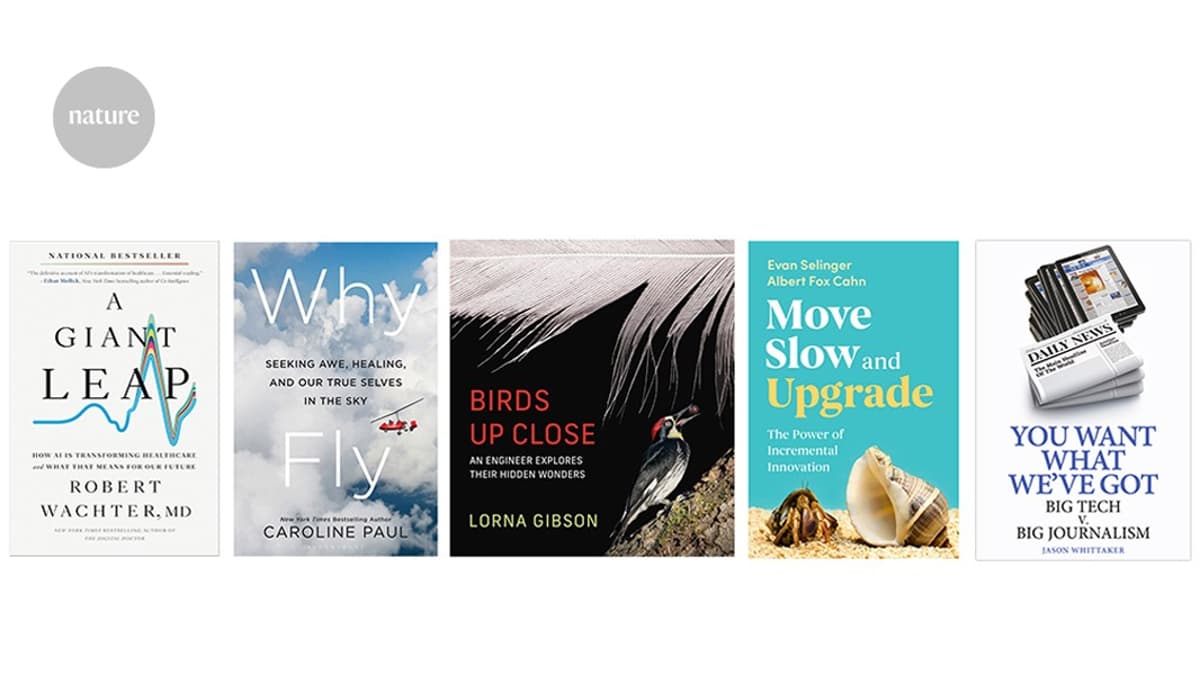
Artificial intelligence is reshaping clinical workflows, with digital scribes converting doctor‑patient dialogue into structured notes across a growing number of U.S. clinics. The technology promises faster documentation, reduced burnout, and more consistent records, yet a 2025 Gallup poll shows only 61% of Americans are comfortable with AI in health care. Wachter’s analysis underscores that while AI can streamline routine tasks, it remains ill‑suited for diagnosing complex acute or chronic conditions, reinforcing the need for human oversight.
In "Birds Up Close," retired engineer Lorna Gibson bridges physics and ornithology, offering a fresh lens on avian physiology. By dissecting the woodpecker’s impact‑resistance myth, she reveals that the bird’s minuscule two‑gram brain mass, not a foam‑like skull, dissipates forces during rapid pecking. This interdisciplinary approach highlights how engineering concepts can illuminate biological mysteries, encouraging scientists to adopt cross‑domain perspectives when tackling long‑standing ecological questions.
The manifesto "Move Slow and Upgrade" by Evan Sellinger and Albert Cahn pushes back against the Silicon Valley credo of rapid disruption. Arguing for measured, incremental enhancements—such as refining car‑dashboard buttons rather than deploying risky touchscreens—the authors warn that relentless break‑and‑build cycles can compromise safety and user trust. Their stance resonates amid growing calls for responsible innovation, suggesting that sustainable progress may lie in thoughtful, step‑by‑step upgrades rather than headline‑grabbing breakthroughs.
Why we seek to fly: Books in brief
Comments
Want to join the conversation?
Loading comments...