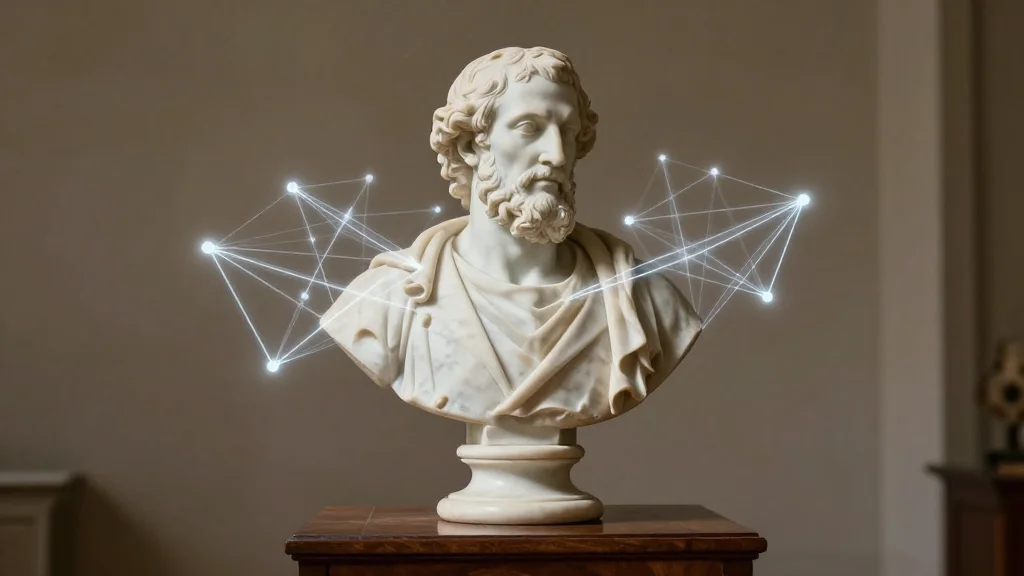
Why We Should Be Reading Paul Churchland Right Now: Neurophilosophy and AI
Why It Matters
Churchland’s framework bridges neuroscience and AI, offering a coherent lens to assess the epistemic and ontological status of LLMs. It equips scholars and developers with conceptual tools to move beyond folk‑psychology debates about machine reasoning.
Key Takeaways
- •Churchland linked neural networks to high‑dimensional conceptual spaces
- •His vector‑based view treats cognition as geometric transformations
- •Modern LLMs retain the representational core Churchland described
- •His philosophy offers a rigorous critique of AI ‘understanding’ claims
Pulse Analysis
Paul Churchland’s neurophilosophy emerged alongside the first wave of connectionist research, positioning artificial neural networks as analogues of brain processes. By framing network activity as movements through high‑dimensional vector spaces, he introduced the notion of "conceptual maps" where dense regions act as attractors—essentially the neural equivalent of concepts. This geometric perspective predates today’s deep‑learning surge, yet it captures the essence of how modern models encode relationships among data points, whether visual features or linguistic tokens.
When applied to contemporary large language models, Churchland’s ideas illuminate why transformers can generate coherent, context‑aware text. The transformer’s attention mechanisms create dynamic embeddings that reside in the same abstract spaces Churchland described, allowing the model to perform "vector completion"—inferring missing information from noisy inputs. By treating language as a structured corpus embedded in these maps, LLMs develop internal representations that resemble human‑like categorization and analogical reasoning, even if the underlying hardware differs from biological neurons.
The practical upshot for AI research is twofold. First, Churchland’s framework supplies a philosophically grounded vocabulary for discussing machine cognition, moving the conversation beyond simplistic claims that models merely mimic human language. Second, it highlights avenues for improvement: refining how models construct and navigate conceptual spaces could enhance reasoning, reduce hallucinations, and align AI outputs more closely with genuine understanding. As the field grapples with ethical and epistemic questions, Churchland’s interdisciplinary lens offers a durable foundation for both critique and innovation.
Why We Should Be Reading Paul Churchland Right Now: Neurophilosophy and AI
Comments
Want to join the conversation?
Loading comments...