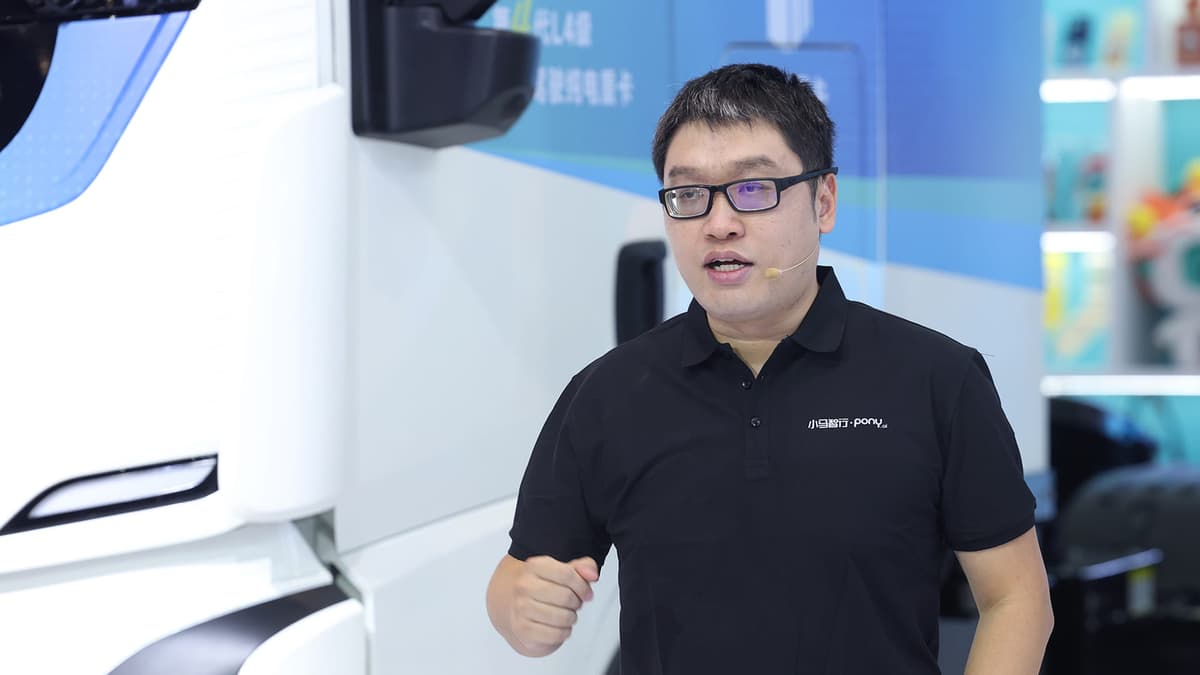
Why World Models Must Do More than Simulate: Pony.ai CTO
Why It Matters
Without a world model that can evaluate and improve its assumptions, autonomous‑driving systems risk amplifying hidden errors, slowing safety progress and increasing deployment costs. Accurate, interactive models accelerate learning while reducing reliance on massive real‑world mileage.
Key Takeaways
- •World models must predict agent responses, not just render scenes
- •Training system needs objective, dynamics, and interaction fidelity
- •Diagnosability separates perception, intent, execution, and traffic‑response errors
- •Real‑world deployment supplies data to expose model blind spots
- •Self‑correcting models guide targeted data collection for faster learning
Pulse Analysis
The autonomous‑driving industry has long relied on high‑fidelity simulators to generate rare edge cases, but the latest thinking from Pony.ai’s CTO highlights a deeper need. A world model should function as a full‑stack training environment, embedding a reward structure that balances safety, efficiency, comfort, and social coordination. By accurately modeling vehicle dynamics and the nuanced reactions of pedestrians, cyclists, and other drivers, these systems can teach AI not just what the world looks like, but how it behaves when the autonomous car takes action.
Beyond realism, diagnosability is becoming a decisive factor. When a failure occurs, engineers must quickly pinpoint whether the root cause lies in perception, intent formulation, control execution, or the model’s prediction of surrounding traffic. This granularity prevents endless cycles of data collection and parameter tweaking, allowing teams to focus remediation efforts where they matter most. Integrating such diagnostic feedback loops transforms the world model from a passive simulator into an active teacher that continuously refines its own assumptions.
The practical payoff emerges during real‑world deployment. As autonomous fleets scale, each mile generates valuable interaction data, but not all miles are equally informative. Advanced world models can flag the specific scenarios where their predictions diverge from reality, guiding targeted data acquisition and hypothesis testing. This closed‑loop approach reduces the need for brute‑force mileage, accelerates safety validation, and aligns the development cadence of AI driving stacks with the fast‑moving demands of the market. In short, the next breakthrough in self‑driving will hinge less on bigger simulators and more on self‑correcting, interaction‑aware world models.
Why world models must do more than simulate: Pony.ai CTO
Comments
Want to join the conversation?
Loading comments...