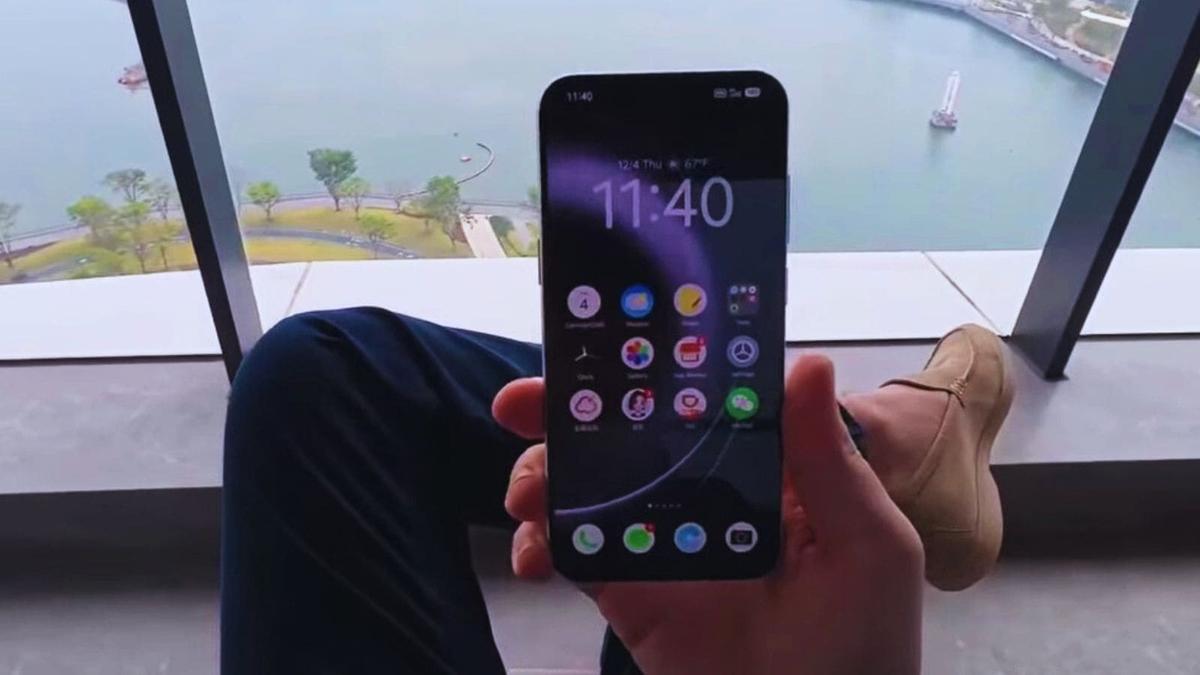
World’s First Fully Agentic AI Smartphone: Is This China’s Second DeepSeek Moment?
•December 5, 2025
0
Companies Mentioned


Why It Matters
The prototype demonstrates a new class of agentic smartphones that could redefine mobile interaction, giving China a potential first‑mover advantage in autonomous AI‑driven devices.
Key Takeaways
- •ZTE‑ByteDance prototype runs AI agent at OS level.
- •Agent can see UI, open apps, complete multi‑step tasks.
- •Powered by Snapdragon 8 Elite Gen 5, 16 GB RAM.
- •Doubao handles reasoning; Nebula‑GUI executes on‑device actions.
- •Signals China may lead first agentic smartphone market.
Pulse Analysis
The emergence of an OS‑native AI agent signals a paradigm shift in how users will engage with mobile devices. By integrating a multimodal large‑scale model like Doubao directly into Android, the phone bypasses the traditional app‑centric workflow, allowing a single intent to trigger a cascade of actions across disparate services. This architecture mirrors the broader industry trend toward on‑device intelligence, where latency, privacy, and offline capability become competitive differentiators. Companies that can fuse cloud reasoning with edge execution stand to capture premium segments that value seamless, hands‑free experiences.
From a hardware perspective, the Snapdragon 8 Elite Gen 5 chipset combined with 16 GB of RAM provides the computational bandwidth needed for real‑time screen perception and rapid UI manipulation. The split‑model approach—cloud‑based Doubao for semantic understanding and the Nebula‑GUI on‑device model for tactile control—optimizes both cost and performance. This hybrid design mitigates bandwidth constraints while preserving user privacy during sensitive interactions such as payments or credential entry, a concern that has hampered broader adoption of fully cloud‑reliant assistants.
Strategically, the prototype positions China at the forefront of the next mobile AI wave, potentially outpacing Silicon Valley rivals that remain limited to voice‑only or permission‑gated assistants. If ZTE translates the demo into a mass‑market product, it could accelerate the adoption of agentic smartphones globally, prompting OEMs and OS vendors to rethink their AI roadmaps. Investors and enterprises should monitor this development as it may reshape competitive dynamics across hardware, software, and AI service ecosystems.
World’s first fully agentic AI smartphone: Is this China’s second DeepSeek moment?
0
Comments
Want to join the conversation?
Loading comments...