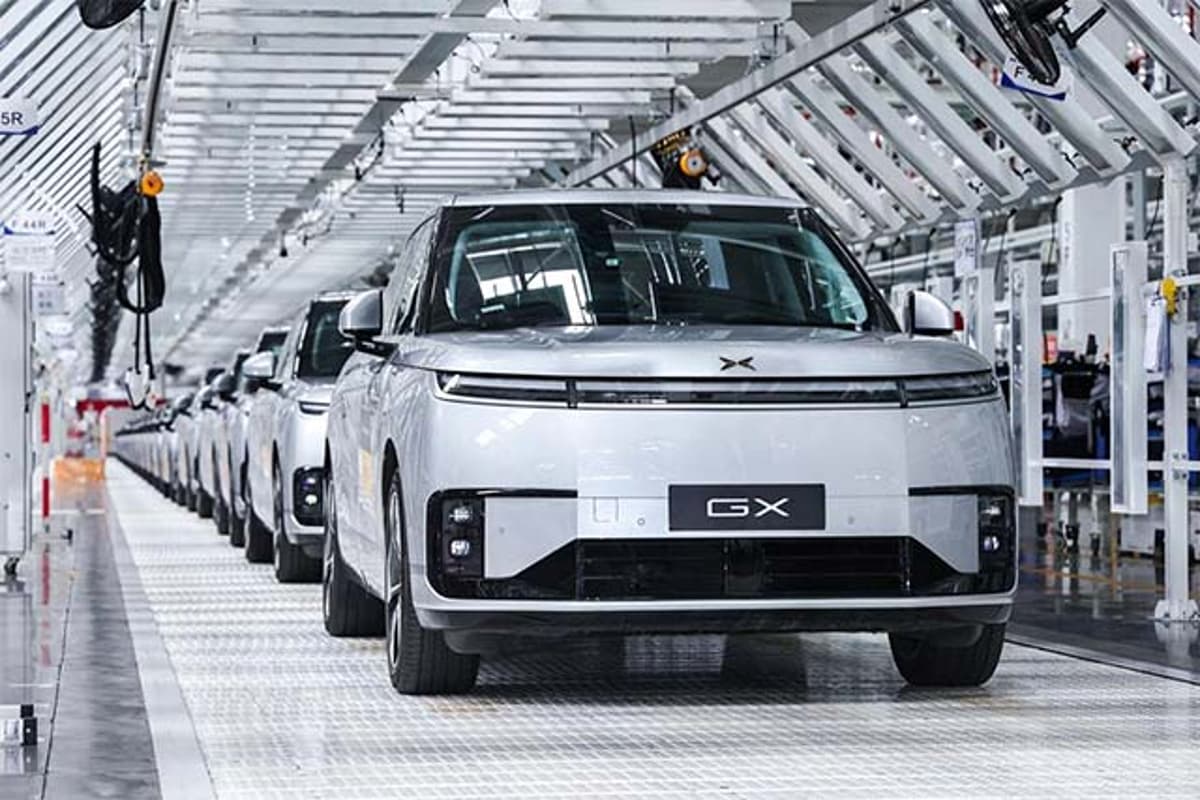
XPENG Launches Mass-Produced Robotaxi in China With L4 Autonomy
Companies Mentioned
Why It Matters
The launch proves that a Chinese automaker can scale fully autonomous, vision‑only robotaxis without external suppliers, accelerating the race toward driverless mobility services in the world’s largest ride‑hailing market.
Key Takeaways
- •XPENG mass‑produces L4 robotaxi using fully in‑house stack.
- •Four Turing AI chips deliver 3,000 TOPS computing power.
- •Vision‑only system runs without LiDAR or HD maps, 80 ms latency.
- •Premium cabin offers privacy glass, zero‑gravity seats, rear entertainment.
- •Robotaxi SDK open to partners; Amap announced as first collaborator.
Pulse Analysis
China’s autonomous‑vehicle sector is reaching a tipping point as XPENG shifts from prototype testing to high‑volume production. By developing the entire stack—from silicon to perception algorithms—internally, XPENG sidesteps the supply‑chain bottlenecks that have slowed many rivals. This vertical integration not only shortens development cycles but also gives the company tighter control over cost and data, positioning it to compete with global players that rely heavily on third‑party lidar and mapping vendors.
The technical heart of XPENG’s robotaxi is a quartet of Turing AI chips that together provide 3,000 trillion operations per second, placing the platform among the most powerful on the road today. Its pure‑vision architecture discards lidar and high‑definition maps, instead using a large‑scale VLA 2.0 model to interpret camera feeds in real time. With decision latency under 80 milliseconds, the vehicle can react faster than many lidar‑based systems, offering smoother navigation through dense urban traffic and reducing hardware costs—a crucial advantage for scaling fleet operations.
Beyond the hardware, XPENG is betting on a premium passenger experience and an open ecosystem. The cabin features privacy glass, zero‑gravity seats and rear entertainment, turning rides into a high‑end service. By releasing a robotaxi SDK and partnering with Amap, XPENG invites developers to build complementary apps, potentially creating a network effect that accelerates adoption. If the pilot phase validates safety and demand, the company could lead China’s transition from driver‑assisted shuttles to fully autonomous ride‑hailing, reshaping urban mobility and setting a benchmark for global robotaxi rollouts.
XPENG Launches Mass-Produced Robotaxi in China With L4 Autonomy
Comments
Want to join the conversation?
Loading comments...