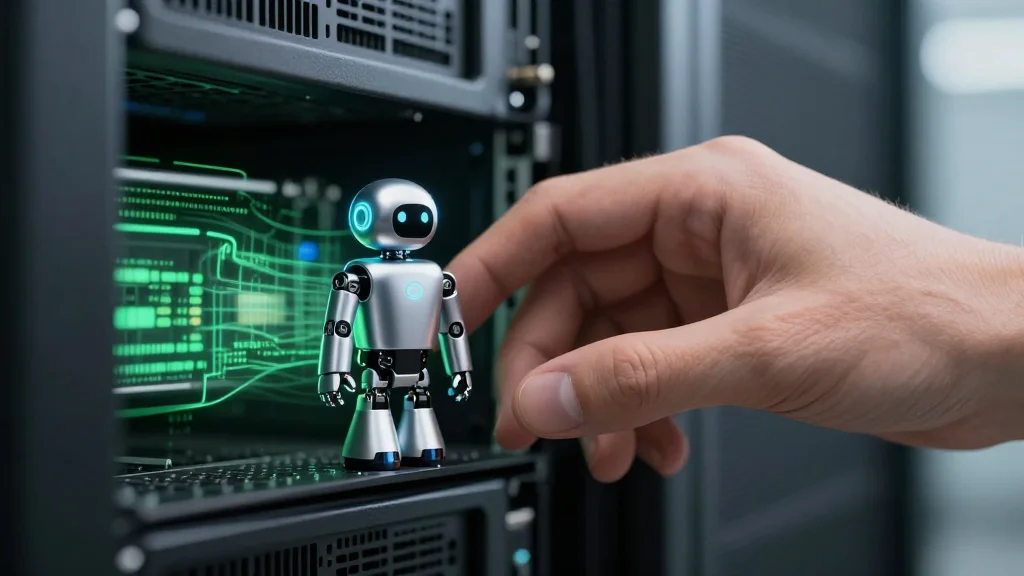
Your AI Coding Agent Isn’t a Tool. It’s a Junior Developer. Treat It Like One
Companies Mentioned

Why It Matters
Mismanaged AI agents can amplify existing security weaknesses and generate costly technical debt, while a junior‑developer approach unlocks sustainable productivity gains for engineering teams.
Key Takeaways
- •AI coding agents act like junior developers, not simple tools
- •Pair programming with agents reduces technical debt and security risks
- •Trust builds gradually: snippets → functions → full features
- •Diverse mentorship accelerates agent learning across codebases
- •Weak security cultures amplify flaws when AI agents are mismanaged
Pulse Analysis
The rise of large‑language‑model coding assistants has sparked hype that they are plug‑and‑play productivity boosters. In practice, however, these agents lack the contextual judgment that seasoned engineers develop through years of hands‑on experience. Treating them as autonomous tools invites the same pitfalls that untrained junior staff would face: outdated patterns, overlooked compliance constraints, and hidden performance costs. By reframing AI assistants as junior developers, firms can apply proven mentorship techniques—pair programming, code reviews, and incremental responsibility—to guide the model toward safe, high‑quality output.
Pair programming, a staple of agile teams, offers a concrete framework for this mentorship. A senior engineer works side‑by‑side with the AI, reviewing suggestions in real time, providing feedback, and correcting missteps before code reaches production. This collaborative loop not only curtails the accumulation of technical debt but also embeds security best practices directly into the agent’s learning trajectory. Over time, the AI internalizes organization‑specific standards, reducing the need for exhaustive post‑hoc reviews and accelerating delivery without sacrificing reliability.
The broader implication for enterprise technology leaders is clear: AI coding agents amplify existing cultural strengths or weaknesses. Organizations with mature DevSecOps pipelines, documented architectures, and disciplined code‑ownership will see the agents act as powerful multipliers, surfacing patterns across massive codebases and accelerating innovation. Conversely, firms lacking rigorous security hygiene risk magnifying vulnerabilities at scale. Investing in a structured onboarding and pairing regimen transforms the AI from a novelty into a sustainable engineering partner, delivering long‑term value while safeguarding the integrity of critical systems.
Your AI coding agent isn’t a tool. It’s a junior developer. Treat it like one
Comments
Want to join the conversation?
Loading comments...