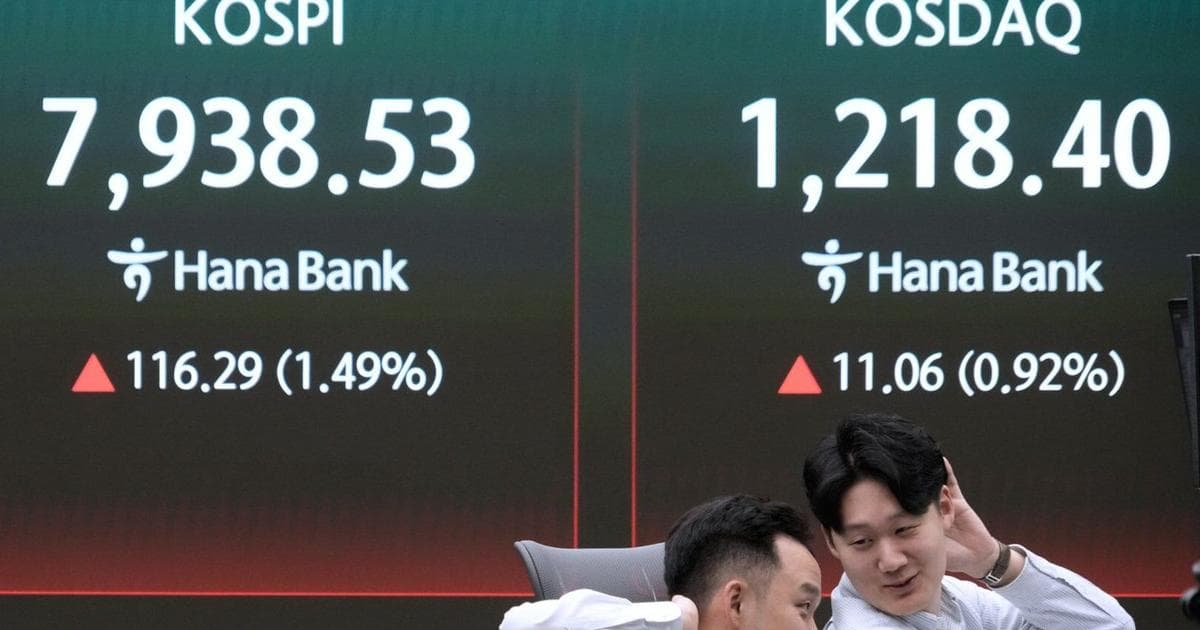
Asian Shares Trade Mixed After Wall Street Rally Despite Iran War Worries
Why It Matters
The divergence highlights how geopolitical shocks and sector‑specific bubbles can simultaneously drive and dampen global market momentum, forcing investors to reassess risk across both commodities and technology‑heavy equities.
Key Takeaways
- •Nikkei up 0.7% to 62,881, while Kospi fell 1.2% to 7,726.
- •Oil hits $99/barrel as Iran war pushes Brent above $105.
- •AI optimism fuels equity rally but analysts warn fragility.
- •Treasury 10‑year yield climbs to 4.40%, signaling tighter credit.
- •Dollar strengthens to ¥157.57; euro slips to $1.1761.
Pulse Analysis
The latest mixed readings across Asian exchanges underscore a growing tension between bullish U.S. equity momentum and regional vulnerabilities. While the S&P 500 and Nasdaq nudged to fresh all‑time highs, investors remain wary of an "AI bubble" that could unravel if earnings fail to meet lofty expectations. Analysts in Tokyo and Seoul argue that the market’s reliance on a handful of AI leaders creates a fragile rally structure, prompting a cautious stance on technology‑heavy stocks despite the headline‑grabbing gains.
Compounding the equity uncertainty, the Iran‑U.S. confrontation has reignited oil market volatility. Brent crude breached the $105 per barrel threshold, a steep climb from pre‑conflict levels near $70, and U.S. West Texas Intermediate hovered just under $99. The surge inflates global inflation metrics and strains consumer purchasing power, especially as gasoline prices climb. Moreover, the blockage of the Strait of Hormuz hampers crude logistics, forcing tankers to reroute and adding further cost pressures to the supply chain.
For investors, the confluence of higher oil prices, rising Treasury yields—now at 4.40% for the 10‑year note—and a strengthening dollar creates a complex risk landscape. Currency markets reflected this shift, with the yen weakening to ¥157.57 per dollar and the euro slipping below $1.18. Portfolio managers may need to balance exposure to AI‑centric equities with defensive assets such as energy stocks or inflation‑linked bonds, while monitoring geopolitical developments that could further destabilize commodity markets. The evolving dynamics suggest that short‑term market direction will hinge on how quickly the oil shock eases and whether AI valuations can sustain current optimism.
Asian shares trade mixed after Wall Street rally despite Iran war worries
Comments
Want to join the conversation?
Loading comments...