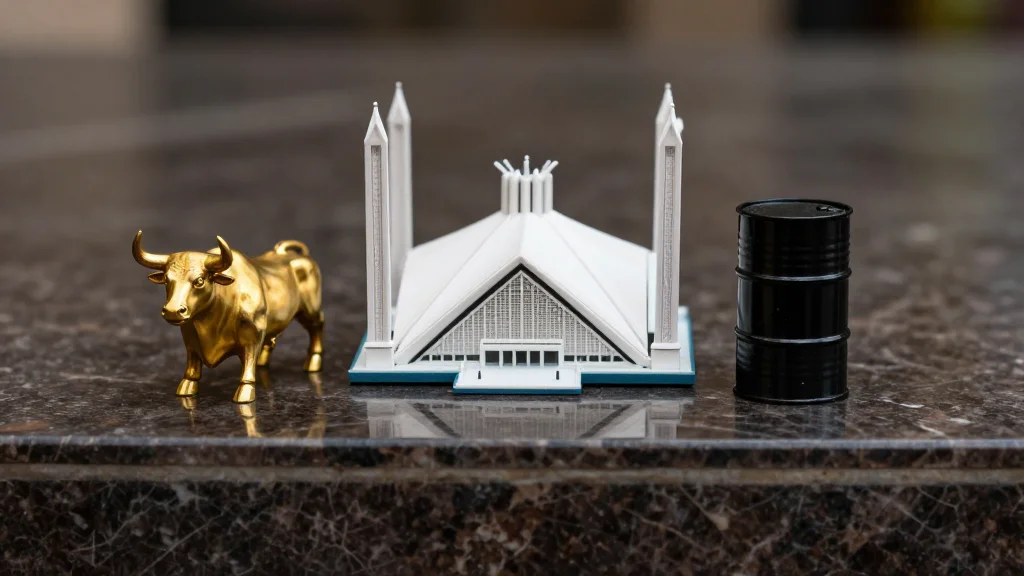
Asian Stocks Rise as Pakistan Offers Islamabad Venue for New US‑Iran Talks, Oil Slides

Why It Matters
The proposed Islamabad talks represent the first multilateral diplomatic effort to bridge the United States and Iran through a neutral Asian venue, directly influencing investor risk appetite in the region. A successful negotiation could dampen oil price volatility, lower inflationary pressures on Asian economies, and sustain the recent equity rally. Conversely, a failure would likely trigger a sharp rebound in oil prices, pressuring balance sheets of commodity‑dependent markets and reigniting capital outflows. For Asian investors, the episode underscores how geopolitical developments—particularly those involving major energy producers—can swiftly reshape market dynamics. The episode also highlights Pakistan’s emerging role as a diplomatic conduit, potentially positioning the country as a strategic facilitator in future regional negotiations, which could have longer‑term implications for its own financial markets and foreign‑investment appeal.
Key Takeaways
- •Pakistan proposes Islamabad as venue for a second U.S.-Iran round of talks.
- •Nikkei 225 up 2.3% to 57,804.81; Kospi up 2.7% to 5,968.06.
- •U.S. crude fell 1.7% to $97.37 a barrel; Brent down 0.9% to $98.49.
- •U.S. Vice President JD Vance said negotiations "did make some progress."
- •President Donald Trump said "we've been called by the other side" and "they want to work a deal."
Pulse Analysis
The market’s swift reaction to Pakistan’s diplomatic overture illustrates the high sensitivity of Asian equities to Middle‑East geopolitics, especially when oil prices are a dominant macro factor. Historically, any sign of de‑escalation in the region has buoyed risk assets, as seen during the 2023 ceasefire talks that lifted the MSCI Asia Pacific Index by roughly 1.5% over a week. This time, the rally is amplified by the novelty of a neutral Asian host, which reduces the perception of a U.S.-centric negotiation and signals broader regional buy‑in.
From a strategic standpoint, the move could reposition Pakistan as a diplomatic hub, potentially attracting foreign aid and investment tied to peace‑building initiatives. However, the fragility of the ceasefire in Lebanon and the ongoing U.S. blockade of Iranian ports mean that any miscalculation could trigger a rapid reversal. Investors should therefore monitor not only the formal acceptance of Islamabad as a venue but also ancillary signals—such as changes in Iranian oil export data or shifts in U.S. sanctions policy—that could pre‑empt market moves.
In the medium term, a successful second round could lay the groundwork for a more stable oil market, allowing Asian central banks to maintain accommodative stances without the threat of a supply shock. Conversely, a stalemate or escalation would likely see oil rebound above $110 a barrel, reigniting inflation concerns and prompting a flight to safety that could depress equity valuations across the region. Market participants should therefore calibrate exposure to energy‑sensitive sectors and remain vigilant for policy cues from Washington, Tehran, and Islamabad.
Asian Stocks Rise as Pakistan Offers Islamabad Venue for New US‑Iran Talks, Oil Slides
Comments
Want to join the conversation?
Loading comments...