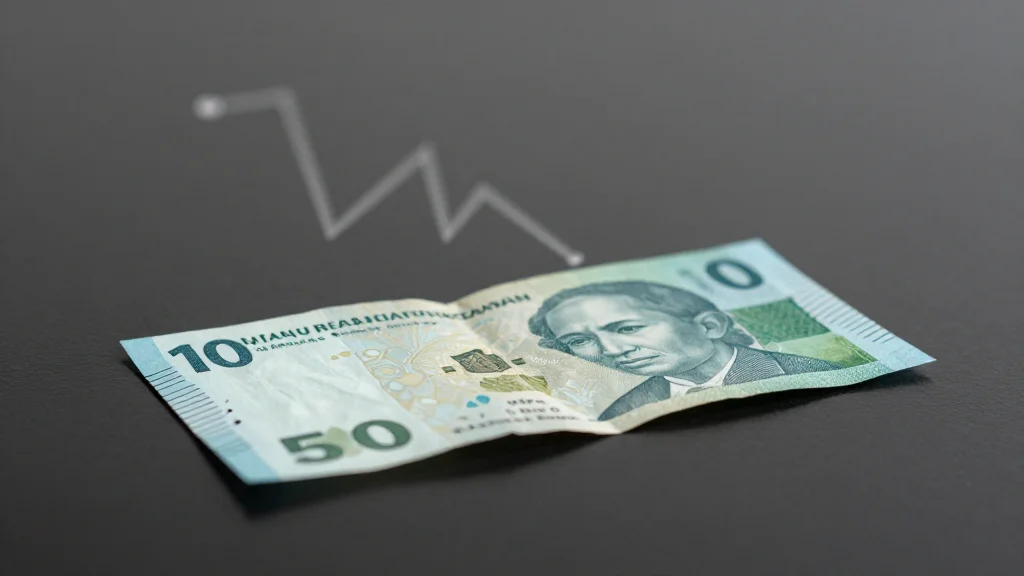
Indonesia’s Financial Regulator Says Stock Index Reflects Fundamentals After Fall
Companies Mentioned
MSCI
MSCI

FTSE Russell
Why It Matters
The sharper, fundamentals‑driven index signals Indonesia’s push for greater transparency, which could restore foreign investor confidence and stabilize the rupiah.
Key Takeaways
- •MSCI removed over a dozen Indonesian firms, index down 7%
- •OJK says index now reflects fundamentals after recent reforms
- •Rupiah hit record low 17,730 per dollar amid market stress
- •FTSE Russell also cutting firms with high shareholding concentration
- •Potential downgrade to frontier status spurred regulatory reforms
Pulse Analysis
The recent exodus of Indonesian equities from MSCI and FTSE Russell benchmarks has amplified market volatility, pushing the Jakarta Composite down more than 3% in a single session and widening a cumulative 7% slide. Investors interpret the removals as a signal of lingering governance and transparency gaps, prompting a sell‑off that tests the resilience of the country’s capital markets. While sentiment‑driven moves have faded, the index’s sharper alignment with fundamentals reflects regulators’ intent to let price discovery reflect underlying corporate health rather than speculative hype.
In response, Indonesia’s Financial Services Authority (OJK) has accelerated reforms aimed at improving disclosure standards, reducing shareholding concentration, and enhancing market infrastructure. The agency’s head, Friderica Widyasari Dewi, emphasized that the recent dip demonstrates a market that now reacts to real economic data, a prerequisite for avoiding a downgrade to frontier status—a scenario warned by MSCI earlier this year. Parallel efforts include the Danantara sovereign‑wealth fund’s engagement with listed firms and a forthcoming central‑bank policy review, both designed to bolster liquidity and investor confidence.
For emerging‑market investors, Indonesia’s experience underscores the delicate balance between regulatory tightening and market stability. A weaker rupiah, now trading at a record 17,730 per dollar, adds currency risk to equity exposure, but successful reforms could re‑anchor foreign capital flows and position the country as a more attractive destination in the Asia‑Pacific region. Continued alignment of index performance with fundamentals will be a key metric for assessing whether Indonesia can sustain its growth trajectory without reverting to frontier‑market volatility.
Indonesia’s financial regulator says stock index reflects fundamentals after fall
Comments
Want to join the conversation?
Loading comments...