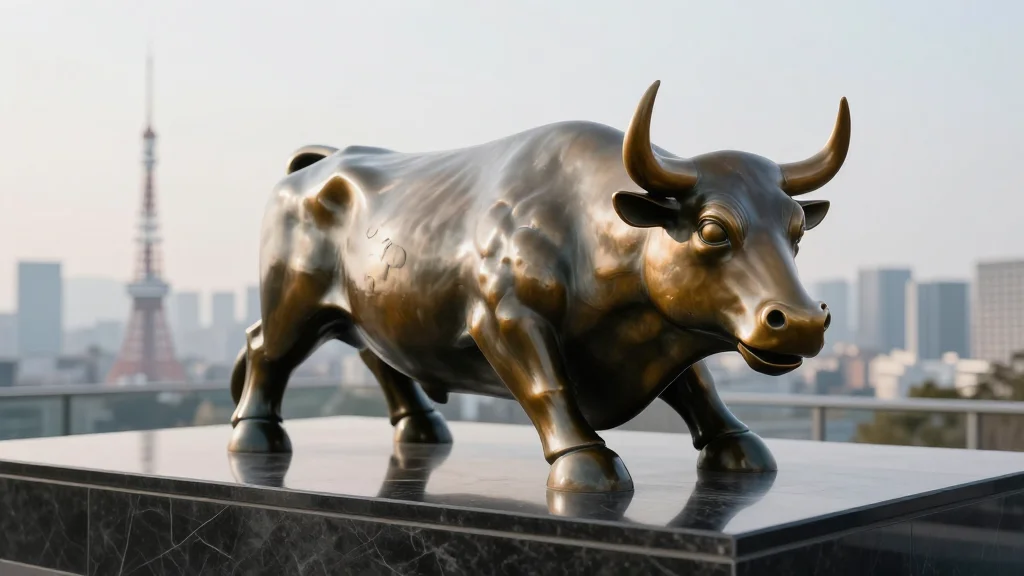
KOSPI Jumps 3.5% and Nikkei Gains 1% on June 9 After Circuit‑Breaker Crash

Companies Mentioned
Why It Matters
The KOSPI’s 3.5% rebound demonstrates how quickly Asian equity markets can recover from extreme volatility, especially when investors target oversold technology stocks. For portfolio managers, the episode reinforces the importance of liquidity and risk‑management tools such as circuit‑breakers, while also highlighting the sector‑specific resilience of AI and semiconductor names. For the broader Asia‑Pacific region, the mixed recovery signals that macro‑economic and geopolitical risks remain dominant. Persistent uncertainty over US monetary policy, oil price volatility, and Middle‑East tensions could continue to generate sharp intra‑day swings, making short‑term positioning and hedging strategies critical for both regional and global investors.
Key Takeaways
- •KOSPI jumped 3.5% (261.94 points) to 7,746.35, erasing most of Monday’s near‑9% plunge.
- •Nikkei 225 rose 0.97% (620.18 points) to 64,644.78, recouping part of a 4% loss.
- •Chip and AI‑related stocks, especially Samsung and SK Hynix, led the Korean rebound.
- •Oil prices eased slightly from a $96 per barrel peak, supporting risk‑asset sentiment.
- •Geopolitical tension in the Iran‑Israel conflict and a 72% Fed‑rate‑hike probability remain key downside risks.
Pulse Analysis
The June 9 bounce illustrates a classic market psychology pattern: after a circuit‑breaker event, traders often view the steep drop as a buying opportunity, especially in sectors that have been oversold. In South Korea, the concentration of semiconductor exposure means that any shift in sentiment toward chip stocks reverberates across the entire index. The rapid dip‑buying suggests that institutional investors have confidence in the longer‑term demand for AI‑related hardware, despite short‑term macro headwinds.
Historically, Asian markets have shown a propensity to over‑react to external shocks, only to correct quickly once the immediate panic subsides. The current episode mirrors the 2022 post‑COVID‑19 rebound, where tech‑heavy indices rallied on similar dip‑buying dynamics. However, the backdrop this time is more complex: a high probability of a Fed rate hike, lingering oil price pressure, and an active Iran‑Israel conflict create a multi‑layered risk environment. Investors who can navigate these layers—by balancing exposure to resilient AI and semiconductor names while hedging against geopolitical spikes—are likely to outperform.
Looking forward, the KOSPI’s new support level sits near 7,700 points, while the Nikkei’s floor appears around 64,300. Breaches of these thresholds could trigger another round of circuit‑breaker activity, especially if oil prices climb back above $100 per barrel or if the Fed signals a more aggressive tightening path. Conversely, a de‑escalation in West Asia or clearer Fed guidance could solidify the recovery, allowing the MSCI Asia Pacific Index to transition from a tentative bounce to a sustained uptrend.
KOSPI Jumps 3.5% and Nikkei Gains 1% on June 9 After Circuit‑Breaker Crash
Comments
Want to join the conversation?
Loading comments...