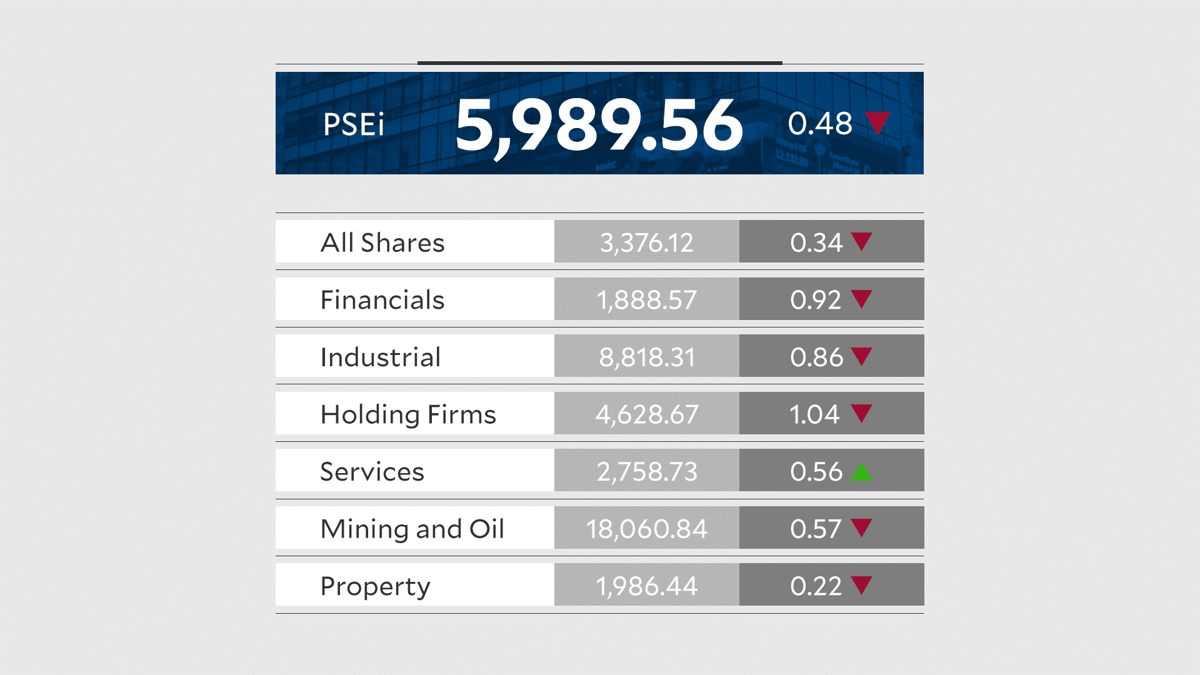
PSEi Falls Below 6,000 Ahead of BSP Policy Setting
Why It Matters
The dip signals heightened risk aversion in the Philippines, where central‑bank policy and global oil shocks could shape market direction. Investors will watch BSP’s guidance closely, as it may set the tone for credit conditions and foreign capital flows.
Key Takeaways
- •PSEi slipped below 6,000, closing at 5,989.56.
- •Turnover fell to $95 M, below $116 M YTD average.
- •Foreign investors sold $9 M worth of shares.
- •Services sector up 0.56%; conglomerates down 1.04%.
- •BSP likely to hold rates, hinting at future hike.
Pulse Analysis
The Philippine market’s recent slide reflects a confluence of local and global pressures. The U.S.‑Iran standoff has revived fears of supply disruptions in the Strait of Hormuz, pushing crude prices higher and feeding inflation expectations in oil‑importing economies like the Philippines. With the benchmark PSEi slipping below the psychological 6,000 barrier, market participants are reassessing risk, leading to subdued trading activity and a net foreign outflow of roughly $9 million. This environment underscores how geopolitical shocks can quickly translate into capital‑flight and lower liquidity in emerging markets.
Against this backdrop, the Bangko Sentral ng Pilipinas faces a delicate balancing act. While most analysts anticipate a hold on the policy rate at its next meeting, the central bank is expected to adopt a more hawkish tone, signaling that a rate hike remains on the table should inflationary pressures persist. Elevated oil prices feed directly into the Philippines’ consumer price index, eroding purchasing power and prompting the BSP to keep a close watch on core inflation. The anticipated stance aims to anchor expectations without choking growth, a tightrope that will be closely monitored by both domestic and foreign investors.
For investors, the immediate outlook remains cautious. The services sector posted a modest gain, but conglomerates and other heavyweights led the decline, reflecting broader uncertainty. Continued foreign selling and lower turnover suggest that capital may remain on the sidelines until clearer policy guidance emerges. Traders should therefore factor in both the BSP’s potential signaling and the volatility stemming from global oil markets when positioning portfolios, as these twin forces are likely to dominate market dynamics in the weeks ahead.
PSEi falls below 6,000 ahead of BSP policy setting
Comments
Want to join the conversation?
Loading comments...