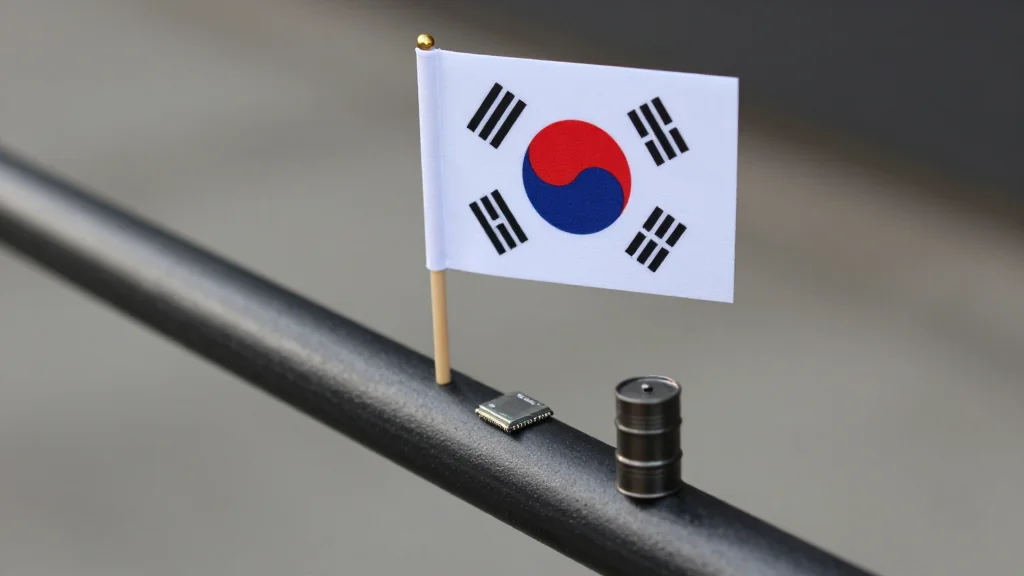
South Korean KOSPI Drops over 2% as Inflation Worries, US Tech Slump and Oil Volatility Hit

Companies Mentioned
Why It Matters
The KOSPI’s sharp decline underscores how tightly linked South Korean equities are to global macro forces, from US tech sentiment to oil price shocks. A $1.2 billion foreign outflow not only depresses market depth but also signals reduced confidence in Korea’s export‑heavy economy, potentially prompting tighter monetary policy. For investors, the episode highlights the need to monitor cross‑border risk channels, especially as AI‑related demand and supply‑chain constraints could amplify future volatility. Furthermore, the episode illustrates the fragility of the Asian tech sector when US market dynamics turn negative. Korean chipmakers, which account for a sizable share of global memory production, are vulnerable to both demand swings and supply‑chain bottlenecks. Persistent inflation pressures could also erode consumer spending, affecting sectors beyond technology, such as automotive and consumer goods, thereby broadening the impact on the Korean economy.
Key Takeaways
- •KOSPI fell 166.8 points (2.22%) to 7,349.22 on May 19, its steepest slide of the day.
- •Foreign investors sold a net 1.654 trillion won (~$1.23 bn) of Korean equities.
- •US tech indices slipped, with Apple and Microsoft closing lower, dragging Korean chip stocks.
- •Brent crude hovered around $110 per barrel; U.S. crude near $103, fueling inflation concerns.
- •Seagate CEO warned of long lead times for new factories, highlighting memory‑chip supply constraints.
Pulse Analysis
The KOSPI’s tumble reflects a perfect storm of external and internal pressures that could reshape investor behavior in the region. Historically, Korean markets have rebounded quickly from external shocks, but the current mix of inflation anxiety, a tech‑heavy global sell‑off, and volatile energy prices creates a more complex risk matrix. The $1.2 billion foreign outflow is a tangible metric of waning confidence, suggesting that capital may now be seeking safer havens until macro uncertainties resolve.
From a strategic standpoint, Korean conglomerates must navigate two divergent forces: the need to accelerate AI‑related semiconductor production while contending with supply‑chain bottlenecks that could delay capacity expansion. The Seagate CEO’s comment underscores a broader industry reality – scaling memory production is capital‑intensive and time‑consuming, meaning any prolonged supply crunch could translate into higher margins for firms that manage to secure capacity, but also heightened volatility for those caught short.
Looking forward, the market’s trajectory will likely be dictated by three variables: the resolution of the Iran‑related oil supply risk, the performance of US tech earnings (especially Nvidia), and domestic policy responses to inflation. If oil prices stabilize and US tech rebounds, foreign investors may re‑enter, providing a lift to the won‑denominated equities. Conversely, persistent inflation and continued tech weakness could entrench the current bearish sentiment, prompting a deeper correction. Investors should therefore calibrate exposure to Korean equities with a keen eye on global macro cues and sector‑specific supply dynamics.
South Korean KOSPI drops over 2% as inflation worries, US tech slump and oil volatility hit
Comments
Want to join the conversation?
Loading comments...