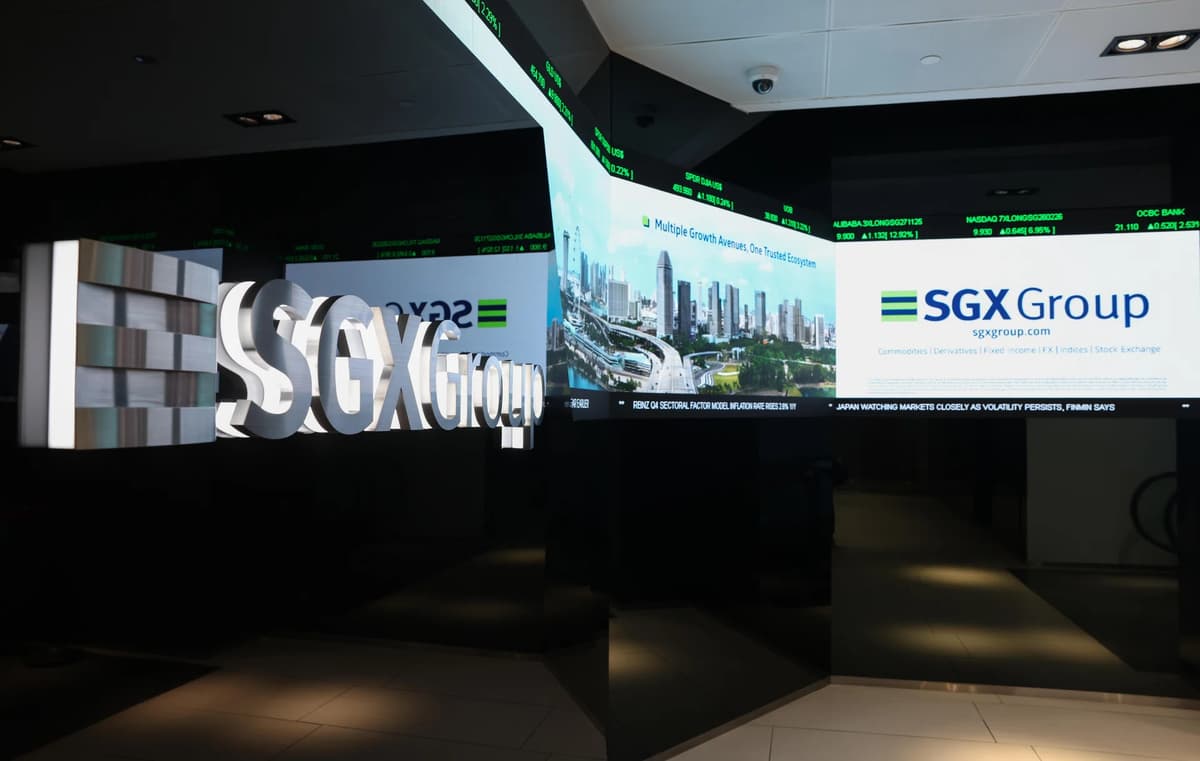
STI Dips 0.4% as Investors Are Concerned About War and Inflation
Companies Mentioned
Why It Matters
The dip signals that Singapore’s equity market remains vulnerable to external shocks, potentially curbing capital inflows and affecting regional fund allocations. Investors will watch how banks and AI‑driven firms navigate the volatile macro environment.
Key Takeaways
- •STI fell 0.4% to 4,922.86 amid war and inflation worries
- •UOB dropped 2.44% despite announcing S$0.71 dividend
- •Yangzijiang Shipbuilding rose 3.8% to S$4.33 (~$3.20)
- •UMS Integration surged 8.08% on AI momentum
- •Regional markets mixed; Hang Seng +0.2%, Nikkei +1%
Pulse Analysis
The Straits Times Index’s modest decline reflects a broader risk‑off mood among Asian investors. Heightened concerns over the Israel‑Lebanon conflict and stubborn global inflation have prompted traders to trim exposure to cyclical stocks, favoring defensive positions. Singapore’s market, traditionally a haven for foreign capital, is now reacting to the same macro‑economic headwinds that have rattled Europe and North America, underscoring the interconnectedness of global sentiment.
Sector‑specific moves highlight divergent narratives. While banks such as UOB and DBS slipped amid dividend announcements, Yangzijiang Shipbuilding bucked the trend, gaining nearly 4% on optimism around shipyard demand and a favorable USD/SGD exchange rate. Meanwhile, UMS Integration’s 8% surge illustrates the growing appetite for AI‑related equities, a theme echoed across the iEdge Singapore Next 50 Index. These micro‑trends suggest that investors are selectively rewarding companies with clear growth catalysts, even as overall market breadth narrows.
Regionally, the mixed performance of neighboring indices—Japan’s Nikkei climbing 1% and Hong Kong’s Hang Seng edging up 0.2%—signals that the impact of geopolitical uncertainty is uneven. Asset managers are likely to recalibrate regional allocations, balancing exposure to resilient sectors against the backdrop of a tentative cease‑fire. For multinational investors, Singapore’s dip serves as a cautionary indicator: while the market offers liquidity and dividend yields, it remains sensitive to external shocks, making active risk management essential in the coming months.
STI dips 0.4% as investors are concerned about war and inflation
Comments
Want to join the conversation?
Loading comments...