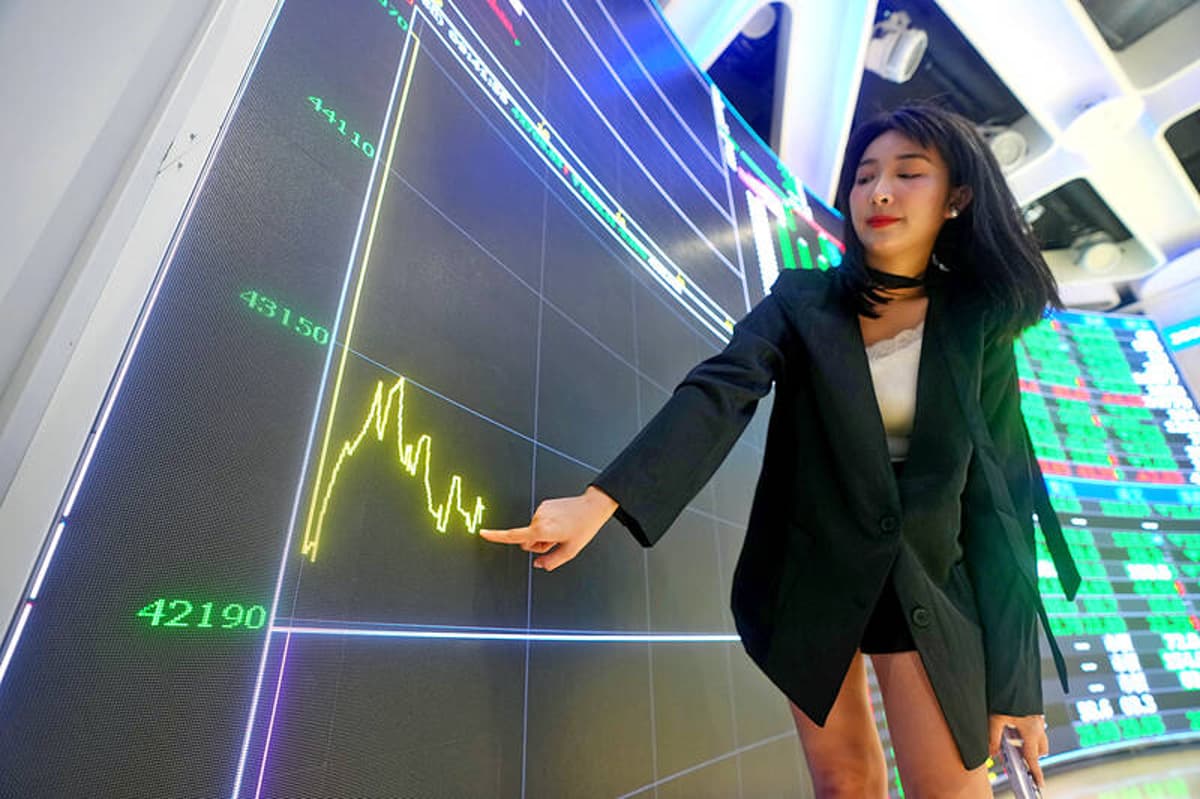
TAIEX Records Third-Heaviest Fall After US Market Drop
Why It Matters
The tumble underscores how U.S. monetary‑policy signals and Middle‑East tensions can quickly reverse Asia’s AI‑driven rally, putting Taiwan’s export‑heavy economy and global tech supply chains at risk.
Key Takeaways
- •TAIEX fell 3.48% to 43,503, third‑largest drop historically
- •US jobs data sparked fears of tighter Fed policy, pressuring global markets
- •Taiwan's tech giants TSMC, MediaTek, Foxconn each lost over 2.9%‑5.3%
- •Oil prices surged >5% after Iran‑Israel clashes, adding market stress
- •Regional indices in Korea, Japan, Hong Kong all posted double‑digit declines
Pulse Analysis
The recent plunge in Taiwan’s TAIEX highlights the fragility of the AI‑fuelled market surge that has dominated Asian equities this year. After months of record‑setting gains driven by expectations of AI‑related revenue, investors were jolted by U.S. payroll data that showed a robust 172,000‑job increase, far exceeding forecasts. That figure reinforced the narrative that the Federal Reserve may keep interest rates elevated longer than anticipated, prompting a risk‑off wave that rippled through global markets, including the Taiwan Stock Exchange.
Technology heavyweights, which together account for more than 40% of the TAIEX, felt the pressure most acutely. TSMC, the world’s largest contract chipmaker, slipped nearly 3%, while MediaTek and Foxconn each fell over 5%. The sector’s vulnerability is amplified by the looming earnings season; analysts expect TSMC’s quarterly report to either validate the AI optimism or confirm a slowdown. Meanwhile, the broader Asian landscape mirrored Taiwan’s pain, with Korea’s KOSPI tumbling 8.3% and Japan’s Nikkei shedding nearly 4%, as semiconductor stocks across the region faced similar sell‑offs.
Beyond monetary policy, geopolitical flashpoints added another layer of uncertainty. The escalation between Iran and Israel sent Brent crude up more than 5% and WTI close to 5%, inflating energy costs for manufacturers and further dampening investor sentiment. For market participants, the episode serves as a reminder that Taiwan’s growth trajectory is tightly linked to external macro forces—U.S. rate expectations, oil price volatility, and regional security dynamics—all of which can swiftly reshape risk appetites and valuation multiples. Companies and investors alike will be watching the Fed’s next moves and TSMC’s earnings for clues on whether the AI rally can regain momentum or remain subdued.
TAIEX records third-heaviest fall after US market drop
Comments
Want to join the conversation?
Loading comments...