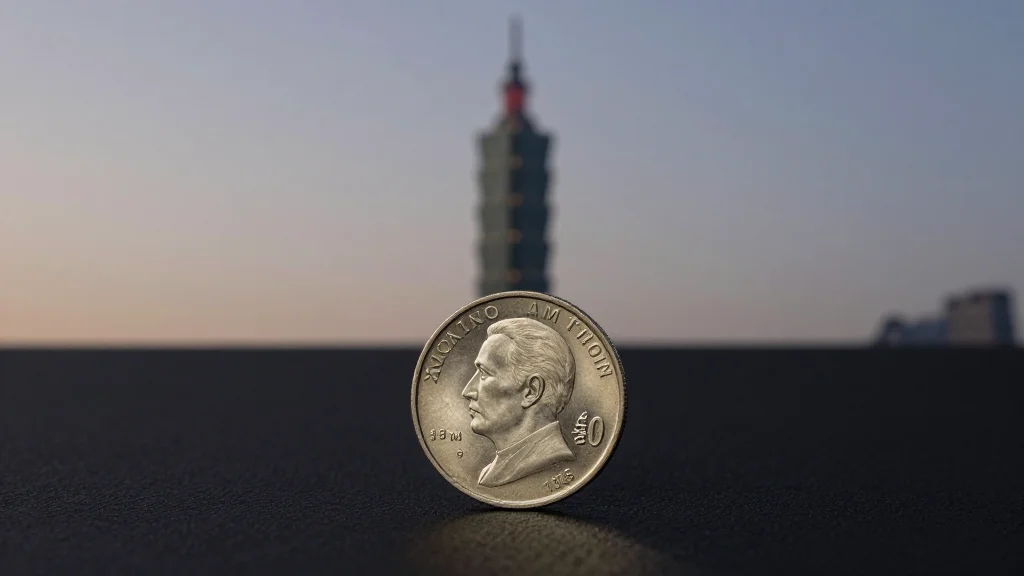
Taiwan’s NT$500bn Stabilization Fund Posts $253M Profit, Stays on Standby Amid US Tariff Shock

Why It Matters
The stabilization fund’s profit and continued dormancy send a clear message about Taiwan’s market resilience, influencing both domestic and foreign investor confidence. By demonstrating that the fund can generate strong returns without active market intervention, the government underscores the robustness of Taiwan’s corporate sector and its capacity to absorb external shocks. This perception is critical for capital inflows, especially as Asian markets grapple with higher energy costs and lingering trade uncertainties. Moreover, the fund’s standby posture serves as a strategic lever for policymakers. Should tariff escalations or geopolitical crises intensify, the fund can be re‑activated swiftly, providing a potent tool to curb excessive volatility. Its current profit cushion also offers fiscal flexibility, allowing the government to allocate resources to other economic priorities while maintaining a latent safety net for the equity market.
Key Takeaways
- •National Stabilization Fund posted NT$8.054 billion ($253.4 million) net profit for the month.
- •Fund holds NT$3.56 billion ($112.1 million) in Taiwanese stocks with an unrealized gain of NT$1.273 billion ($40.1 million).
- •Holding cost of NT$9.963 billion translates to a 80.84 % return on investment.
- •TAIEX rose 0.11 % to 35,457.29 points, a 16 % gain since the fund’s last market support on Jan. 12.
- •Fund remains on standby, ready to act if US tariff shocks or geopolitical risks intensify.
Pulse Analysis
Taiwan’s stabilization fund operates at the intersection of fiscal prudence and market engineering. Its recent profitability—driven largely by capital appreciation rather than active trading—demonstrates that a well‑capitalized sovereign fund can generate returns while remaining a latent market stabilizer. This dual role is increasingly valuable in a region where trade policy volatility and energy price spikes threaten equity valuations.
Historically, the fund’s interventions have been timed to blunt sharp sell‑offs, most notably during the 2023 US tariff surge. The current decision to stay idle, despite renewed tariff rhetoric, suggests that market participants have internalized a lower risk premium for Taiwan equities. This could encourage higher foreign portfolio inflows, as investors perceive a reduced likelihood of abrupt policy‑driven market distortions.
However, the fund’s silence also introduces a subtle risk: without an active backstop, market participants may over‑price the safety net, leading to complacency. Should a sudden shock—such as a coordinated tariff escalation or a sharp oil price spike—materialize, the fund’s rapid deployment will be critical. The committee’s pledge to act "in a timely manner" provides a contingency, but the timing and scale of any future intervention will be closely scrutinized. In the near term, the fund’s profitability and standby status reinforce Taiwan’s image as a stable investment destination, but the true test will be how quickly it can mobilize if external pressures intensify.
Taiwan’s NT$500bn Stabilization Fund Posts $253M Profit, Stays on Standby Amid US Tariff Shock
Comments
Want to join the conversation?
Loading comments...