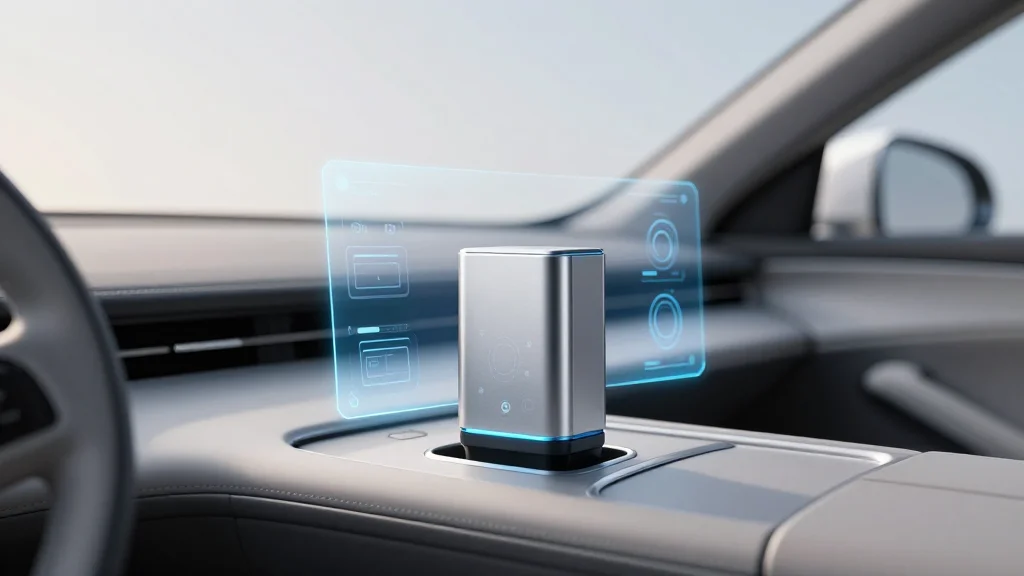
ByteDance Bringing Doubao AI to Car Cabins in New Tech Rivalry
Key Takeaways
- •ByteDance partners with Seres, investing ¥100M (~$14.7M) for smart‑cabin AI.
- •Doubao AI runs a 30‑billion‑parameter model on Nvidia Thor Z chips.
- •Alibaba counters with 4‑billion‑parameter Qwen on Qualcomm 8797 automotive chip.
- •On‑device large models aim to replace cloud reliance for cabin interactions.
- •Competition could accelerate AI‑driven features across Chinese EV market.
Pulse Analysis
The automotive industry is undergoing a paradigm shift as large‑language models move from cloud servers into vehicle cabins. Early adopters like Tesla demonstrated the potential of on‑board AI assistants, reducing latency and enabling richer natural‑language interactions. This evolution is driven by advances in edge computing and the need for privacy‑preserving, real‑time processing, prompting automakers and tech firms to explore on‑device solutions that can handle vision, voice, and environmental perception without constant internet connectivity.
ByteDance’s entry into the smart‑cabin arena leverages its Doubao AI, a model originally honed for mobile devices, now scaled to 30 billion parameters for automotive use. By collaborating with Seres and deploying Nvidia’s memory‑optimized Thor Z chips in an external box, ByteDance sidesteps the traditional cloud‑centric architecture, offering a more responsive and secure user experience. In contrast, Alibaba’s Qwen model adopts a lighter 4‑billion‑parameter design paired with Qualcomm’s 8797 chip, highlighting divergent strategies: ByteDance bets on raw model size for broader capabilities, while Alibaba prioritizes efficiency and integration simplicity.
The rivalry has broader implications for the Chinese EV market and beyond. OEMs may soon face pressure to embed AI partners directly into their platforms, creating new revenue streams for tech firms and reshaping vehicle differentiation. As AI‑driven cabin features become a selling point, regulators will need to address data privacy and safety standards. Ultimately, the competition between ByteDance and Alibaba could accelerate the rollout of sophisticated, on‑device assistants, setting a new benchmark for in‑car user experiences worldwide.
ByteDance bringing Doubao AI to car cabins in new tech rivalry
Comments
Want to join the conversation?