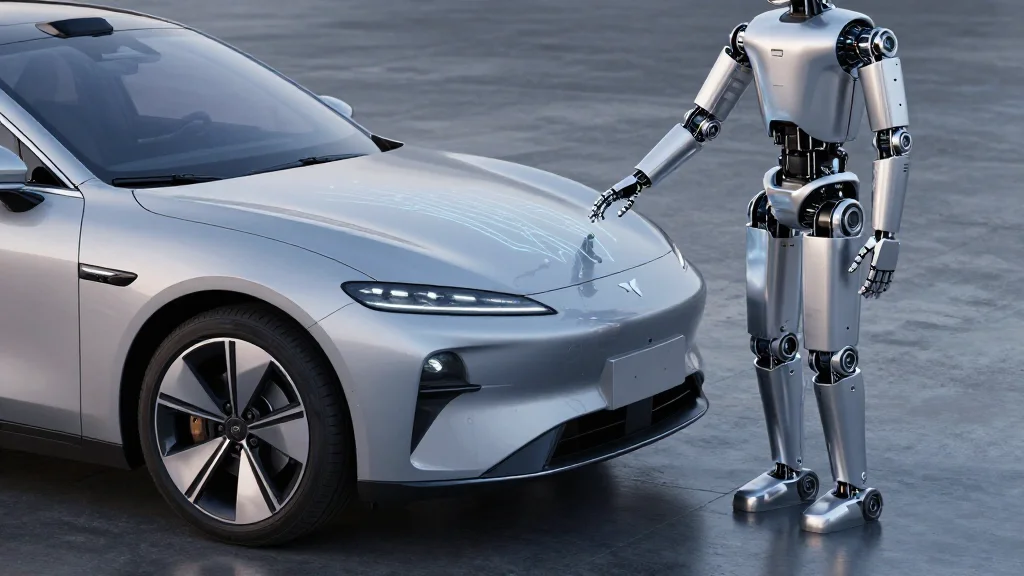
Not Just Cars: Watch The Robotic Shift At Auto China 2026
Key Takeaways
- •XPeng's Iron robot shares Vision‑Language‑Action AI with its driver‑assist system
- •Xiaomi tests humanoid robots on production lines, achieving >90% task success
- •Chery prices its Mornine humanoid at ~¥285,800 (~$40k) via dealership network
- •UBTECH's Walker S2 augments factory workers, targeting 80% human productivity by 2028
Pulse Analysis
The emergence of "Physical AI" at Auto China 2026 reflects a broader strategic pivot in China’s auto sector. Rather than viewing artificial intelligence as a feature layered onto electric vehicles, firms like XPeng are embedding a unified perception and decision‑making stack into both cars and humanoid robots. This approach leverages existing sensor suites—LiDAR, cameras, and high‑throughput Turing chips—allowing manufacturers to spread R&D costs across multiple product lines and shorten time‑to‑market for new robotic applications.
Manufacturers are also testing the commercial viability of robotics in real‑world settings. Xiaomi’s factory trials demonstrate that AI‑driven humanoids can reliably perform repetitive fastening tasks with a success rate exceeding 90%, proving that the technology can meet the tight tolerances of mass production. Meanwhile, Chery’s decision to price its Mornine humanoid at roughly $40,000 and sell through its dealership network mirrors the automotive distribution model, suggesting a future where robots are as ubiquitous as cars on showroom floors. This pricing strategy could democratize access to advanced robotics for mid‑size enterprises and retail environments.
The broader implication for the industry is a convergence of mobility, automation and service sectors under a single AI umbrella. UBTECH’s Walker S2 and Geely’s purpose‑built robotaxi illustrate how manufacturers are positioning robots as collaborative partners rather than replacements, aiming for productivity levels that approach human performance within the next few years. As Chinese firms scale production and integrate AI across vehicles, factories and public spaces, they are poised to set new standards for cost‑effective, multi‑modal automation that could reshape global supply chains and consumer expectations.
Not Just Cars: Watch The Robotic Shift At Auto China 2026
Comments
Want to join the conversation?