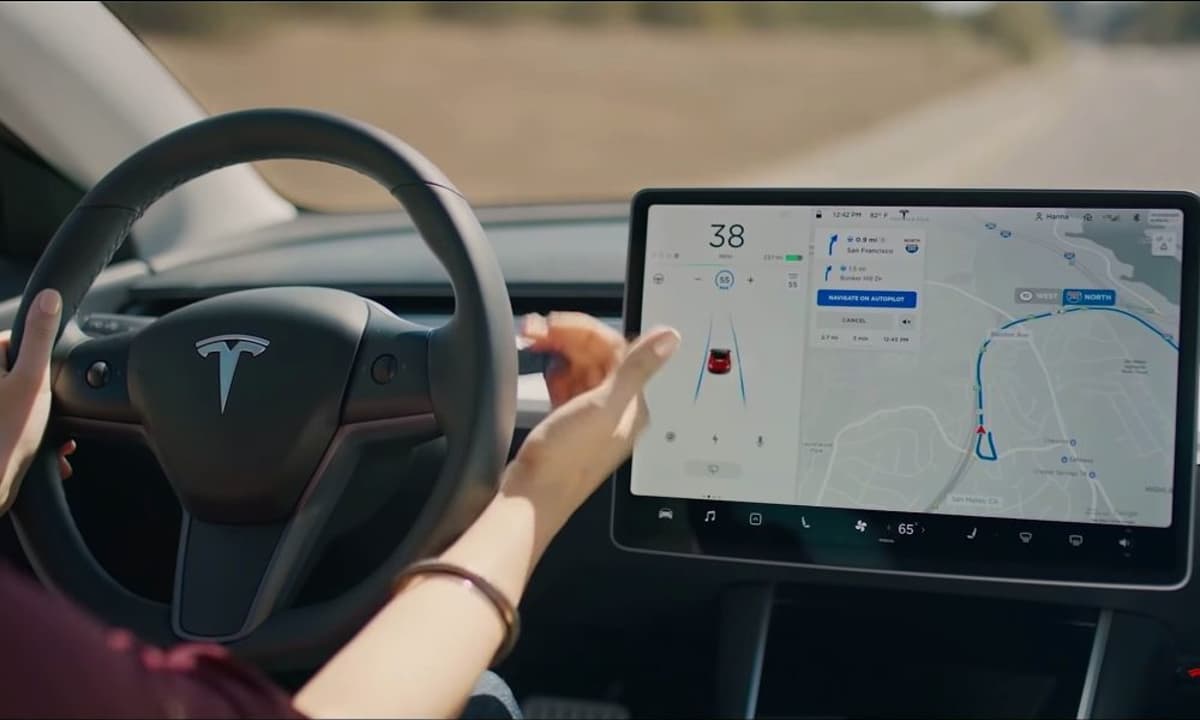
Tesla Confirmed HW3 Can’t Do Unsupervised FSD but There’s More to the Story
Key Takeaways
- •HW3 vehicles cannot achieve unsupervised Full Self-Driving.
- •Tesla will release V14‑lite software for HW3 in late June 2026.
- •Discounted trade‑in program offered to legacy HW3 owners.
- •Unsupervised FSD rollout now targeted for Q4 2026, geography‑limited.
Pulse Analysis
Since its debut in April 2019, Tesla’s Autopilot Hardware 3 (HW3) has been the backbone of the company’s Full Self‑Driving (FSD) promise. Early buyers were sold the notion that the hardware would eventually enable fully autonomous, driver‑less operation, often paying premium upgrades ranging from $8,000 to $15,000. Over time, Tesla’s neural‑network models grew more demanding, pushing newer AI4 platforms to later software versions (v13, v14) while HW3 remained stuck at v12.6. The recent admission that HW3 cannot reach unsupervised FSD highlights a widening gap between hardware capability and software ambition, a rare public acknowledgment from a firm that usually frames upgrades as seamless.
To soften the blow, Tesla unveiled a V14‑lite over‑the‑air update for HW3 slated for late June 2026. The patch will back‑port many AI4 features—such as enhanced lane‑keeping and predictive braking—to older vehicles, giving owners a tangible performance boost without a physical retrofit. Simultaneously, the company introduced a discounted trade‑in program, allowing legacy HW3 owners to exchange their cars for newer models at a reduced price. Analysts see the combined software upgrade and financial incentive as a strategic move to retain a disgruntled segment and protect the brand’s long‑term revenue stream.
Unsupervised FSD is now projected for the fourth quarter of 2026, but Musk emphasized a gradual, geography‑limited rollout. This timeline puts Tesla behind rivals like Waymo and Cruise, which are already piloting driver‑less services in select cities. The delay may pressure Tesla to accelerate hardware revisions or accelerate its “Full Self‑Driving” subscription model as an interim revenue source. For investors, the key questions revolve around the cost of the trade‑in program, the adoption rate of V14‑lite, and whether the eventual unsupervised launch can recoup the early‑adopter goodwill lost in 2025.
Tesla confirmed HW3 can’t do Unsupervised FSD but there’s more to the story
Comments
Want to join the conversation?