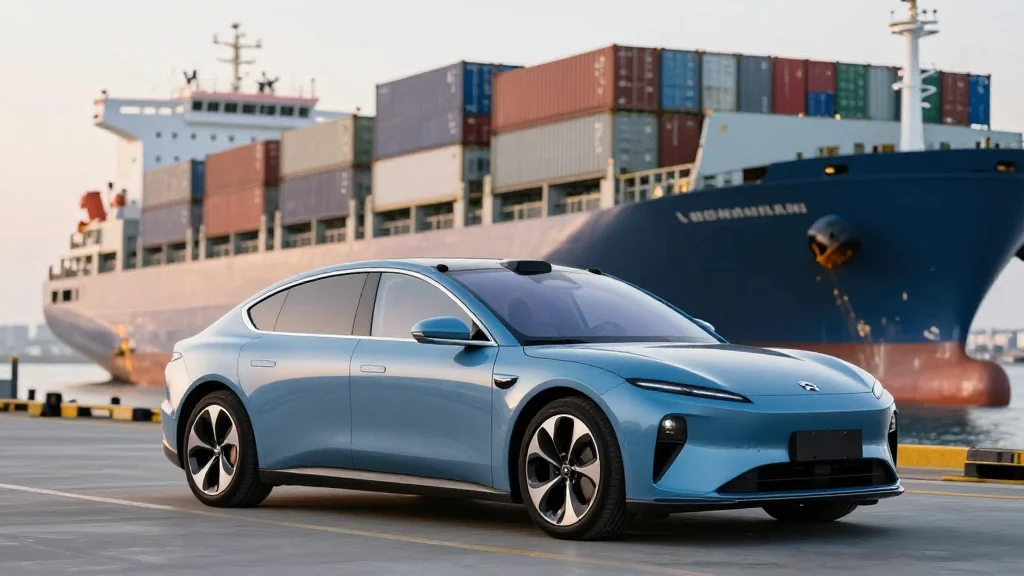
Wrap-Up: April 2026 Deliveries for Major Chinese Automakers
Key Takeaways
- •BYD overseas shipments hit 134k units, up 71% YoY
- •Geely exports rose 245% to 83k, offset domestic slump
- •Leapmotor deliveries jumped 74% YoY, targeting 60% overseas sales
- •Zeekr delivery growth 132% YoY, driven by 9X hybrid SUV
- •Nio and Xpeng show mixed trends, with modest YoY gains
Pulse Analysis
China’s NEV market remains a bellwether for global electric‑vehicle trends. BYD’s 321,123 April sales cement its domestic dominance, but the real story is its overseas surge – more than 134,000 units shipped, a 70.9% YoY jump that pushes the Chinese automaker into the top tier of global exporters. Geely’s strategy mirrors this export‑first pivot; despite a 0.45% domestic sales rise, its shipments abroad leapt 245% to 83,186 units, cushioning a 27.6% domestic decline. The data illustrate how Chinese manufacturers are leveraging scale and government incentives to capture foreign market share, reshaping the competitive landscape.
Meanwhile, newer entrants are rewriting growth narratives. Leapmotor’s 71,387 deliveries – up 73.95% YoY – reflect aggressive model launches like the A10 and D19 SUVs, and a clear ambition to generate 60% of sales overseas. Zeekr’s 31,787 units, a 131.57% YoY surge, are anchored by the premium 9X hybrid SUV priced around $74,000, and the recently introduced 8X. Huawei’s HIMA division and Xiaomi EV also posted double‑digit growth, with Xiaomi’s upcoming YU7 GT priced between $63,000 and $70,000, signaling a premium‑performance niche. These fast‑moving players are intensifying competition on technology, price and design, accelerating the overall market pace.
The ripple effects extend beyond China’s borders. Li Auto’s flagship L9 Livis, priced at roughly $78,000, and Voyah’s Taishan X8 SUV at about $42,000, illustrate a trend toward higher‑margin, technology‑rich models targeting affluent overseas buyers in the Middle East and Southeast Asia. As Chinese firms chase export milestones – SGMW surpassed 30,000 overseas units in April – they pressure incumbent global OEMs to innovate and price competitively. The convergence of record exports, rapid model turnover, and aggressive pricing forecasts a more fragmented yet highly dynamic global EV market, where Chinese brands could claim a sizable share of future sales volumes.
Wrap-up: April 2026 deliveries for major Chinese automakers
Comments
Want to join the conversation?