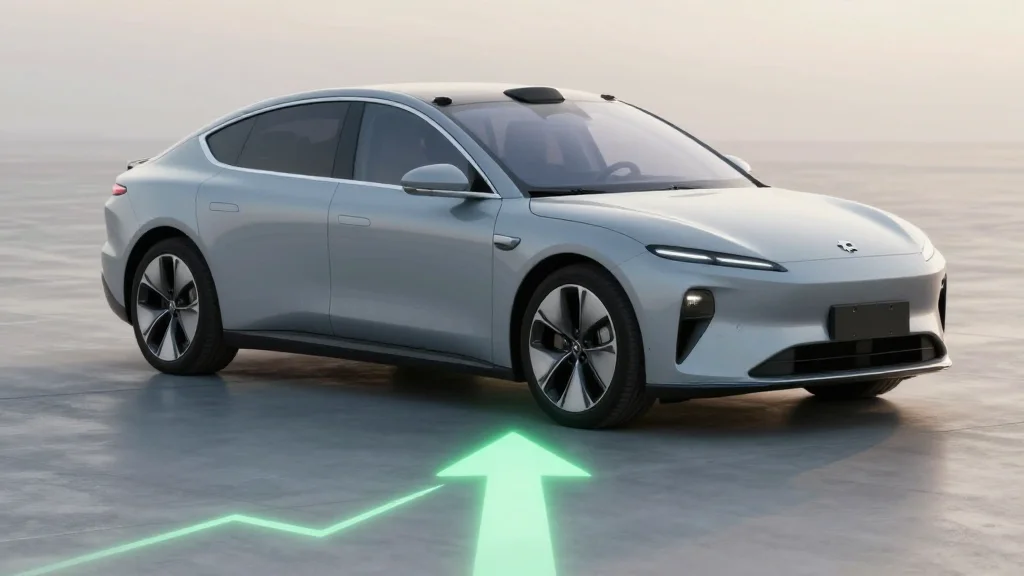
1 In 4 Cars Sold Globally Is An Electric Vehicle
Companies Mentioned
Why It Matters
The rapid adoption signals a decisive shift toward electrified mobility, reshaping automakers' product strategies and accelerating demand for charging infrastructure worldwide.
Key Takeaways
- •EV sales hit 21 million units in 2025, doubling since 2022.
- •EVs represent 25 % of global passenger‑car sales, up from 2 % in 2018.
- •China accounts for ~60 % of worldwide EV sales, 13 million units.
- •Europe and U.S. together sold nearly 8 million EVs in 2025.
- •Plug‑in hybrids contributed significantly to the overall EV market share.
Pulse Analysis
The 2025 EV milestone reflects a convergence of policy incentives, battery‑cost declines, and expanding model portfolios. Governments across Europe, North America, and parts of Asia have tightened emissions standards while offering subsidies, prompting manufacturers to accelerate electrification roadmaps. Simultaneously, lithium‑ion battery prices have fallen below $80 per kilowatt‑hour, making EVs price‑competitive with internal‑combustion models in many segments. This price parity, coupled with broader consumer awareness, has propelled the market share from a niche 2 percent in 2018 to a quarter of all new car sales today.
China’s outsized share stems from a coordinated industrial strategy that blends massive state subsidies, a dense charging network, and a domestic supply chain that dominates battery cell production. The country’s "dual‑credit" system rewards manufacturers for meeting EV quotas, while local firms benefit from economies of scale in battery manufacturing and vehicle assembly. As a result, Chinese brands have flooded both domestic and export markets with affordable EVs, pressuring global rivals to either partner with Chinese suppliers or invest heavily in their own battery facilities to stay competitive.
For legacy automakers and investors, the data underscore the urgency of retooling factories and securing raw‑material contracts. Companies lagging in EV rollout risk losing market relevance, while those that pivot quickly can capture growth in a market projected to exceed 40 percent share by 2030. Infrastructure developers also stand to benefit as demand for public and residential chargers accelerates. However, challenges remain, including grid capacity, recycling of batteries, and ensuring a smooth transition for workforces dependent on traditional powertrains. Navigating these dynamics will define the next decade of automotive innovation.
1 In 4 Cars Sold Globally Is An Electric Vehicle
Comments
Want to join the conversation?
Loading comments...