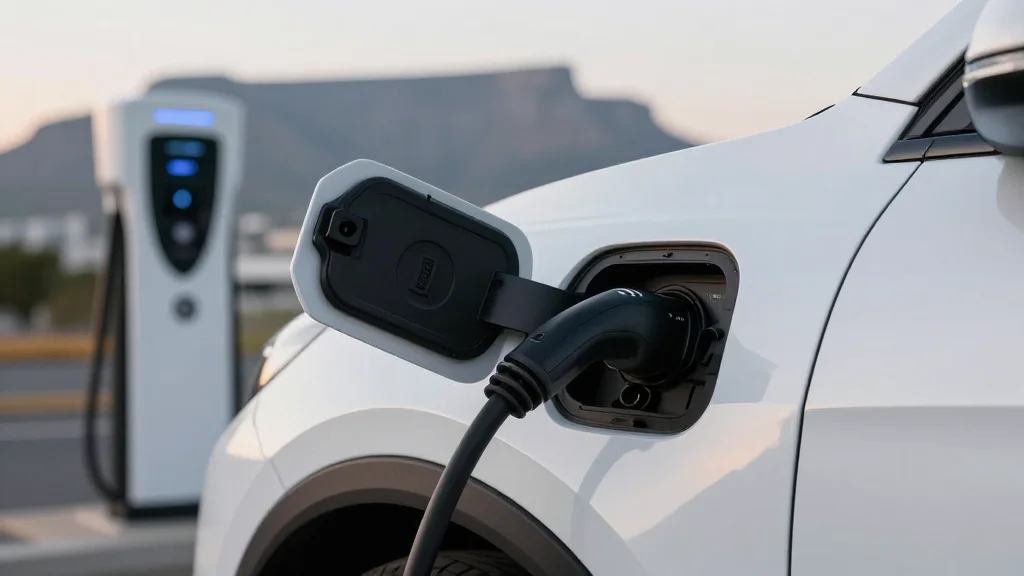
64% Sales Jump in South Africa that Few Saw Coming
Why It Matters
The rapid increase signals accelerating EV adoption in South Africa, translating into higher operator revenues and testing the capacity of existing charging infrastructure. It also highlights a market poised for further growth as new models and price competition attract buyers.
Key Takeaways
- •Rubicon's daily energy use up 64% YoY.
- •April 2026 consumption hit 103,317 kWh, record high.
- •EV sales surged, 389 units sold in March 2026.
- •BYD and Geely launches boost market competition.
- •Charger congestion remains minimal despite usage rise.
Pulse Analysis
South Africa’s electric‑vehicle ecosystem is entering a pivotal phase, with Rubicon’s network illustrating how demand can outpace expectations. The operator’s 64% increase in daily energy dispensed compared with 2025 reflects not only a spike in vehicle mileage but also a broader consumer shift toward electrified mobility. By April 2026, Rubicon delivered over 103,000 kWh, a record that eclipses its previous annual totals and underscores the scaling of public‑charging usage across both urban hubs and long‑haul corridors.
Several market dynamics are fueling this momentum. Record‑breaking sales of 389 new EVs in March, buoyed by BYD’s expanding portfolio and Geely’s competitively priced E2 hatchback, have expanded the pool of drivers needing public charge points. Concurrently, soaring fuel prices have spurred a 45% rise in used‑EV searches, indicating price‑sensitive consumers are turning to electric alternatives. While the charger‑to‑car ratio in South Africa has historically been favourable, the uptick in simultaneous charger usage observed on GridCars’ live map suggests that infrastructure planners must anticipate future congestion as adoption accelerates.
For operators like Rubicon, the revenue implications are immediate: the first four months of 2026 already surpassed the entire 2024 turnover and represent half of 2025’s earnings. Yet the modest congestion levels reported by EV owners—only 8% experiencing significant wait times—suggest a short window before capacity constraints emerge. Stakeholders, including policymakers and investors, should therefore consider expanding fast‑DC networks, incentivising private‑sector partnerships, and streamlining permitting processes to sustain growth without compromising user experience. Proactive infrastructure investment will be key to maintaining South Africa’s competitive charger‑to‑car ratio while supporting the nation’s broader decarbonisation goals.
64% sales jump in South Africa that few saw coming
Comments
Want to join the conversation?
Loading comments...