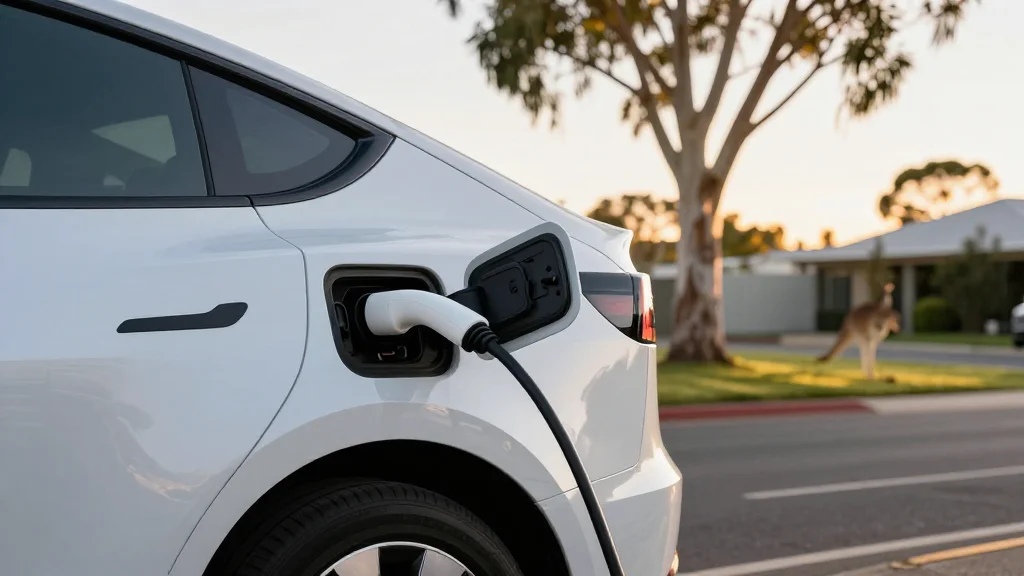
“A Good Outcome:” Full FBT Exemption for EVs to Stay for Another Year, Despite Calls to Scrap It
Why It Matters
The policy directly influences EV affordability and sales momentum in Australia, shaping emissions targets and future tax revenue streams.
Key Takeaways
- •Full EV FBT exemption stays until 31 Mar 2027.
- •From Apr 2027, only cars ≤AU$75k get full exemption.
- •All EVs receive 25% FBT discount after Apr 2029.
- •First three years cost AU$2 bn (US$1.3 bn).
- •Projected cost AU$2.8 bn (US$1.85 bn) by 2028‑29.
Pulse Analysis
Australia’s Fringe Benefit Tax exemption has become the cornerstone of its electric‑vehicle push, offering a tax‑free fringe benefit to employees who drive EVs. By keeping the full exemption through March 2027, the government gives manufacturers and buyers a predictable window to plan purchases, especially as the AU$75,000 (≈US$49,500) price cap aligns with the growing pool of sub‑AU$45,000 (≈US$30,000) models. This approach mirrors other OECD nations that blend tax incentives with direct subsidies, but Australia’s reliance on a tax exemption makes the policy especially sensitive to fiscal pressures.
The market response has been measurable. Since the scheme’s inception, the number of affordable EV models has tripled, and eight vehicles now sit below the AU$45,000 threshold, expanding consumer choice beyond premium brands. The Australian Electric Vehicle Council estimates the discount added roughly 64,000 battery‑EVs and 78,000 total EVs to the road by the end of 2025, lifting EV share to 14.5 % of new car sales. Yet, despite these gains, six in seven new car buyers still opt for petrol, underscoring that tax relief alone cannot overcome entrenched preferences and infrastructure gaps.
Fiscal sustainability and climate ambition are now at odds. The program’s cost has risen from AU$2 billion (US$1.3 billion) in its first three years to a projected AU$2.8 billion (US$1.85 billion) by 2028‑29, prompting the staged reduction to a permanent 25 % discount. Policymakers must balance revenue considerations with the need to meet emissions targets, potentially by integrating emerging technologies such as vehicle‑to‑grid (V2G) incentives. A calibrated, long‑term framework that rewards affordable, grid‑interactive EVs could preserve market momentum while delivering the fiscal discipline the Treasury seeks.
“A good outcome:” Full FBT exemption for EVs to stay for another year, despite calls to scrap it
Comments
Want to join the conversation?
Loading comments...